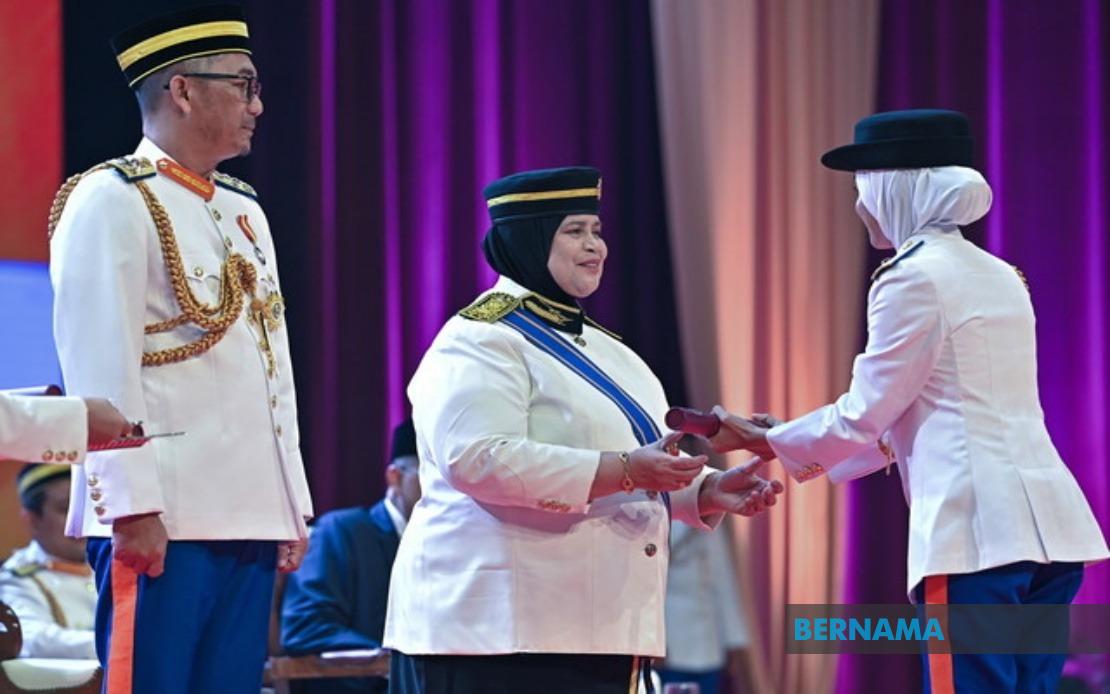
The government has begun rolling out a long-awaited allowance scheme for members of the Civil Defence Student Corps, with 1,107 cadets from 36 higher learning institutions across the country set to receive their first payments this month. The initiative marks a significant milestone in efforts to enhance welfare provisions for student volunteers who contribute to civil defence and public safety activities nationwide. Deputy Minister of Rural and Regional Development Datuk Rubiah Wang announced the development at the 17th National Kor SISPA Commissioning Ceremony held at Universiti Pendidikan Sultan Idris in Tanjong Malim, representing Deputy Prime Minister Datuk Seri Dr Ahmad Zahid Hamidi at the event.
The allowance structure reflects differentiation based on educational qualifications and work commitments. Cadets holding a bachelor's degree will receive RM9.80 per hour, whilst those with diploma qualifications will earn RM8 per hour. The payment mechanism calculates compensation according to hours of duty undertaken, ensuring that remuneration aligns with actual service contribution. This tiered approach recognises the varying levels of responsibility within the cadet corps whilst maintaining accessibility across different educational pathways represented among participating students.
Initial financial allocation for this first phase of implementation stands at approximately RM500,000, covering the inaugural cohort of beneficiaries. Datuk Rubiah emphasised that the government views this commencement as merely the foundation for expanded benefit delivery. Officials have committed to exploring additional fiscal pathways that would allow the scheme to grow progressively, potentially encompassing substantially larger numbers of Kor SISPA members in subsequent phases. This incremental approach balances immediate welfare improvements with sustainable budgetary planning.
The allowance programme directly addresses long-standing calls from student volunteers for recognition of their unpaid labour within the civil defence framework. By formalising monetary compensation, the government signals acknowledgement that Kor SISPA members undertake genuine work that merits financial remuneration. Datuk Rubiah stressed that this shift from discussion to concrete implementation represents a pivotal moment for corps morale and organisational development. The move seeks to incentivise continued participation among university students who might otherwise allocate their time to paid employment or other pursuits.
Civil Defence activities extend far beyond emergency response and disaster management, a point Datuk Rubiah underscored during her remarks. Kor SISPA volunteers provide year-round services including campus event support, community outreach, and coordination assistance across universities and external locations. This comprehensive service portfolio justifies the investment in cadet welfare, as these individuals maintain civilian readiness while balancing demanding academic schedules. Recognising this contribution through financial compensation strengthens the volunteer commitment pipeline essential to civil defence operations.
Kor SISPA itself represents a relatively recent institutional development within Malaysia's higher education ecosystem. Established in 2010, the programme has expanded across universities, polytechnics, and teacher education institutes throughout the country. To date, the corps has graduated approximately 11,802 trained individuals who carry forward civil defence knowledge and commitment into their post-university careers. This growing alumni base creates potential future workforce opportunities within formal civil defence structures and demonstrates the programme's success in cultivating civic responsibility among youth populations.
The allowance scheme carries particular relevance for Malaysian universities competing to attract engaged student leaders. Enhanced welfare packages make Kor SISPA participation more attractive relative to alternative student employment or volunteer activities. For institutions already hosting the programme, improved cadet support strengthens overall student welfare infrastructure and signals genuine commitment to experiential learning opportunities. This competitive dimension may encourage additional institutions not currently participating to establish Kor SISPA chapters, potentially expanding the programme's national reach.
Implementing a phased rollout strategy allows administrators to refine operational procedures, assess financial implications, and gather feedback before broader expansion. The next commissioning ceremony scheduled for Universiti Sultan Zainal Abidin next year presents another opportunity to extend allowance eligibility to additional cohorts. This staged approach mitigates risks associated with rapid programme scaling whilst demonstrating measurable commitment to cadet welfare improvement across successive implementation rounds.
For Southeast Asian context, Malaysia's initiative reflects broader regional trends toward professionalising student volunteer organisations. As universities increasingly emphasise social engagement and public service, formalising compensation structures acknowledges the substantive contributions these groups make. The allowance scheme positions Malaysia alongside regional peers in recognising that meaningful civic participation warrants tangible support mechanisms, potentially setting benchmarks for neighbouring countries considering similar initiatives within their own civil defence and emergency management frameworks.

