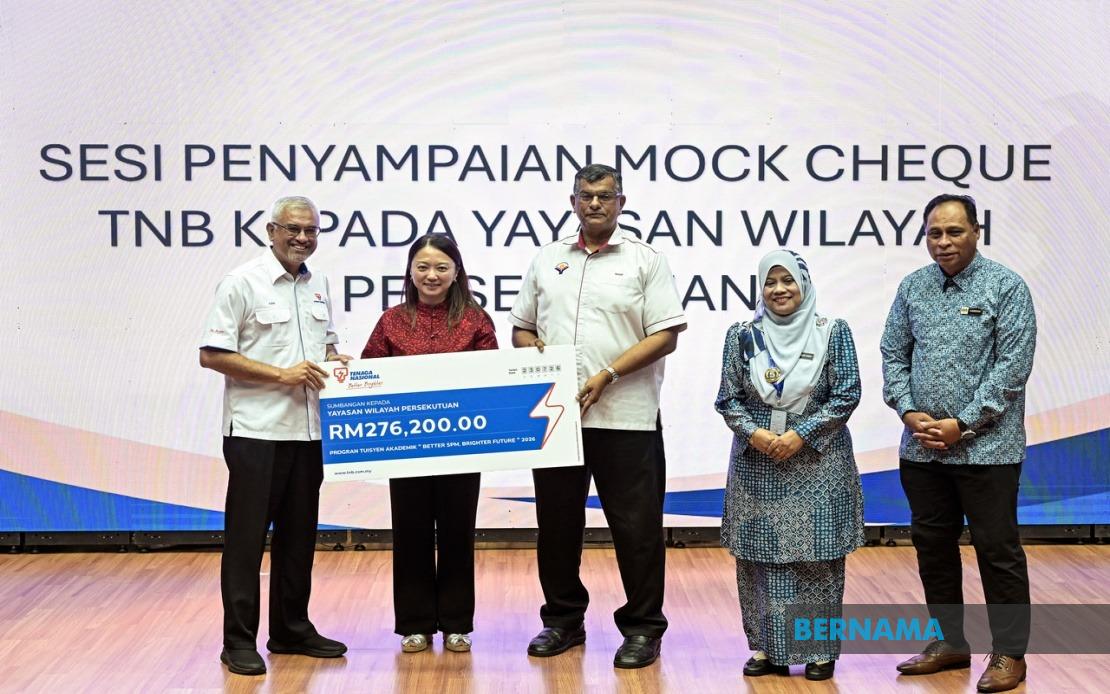
The Better SPM Brighter Future Programme has commenced operations, bringing free academic support to 1,600 Sijil Pelajaran Malaysia (SPM) candidates enrolled across 40 secondary schools in Kuala Lumpur. Launched on July 23 at Sekolah Seni Malaysia Kuala Lumpur, the initiative represents a targeted effort to strengthen examination preparation while removing the financial barriers that often prevent lower-income families from accessing supplementary education.
Hannah Yeoh, who serves as Minister in the Prime Minister's Department (Federal Territories) and chairman of Yayasan Wilayah Persekutuan (YWP), unveiled the programme with the stated objective of enabling students to engage in comprehensive exam preparation without imposing additional costs on households. The initiative reflects growing recognition within Malaysian policymaking circles that private tuition expenses, whilst commonplace in urban centres like Kuala Lumpur, represent a significant financial burden for many families and can inadvertently create educational inequity between students from different socioeconomic backgrounds.
The programme's financing structure demonstrates corporate sector participation in educational development. Tenaga Nasional Berhad (TNB), Malaysia's largest power utility, contributed RM276,200 to YWP to establish and operate the tuition scheme. This partnership model, combining government institutional support with private sector funding, has become increasingly common in Malaysian social development initiatives, though its efficacy in reaching underserved communities remains subject to ongoing evaluation.
The curriculum structure focuses on four subjects deemed critical to SPM success: Bahasa Melayu, English, History, and Mathematics. This selection reflects the weighting of these subjects within the national examination framework and their foundational importance for students pursuing further academic or vocational pathways. Mathematics and English carry particular significance in Malaysia's educational and employment landscape, as proficiency in these subjects correlates strongly with tertiary education opportunities and professional competitiveness in sectors ranging from engineering to finance.
The collaboration extends beyond funding mechanisms to include operational partnership with the Kuala Lumpur Federal Territories Education Department, indicating institutional coordination at both state and federal levels. Such coordination is essential for programme implementation, as schools must integrate tuition schedules with existing curricula and ensure that additional instruction complements rather than duplicates classroom teaching. The involvement of the education department also suggests alignment with broader federal territories educational policy objectives.
Yeoh's remarks during the launch touched upon broader civic responsibility issues, contextualizing the tuition initiative within wider social development concerns. Her comments regarding cleanliness standards at Dataran Merdeka following a World Cup final screening event, whilst seemingly tangential to the tuition programme, underscore an emerging governance emphasis on public behaviour and civic consciousness. She characterised her earlier remarks not as criticism of specific parties but as advocacy for heightened public accountability regarding environmental stewardship, distinguishing between constructive guidance and political censure.
The minister's emphasis on public education regarding waste management and cleanliness reflects a documented challenge in Malaysian urban spaces, where high-traffic public venues frequently experience sanitation difficulties following mass gatherings. Framing responsibility as a shared civic duty rather than exclusively a municipal function or foreign workers' responsibility demonstrates an attempt to shift behavioural norms among local populations. This pedagogical approach, targeting adult example-setting as instrumental in shaping children's civic values, aligns with contemporary educational theory emphasising social learning and environmental citizenship.
Kuala Lumpur City Hall's continued commitment to maintaining Dataran Merdeka as a publicly accessible recreational space underscores the tension between preserving heritage sites for community use and managing the logistical challenges accompanying large-scale public events. The venue's historical significance as a symbolic national space places additional weight on ensuring its upkeep meets standards befitting its status, though balancing accessibility with maintenance represents an ongoing municipal challenge across Southeast Asian capital cities.
The Better SPM Brighter Future Programme arrives at a consequential juncture in Malaysian education policy, following years of curriculum reforms and ongoing debates regarding examination-based assessment. Free tuition initiatives such as this one potentially serve multiple policy objectives simultaneously: reducing educational stratification, alleviating household financial stress, and improving aggregate examination outcomes. However, the programme's ultimate impact will depend significantly on implementation quality, student attendance rates, and the pedagogical effectiveness of volunteer or contracted tutors delivering instruction.
For Malaysian policymakers and education stakeholders, this initiative offers valuable data regarding demand for supplementary education in federal territory contexts and the feasibility of government-corporate partnerships in educational service delivery. The 40-school coverage and 1,600-student reach, whilst substantial, represents a fraction of Kuala Lumpur's secondary student population, suggesting either capacity constraints or intentionally phased implementation. Scaling such programmes to reach students in other Malaysian states and less urban contexts presents a distinct challenge, given infrastructure and resource limitations in less densely populated regions.
The tuition programme's focus on examination subjects rather than enrichment curricula reflects pragmatic prioritization within resource constraints. Malaysian secondary students generally face intense pressure to perform well in standardised examinations, with SPM results significantly influencing access to pre-university programmes and tertiary education scholarships. Targeted support in core examination subjects represents efficient resource allocation from a outcomes perspective, though some educational researchers argue this approach potentially neglects broader skill development in areas such as critical thinking and creativity.
Looking forward, the effectiveness of the Better SPM Brighter Future Programme will likely influence subsequent decisions regarding government investment in free tuition across Malaysia's federal territories and potentially other states. Should the initiative demonstrate measurable improvements in SPM performance among participating students whilst simultaneously reducing tutoring-related household expenditure, it could serve as a compelling model for broader replication. Conversely, implementation challenges or modest outcome improvements might encourage policymakers to explore alternative approaches to enhancing examination preparation equity and accessibility.

