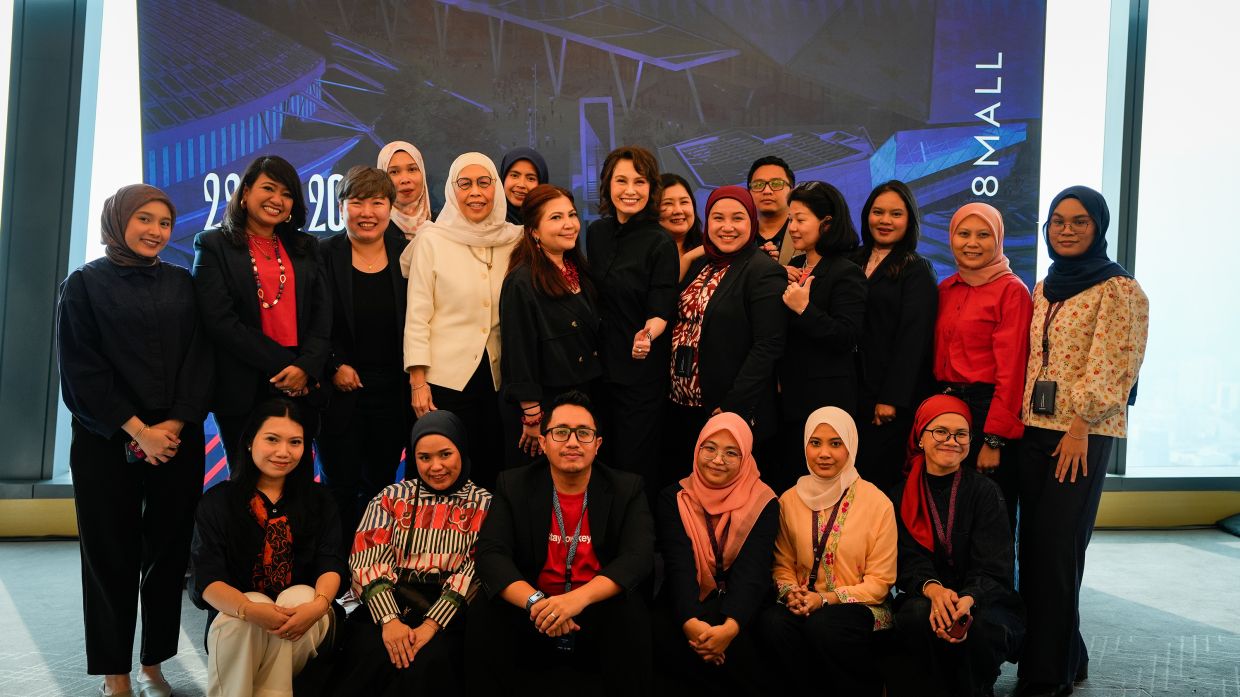
118 Mall has commenced formal engagement with its retail constituency, convening more than 200 shop partners at Park Hyatt Kuala Lumpur to outline strategic positioning ahead of its November 2026 debut. The gathering represents the first major coordination between property developers PNB Merdeka Ventures Sdn Bhd and the merchant consortium that will animate the new shopping destination, signalling accelerating preparations for the ambitious retail complex positioned within the Merdeka 118 megadevelopment in the capital's downtown core.
The retailers assembled for the event span established market categories—fashion, food and beverage, lifestyle services, and artisanal goods—with confirmed participants including international anchors such as adidas, ALDO, Converse, Foot Locker, Guess and Lacoste. The roster extends to homegrown specialists: Village Grocer and Makanism Foodhall represent premium grocery and dining concepts, while Best Denki and BookXcess cater to electronics and publishing respectively. A notable inclusion is the Malaysian Artisan District (M.A.D), a curated section dedicated to celebrating indigenous design and craft brands, underscoring developer ambitions to blend global retail appeal with local cultural authenticity.
PNB Merdeka Ventures chief executive officer Datuk Ir. Ts. Izwan Ibrahim framed the mall as fundamentally different from conventional shopping centres, owing to its embedding within a mixed-use urban precinct that combines retail, five-star hospitality, tourism experiences, heritage attractions and corporate office space. This architectural and functional integration creates what Ibrahim characterised as a distinctive ecosystem capable of generating diverse visitor streams—affluent hotel guests, international tourists, white-collar workers and metropolitan residents—each representing distinct consumption patterns and spending propensities. The multiplier effect implicit in such convergence potentially amplifies retail performance beyond what isolated shopping malls typically achieve.
Central to management's commercial projections is an ambitious first-year visitor target of 22 million entries. For context, this figure would position 118 Mall among Malaysia's highest-traffic retail environments, comparable to established mega-malls in the Klang Valley, and reflects developer confidence in the Merdeka 118 precinct's capacity to generate sustained consumer flow. The forecast assumes effective activation of the broader development ecosystem and successful execution of marketing campaigns that position the mall as a lifestyle destination rather than a transactional shopping venue.
Mall head of retail Sue Wang disclosed that the completed facility will comprise more than 300 retail outlets, distributed across seven storeys. This scale substantially exceeds typical Malaysian regional shopping centres but aligns with contemporary global standards for premium urban malls in major metropolitan markets. The retail mix deliberately balances high-street fashion brands with specialized merchants, dining concepts spanning casual to fine dining, and experiential retailers—categories collectively designed to extend dwell time and encourage repeat visitation beyond functional purchasing.
The Malaysian Artisan District represents a deliberate strategy to differentiate 118 Mall within an increasingly saturated Malaysian retail landscape. By comingling local artisan and design-focused brands with established international names, the mall aims to appeal simultaneously to domestic consumers seeking authentic cultural products and international visitors drawn to authentic Southeast Asian design. This positioning carries particular resonance as Malaysian consumers increasingly value locally-crafted goods and heritage products, reflecting broader global trends favouring sustainability and authenticity over mass-market uniformity.
Retailers received detailed briefings on marketing infrastructure and brand activation opportunities embedded within the mall's physical plant. The facility will incorporate extensive digital display systems and designated event spaces permitting merchant-led promotional campaigns, product launches and experiential activations. This technological and spatial flexibility addresses contemporary retail sector dynamics, where experiences and engagement increasingly matter alongside product availability. Shopping destinations that facilitate brand storytelling and consumer interaction consistently outperform conventional retail formats in visitor satisfaction and sales performance.
The timing of this retailers' convening carries strategic significance for Malaysian retail sector observers. The Malaysian economy faces persistent consumption headwinds, with household purchasing power constrained by elevated interest rates and debt servicing burdens. Luxury and discretionary retail—categories heavily represented in 118 Mall's confirmed tenant roster—remain vulnerable to economic slowdowns. However, the precinct's integrated tourism positioning may partially insulate it from domestic demand fluctuations by capturing international visitor spending, a crucial consideration given Malaysia's tourism recovery trajectory post-pandemic.
Developer messaging emphasises long-term partnership value rather than transactional landlord-tenant relationships. This rhetorical framing, repeated across Ibrahim's and Wang's public comments, suggests developer awareness that retail success increasingly depends on merchant collaboration, shared digital marketing, coordinated promotional calendars and cooperative brand-building. Traditional landlord approaches emphasising maximum rental extraction have demonstrably underperformed relative to proactive developer engagement in merchant success metrics.
The seven-storey structure's location adjacent to Merdeka 118's hospitality and commercial components positions it to capture spillover traffic from the tower complex. Hotel guests seeking retail experiences, office workers utilising nearby facilities, and convention attendees accessing the broader precinct will constitute captive audiences with comparatively lower search costs for shopping alternatives. This geographic synergy represents a competitive moat against other Kuala Lumpur retail destinations, particularly as established malls face increasing competition from e-commerce platforms.
For Malaysian retailers and international brands establishing regional headquarters, 118 Mall's configuration offers strategic advantages beyond conventional shop operations. The integrated precinct environment facilitates corporate entertainment, client hosting, and brand experience centres in ways isolated shopping malls cannot accommodate. Premium retailers increasingly recognise that contemporary retail destinations must provide experiential dimensions, event hosting capabilities, and sophisticated dining accompaniments—attributes that 118 Mall's architecture explicitly accommodates.
The November 2026 opening timeline affords the developing retail ecosystem approximately 18 months for operational planning, supply chain optimisation, and staff recruitment. For merchants accustomed to managing multiple locations, this preparation window proves adequate for sophisticated launch operations. However, for smaller Malaysian artisan and specialist retailers newly entering structured retail environments, the timeframe will demand intensive operational capacity building.
The retailers' gathering ultimately signals that 118 Mall development has transitioned from planning and construction phases into merchant activation. Success metrics will ultimately depend on whether the projected 22 million annual visitor target materialises and whether the diverse merchant mix achieves sustainable profitability—outcomes contingent on precinct-wide operational excellence, effective marketing execution, and sustained economic conditions supporting consumer spending across Malaysia's discretionary retail segments.

