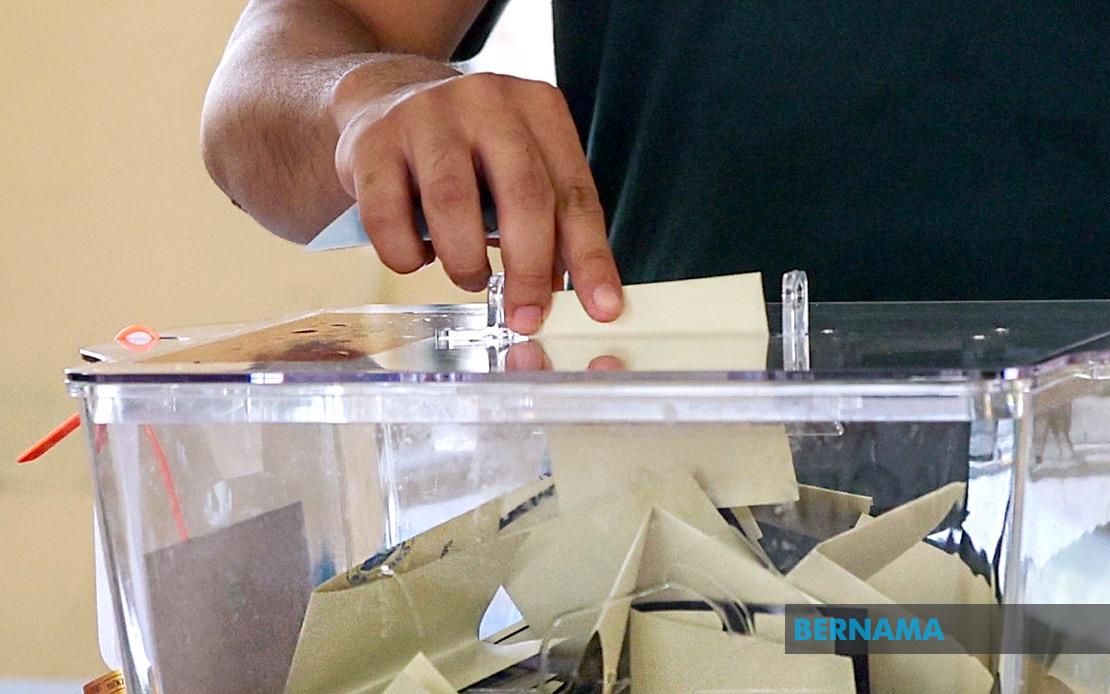
The 16th Johor state election claimed an unusual casualty on polling day when Rahmat Shukor, 57, found himself unable to exercise his democratic right despite a determined 120-kilometre journey from Batu Pahat to cast his vote. Having driven non-stop to SJK (C) Foon Yew 4 in Johor Bahru, Rahmat's effort ultimately proved futile as he crossed the threshold of the polling centre a mere 60 seconds after voting had officially concluded at 6 pm, leaving him devastated by circumstances largely beyond his control.
Rahmat's ordeal began the previous evening when he chose to remain at his late mother's residence in Sri Medan, Batu Pahat, rather than return to Johor Bahru. The decision stemmed from exhaustion following intensive work in plantation and contract labour, activities that had left him too drained to undertake the drive at that time. This fatigue-driven delay would prove consequential, as it meant he attempted his journey on polling day itself, a timing that exposed him to the unpredictable realities of Malaysian road conditions during peak election activity.
The primary culprit in Rahmat's inability to vote was an unusual surge in traffic congestion that began at the Simpang Renggam Rest and Recreation Area and extended towards Sedenak along the main approach route. This unexpected gridlock disrupted his carefully timed journey, transforming what should have been a manageable drive into an extended ordeal. Demonstrating resourcefulness, Rahmat attempted to mitigate the delays by exploring alternative routes through the congested Skudai area, yet each diversion proved insufficient to overcome the accumulated lost time.
Outside the polling centre, Rahmat expressed his frustration while remaining composed about the situation. He emphasised that he possessed documentation of his predicament, including photographs of the traffic jam that had detained him, and that he had even informed election officials of his circumstances upon arrival. These efforts at substantiating his plight revealed the modern reality of Malaysian elections where voters increasingly attempt to provide evidence of legitimate obstacles to voting, yet such documentation holds no sway once the statutory closing time has passed.
The broader context of Rahmat's experience highlights a tension within Malaysia's electoral system between the principle of universal suffrage and the practical inflexibility of voting schedules. While poll closures at a fixed time are necessary for administrative efficiency and standardisation across all 1,076 polling centres statewide, the consequences can be harsh for individuals whose circumstances—whether traffic, family obligations, work commitments, or medical emergencies—genuinely prevent timely arrival. Rahmat's case exemplifies this institutional rigidity intersecting with the vagaries of Malaysian road infrastructure during high-traffic periods.
What renders Rahmat's situation particularly poignant is the contrast with his family's experience. His wife and other family members had returned to Johor Bahru the previous Friday and successfully cast their votes without incident, leaving Rahmat as the sole family member excluded from the democratic process. This disparity underscores how election day outcomes sometimes hinge not on political conviction or civic engagement but on logistical happenstance. The difference between his family's successful participation and his exclusion amounted to merely 24 hours and the arbitrary decisions born of tiredness.
Rahmat's profession as a self-employed individual, likely engaged in work that cannot be postponed or delegated, complicated his ability to allocate time for voting in advance. For such workers, who form a substantial portion of Malaysia's informal economy, election day voting becomes a genuine challenge when circumstances force them away from their principal voting location. Had advance voting provisions been more accessible or publicity around early voting more prominent in constituencies, Rahmat's situation might have been entirely preventable.
The closing of all 1,076 polling centres simultaneously at the statutory 6 pm deadline represents a coordinated exercise in electoral administration, ensuring consistency across Johor's diverse constituencies from urban Johor Bahru to rural areas. This uniformity serves important purposes in maintaining electoral integrity and operational clarity. However, the inflexibility of such deadlines, even when circumstances are genuinely beyond an individual's control, raises questions about whether modern electoral systems should incorporate limited provisions for documented cases of unavoidable delays, particularly when voters arrive minutes after closure with corroborating evidence.
Despite his disappointment, Rahmat demonstrated the civic maturity characteristic of many Malaysian voters by accepting the situation philosophically and expressing hope that the democratic process would continue smoothly. His non-confrontational response, even when he possessed legitimate grievances, reflects the resignation many voters develop when confronted with bureaucratic finality. His acceptance, however gracious, should not obscure the underlying issue: a dedicated citizen's voting opportunity was lost to circumstances partially attributable to infrastructure limitations during a high-traffic period.
The incident raises practical considerations for future elections in Johor and across Malaysia. Election management bodies might explore whether temporary traffic management measures, advance voting expansion, or extended voting windows in high-congestion areas could prevent similar situations. Additionally, the incident demonstrates the importance of encouraging voters, particularly those travelling from outside their constituencies, to plan their voting journeys with substantial time buffers to accommodate unexpected delays. While one minute's difference may seem negligible, electoral law operates in absolutes, and such marginal shortfalls accept no exceptions.
Rahmat's 120-kilometre journey, undertaken with genuine intent to participate in his state's democratic processes, ultimately serves as a cautionary reminder of the practical obstacles facing committed voters in Malaysia's sprawling constituencies. His story resonates particularly in a country where voters often contend with significant geographical distances, underdeveloped public transport, and congestion patterns that make election participation a genuine logistical undertaking rather than a simple civic act. While the system cannot accommodate every conceivable circumstance, Rahmat's case suggests that marginal improvements in planning and flexibility could enhance electoral participation and prevent such frustrating outcomes.

