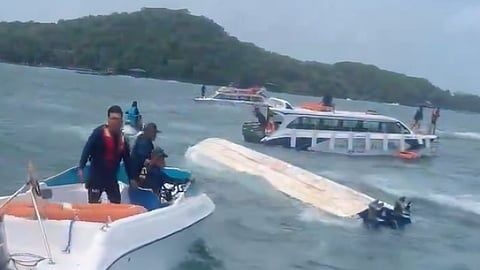
A speedboat tragedy unfolded in southern Vietnamese waters on Saturday when a tourist vessel capsized near Phu Quoc Island, resulting in the deaths of 15 Indian nationals. The incident occurred as the boat was transiting through the waters around Hon May Rut Ngoai Island, located roughly 10 kilometres south of Phu Quoc, Vietnam's largest and most developed island destination. The vessel was operating under capacity with 32 Indian visitors and a crew complement of four aboard when it overturned approximately 400 metres from the island.
Accounts from those present at the scene indicated that the overturning happened suddenly, trapping numerous passengers inside the submerged vessel. This factor significantly complicated the initial rescue efforts, as responders had to navigate the challenge of extracting individuals from within the capsized hull while managing the chaotic conditions typical of maritime emergencies. The depth and conditions of the waters at that location added further complications to what was already a desperate situation unfolding in real time.
Immediate assistance came from nearby vessels whose captains and crews witnessed the disaster. These first responders began conducting water rescues without waiting for official emergency services, pulling survivors from the surrounding waters and providing crucial aid during the critical opening minutes. This civilian intervention likely prevented additional casualties, as the response time from formally mobilised rescue agencies would have been longer. Border guards, naval personnel, coast guard units, and other government rescue organisations subsequently arrived at the location and coordinated the broader recovery and rescue operation.
The final toll from the incident saw 21 individuals successfully rescued from the water, while authorities confirmed that all deceased victims were recovered from the scene. The injured survivors were transported to local hospitals for medical evaluation and treatment. The operation represented a substantial rescue and recovery effort given the scale of the disaster and the challenging conditions that responders faced.
Phu Quoc Island has positioned itself as one of Southeast Asia's premier beach tourism destinations, attracting millions of visitors annually through its reputation for white-sand beaches and crystalline waters. The island serves as a gateway for numerous island-hopping excursions and water-based tourist activities, with speedboats being a standard mode of transport for day trips to surrounding islands and reefs. Hon May Rut Island, where the capsizing occurred, is itself a popular tourist destination known for its natural beauty and beach amenities. The incident raises questions about safety protocols and vessel management for the substantial tourism infrastructure that has developed around these attractions.
Investigative authorities indicated that determining the underlying cause of the capsizing remained an active priority. Multiple scenarios could account for such an incident: sudden adverse weather conditions, mechanical failure, overcrowding concerns, or operator error during vessel handling. The speed at which the boat overturned and the difficulty in assisting those trapped suggested the event occurred with little warning. Preliminary findings from Vietnamese authorities would typically examine maintenance records, weather conditions at the time, passenger loading procedures, and crew qualifications.
The incident carries significant implications for tourist safety protocols across Vietnam's tourism sector, particularly for water-based activities that form a substantial part of the country's appeal to international visitors. India and Vietnam maintain substantial bilateral relationships, and the deaths of 15 Indian nationals represents a serious diplomatic concern alongside the humanitarian tragedy. Such incidents typically trigger broader reviews of safety standards and enforcement mechanisms across the tourism industry.
For Malaysian and regional observers, the disaster underscores the importance of consistent safety oversight for maritime tourism activities throughout Southeast Asia. The region hosts millions of island-hopping tourists annually, with similar speedboat operations operating throughout Malaysia, Thailand, Philippines, and Indonesia. The reliance on speedboats for short-distance tourist transfers creates inherent risks that require robust regulatory frameworks and enforcement mechanisms. Regional maritime authorities often share challenges around standardisation of safety equipment, crew training, and vessel maintenance standards.
The capsizing also highlights broader questions about the capacity of emerging tourism destinations to manage rapid growth in visitor numbers without compromising safety standards. Phu Quoc's transformation into a major international destination has occurred rapidly, bringing economic benefits but also infrastructural pressures. The incident occurred in a location heavily dependent on water-based activities and transport, where the marginal cost of upgrading safety protocols must be weighed against competitive pressures and profitability concerns.
Preliminary observations suggest this incident may prompt Vietnamese authorities to conduct wider safety audits of speedboat operations throughout the Phu Quoc region and potentially across other tourist destinations. Such reviews typically examine life jacket availability and usage compliance, vessel maintenance schedules, weather monitoring procedures, and crew training qualifications. International travel advisories from India may also reflect this incident, potentially influencing travel patterns to the region.

