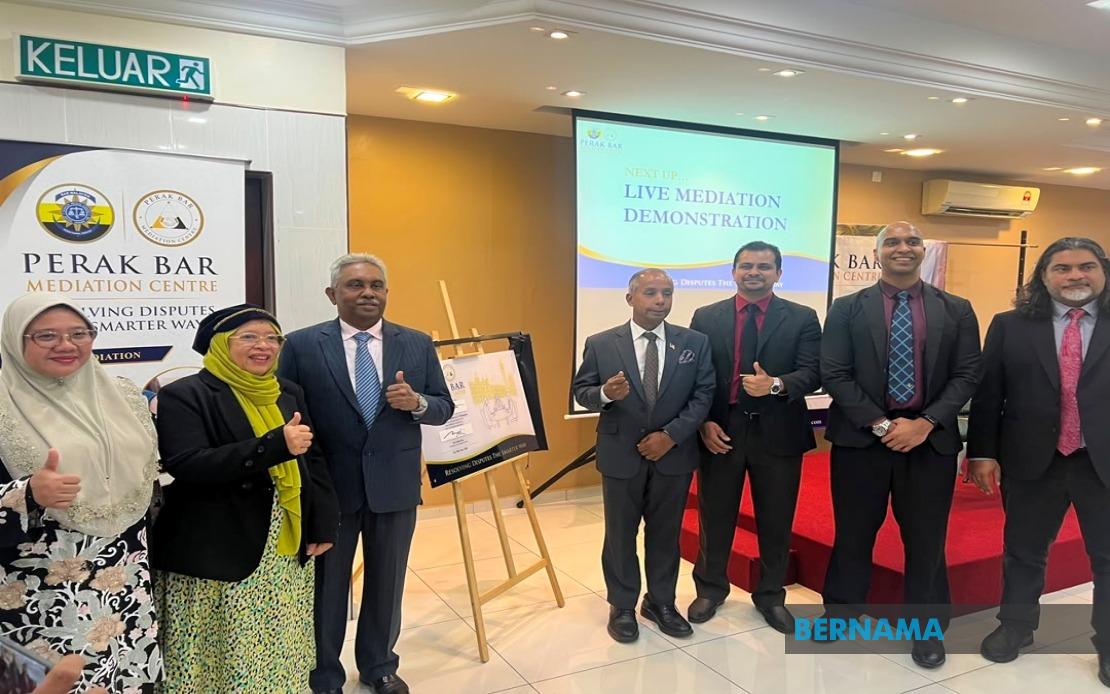
Malaysia's push to democratise dispute resolution has gathered significant momentum with 158 pro bono mediators now registered under the Asian International Arbitration Centre's commercial mediation scheme. Deputy Minister M. Kulasegaran announced the milestone during the launch of the Perak Bar Mediation Centre in Ipoh, underscoring the legal profession's commitment to widening access to justice across the country.
The initiative, formally established under the MADANI Mediation Centre on May 18, was designed to address a critical gap in Malaysia's justice system. By offering free mediation services across more than 26 categories of commercial disputes where claims remain below RM250,000, the programme targets disputes that might otherwise remain unresolved due to cost barriers. This threshold captures a substantial portion of everyday commercial disagreements that affect businesses and individuals across Malaysia's economy.
Since launching mere months ago, the momentum has already begun to translate into tangible outcomes. The AIAC has begun processing mediation cases, with approximately 10 formal registrations completed during the initial implementation phase. While this represents a modest caseload so far, observers point to the broader significance: the programme demonstrates both institutional readiness and emerging public awareness of mediation as a viable alternative to protracted court proceedings.
Kulasegaran, during remarks at the Perak ceremony, signalled the government's intention to scale the initiative substantially. He committed to directing AIAC to engage with the Bar Council in developing enhanced outreach strategies aimed at reaching ordinary Malaysians unfamiliar with mediation options. The emphasis on publicity reflects recognition that awareness remains a critical bottleneck—many potential users remain trapped within the conventional wisdom that courts represent the inevitable avenue for dispute resolution.
The deputy minister's personal experience coloured his advocacy for mediation as a mechanism for judicial efficiency. Having personally handled cases spanning 10 to 15 years through litigation channels, Kulasegaran highlighted the grinding reality of appeal stages and procedural complexity inherent in traditional adjudication. By contrast, mediation's capacity to achieve resolution significantly earlier resonated through his remarks, framed as delivering mutual benefit to disputing parties rather than imposing outcomes through legal victory.
For Malaysian businesses and individuals, the implications extend beyond convenience. Extended litigation drains resources, consumes management attention, and perpetuates uncertainty that damages commercial relationships and personal wellbeing. Mediation's structured but flexible approach offers resolution pathways compatible with relationship preservation—particularly valuable in Malaysia's context, where many disputes involve repeat commercial actors or family-adjacent business entanglements where ongoing relationships matter.
The legal profession's apparent receptiveness—evidenced by the 158 mediator registrations—suggests the bar recognises its own interest in channelling disputes toward negotiated settlement. Lawyers trained in mediation advocacy can position themselves as settlement facilitators rather than courtroom combatants, potentially expanding their service offerings while addressing client needs for faster, more predictable outcomes. This alignment of professional incentives with public benefit distinguishes the initiative from purely altruistic volunteering.
The event's attendance by significant figures from Malaysia's legal infrastructure, including Malaysian Bar president Anand Raj and Malaysian Bar vice-president Murshidah Mustafa, signalled institutional endorsement. The presence of Perak Industrial Relations Department leadership and local bar representatives underscored the scheme's state-level embeddedness, critical for generating referral pathways and community trust.
Kulasegaran's separate remarks on the Taiping Prison incident CCTV footage revealed the government's cautious stance on transparency in politically sensitive matters. By framing the decision as awaiting Cabinet direction rather than unilaterally committing to release, the deputy minister positioned the government within established legal boundaries while acknowledging parliamentary pressure. The sub judice rule and ongoing prosecutions genuinely create complex legal impediments, yet the framing also permits potential deferral of disclosure decisions on technical grounds.
For Southeast Asia broadly, Malaysia's pro bono mediation initiative mirrors regional trends toward alternative dispute resolution expansion. Singapore, Thailand, and Vietnam have each invested in mediation frameworks, recognising efficiency gains in commercial settings. Malaysia's coupling of pro bono voluntarism with institutional infrastructure through AIAC positions the country within this regional competitive dynamic, where dispute resolution quality increasingly factors into foreign direct investment decisions.
The programme's reliance on volunteer mediators introduces both strength and vulnerability. The strong response rate suggests ideological commitment among legal professionals, yet sustainability depends on maintaining volunteer motivation over time—particularly as caseloads grow and mediators encounter more complex disputes. The government's stated intention to deepen Bar Council engagement may provide mechanisms for volunteer support, training advancement, and recognition systems that strengthen retention.
For ordinary Malaysians and small-to-medium enterprises, the RM250,000 threshold captures disputes representing genuine financial stakes—sufficient to justify legal expenditure under traditional models, yet below the scale where multi-year litigation becomes economically rational. This sweet spot positions mediation as the genuinely superior option for resolving the disputes comprising the bulk of Malaysia's commercial friction. As awareness grows and the programme matures, expect dispute resolution culture to gradually shift toward negotiation-first approaches, with litigation increasingly reserved for disputes involving fundamental principle or relationships already irretrievably broken.
The Perak Bar Mediation Centre's establishment represents institutional embedding of alternative dispute resolution within Malaysia's legal infrastructure at the state level. Replicating this model across other state bars could transform mediation from experimental initiative into default commercial dispute resolution pathway. Such evolution would represent significant progression toward genuine access to justice—not merely formal rights on paper, but practical mechanisms enabling ordinary people to resolve genuine disputes without bankrupting themselves through litigation.

