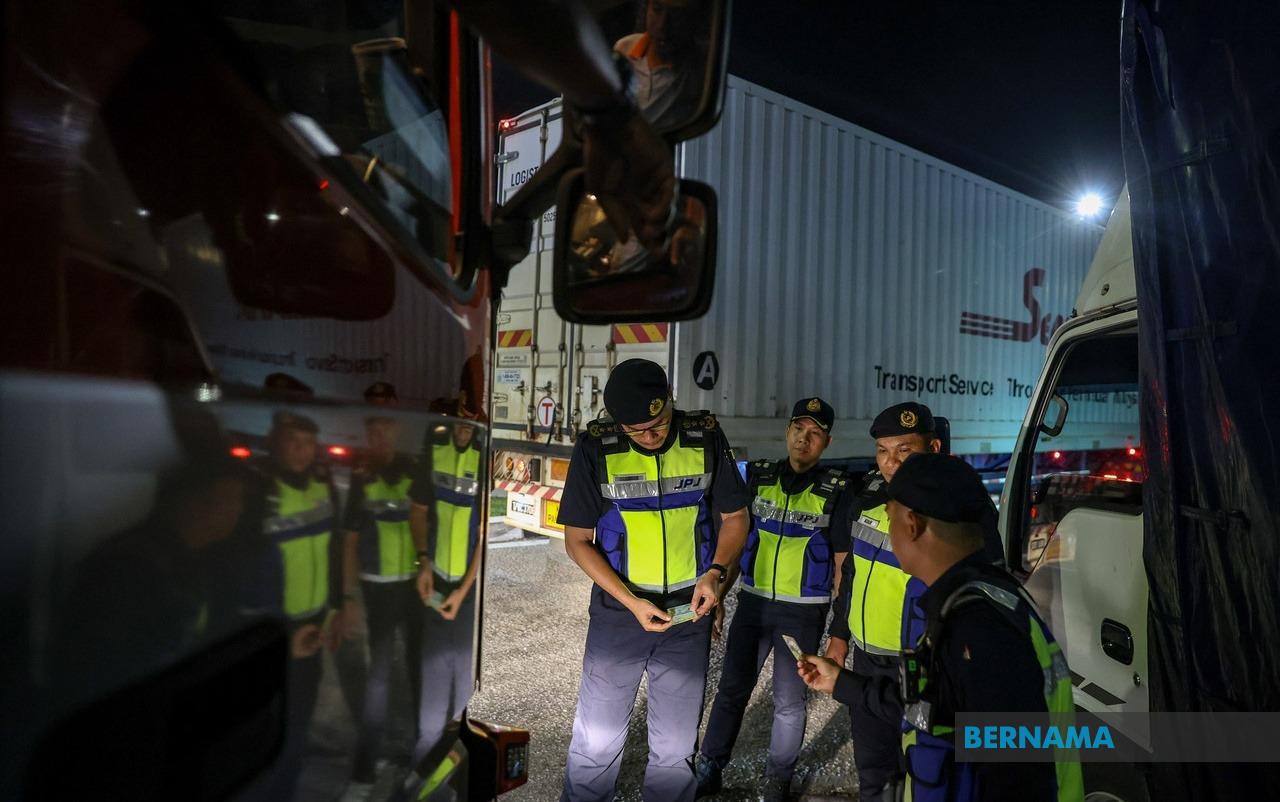
A coordinated crackdown on drug-impaired driving in Johor has resulted in 16 commercial and public transport drivers testing positive for narcotics, highlighting persistent substance abuse problems among professional road users in the state. The Integrated Drug Operation, conducted jointly by the Johor Road Transport Department (JPJ), Royal Malaysia Police (PDRM), National Anti-Drug Agency (NADA), and PLUS Malaysia Berhad, screened drivers at multiple enforcement points throughout Johor from July 1 until July 10. According to Johor JPJ director Zulkarnain Yasin, the operation targeted drivers at strategic locations including highway rest and service areas, JPJ enforcement stations, and bus terminals, underscoring the authorities' determination to intercept drug users before they endanger public safety on major routes.
The screening process revealed significant drug prevalence among the 164 drivers tested. Of those who submitted to urine tests, ten tested positive for methamphetamine or crystal methamphetamine, commonly known as "ice" in street parlance. Two drivers returned positive results for cannabis, while a single driver tested positive for morphine. The concentration of stimulant use—particularly methamphetamine variants—aligns with broader regional trends in substance abuse among transport workers, who frequently consume such drugs to maintain wakefulness during long-haul journeys. This pattern is particularly concerning because drivers under the influence of stimulants often experience impaired judgment and heightened aggressiveness, creating compounded hazards for other road users.
The JPJ's response to positive drug tests underscores the seriousness with which authorities are treating the issue. Under Section 56(4) of the Road Transport Act 1987, the department will pursue suspension or revocation of vocational licences for all drivers who tested positive. Such sanctions represent substantial consequences for professional drivers whose livelihoods depend on maintaining valid commercial driving credentials. The threat of licence revocation theoretically creates a powerful deterrent, yet the continued detection of drug use suggests that existing awareness campaigns and penalties have not yet achieved sufficient preventive effect. This gap between enforcement and actual behavioural change warrants examination of whether transport companies themselves are implementing adequate drug testing protocols and whether driver education programs adequately address substance abuse risks.
Beyond drug-related violations, the operation uncovered a staggering array of regulatory breaches that collectively paint a picture of widespread non-compliance across Johor's transport sector. The JPJ detected 707 instances of drivers operating without valid licences, 626 vehicles with expired road tax, and 574 with lapsed insurance coverage. Such violations are not merely administrative infractions; they represent genuine safety and financial risks. A driver without a current licence may lack recent competency verification, whilst expired insurance leaves accident victims potentially uncompensated. The scale of these findings—with nearly 1,500 documented licensing and insurance violations alone—suggests systemic enforcement gaps and possible inadequate compliance monitoring by transport operators.
Vehicle condition deficiencies compounded the enforcement challenges. Authorities recorded 113 instances of overloaded vehicles during the operation, a violation with direct consequences for road safety and vehicle handling characteristics. Additionally, 128 vehicles lacked proper Goods Vehicle Licences, whilst 39 cases involved unauthorised vehicle modifications that could compromise structural integrity or safety systems. Technical inspections revealed 30 instances of tyres failing to meet specifications, a critical safety issue given that tyre degradation or incompatibility directly affects braking distance and road grip. The accumulation of such technical violations—928 additional cases were recorded—demonstrates that many transport operators are deferring maintenance or cutting corners on safety equipment, likely to reduce operational costs.
The operation's breadth reveals coordination challenges inherent in Malaysia's transport oversight system. Whilst the JPJ, PDRM, NADA, and PLUS Malaysia Berhad collaborated effectively for this initiative, the sheer volume of violations detected suggests that routine monitoring between such coordinated operations remains insufficient. The concentration of enforcement activity in July, with checks specifically at rest areas and terminals, implies that violators may operate with relative impunity outside these organised sweeps. For Malaysian transport users and logistics companies relying on professional road haulage, these findings underscore the variable safety standards across the sector and the importance of selecting transport partners with demonstrated compliance records.
From a regional perspective, Johor's experience mirrors challenges facing Southeast Asian transport authorities broadly. Long-distance drivers across Thailand, Indonesia, and the Philippines report similar patterns of stimulant use and equipment violations. The integration of multiple agencies in Johor's approach—combining drug enforcement with vehicle safety and licensing checks—represents a more comprehensive strategy than purely drug-focused operations. However, sustainability requires consistent resourcing and coordination mechanisms that extend beyond periodic campaigns. Whether the July operation represents a one-off initiative or the beginning of sustained, systematic enforcement remains unclear from available information.
The implications for commercial transport operators and logistics companies are significant. Those currently operating with marginal compliance margins face escalating enforcement risk, particularly given the apparent sophistication of this integrated approach. Transport firms may need to invest in stronger internal compliance systems, including regular driver briefings on drug risks, maintenance schedules that exceed minimum legal requirements, and perhaps independent safety audits. The detection of 16 drug-positive drivers also raises questions about industry-wide substance abuse prevalence; if this sample of 164 drivers is representative, Johor's transport sector may have a drug problem affecting approximately 10 per cent of professional operators.
For government authorities, the operation's success in identifying violations creates secondary policy questions about enforcement frequency and sustainability. One-time operations generate significant data but limited deterrent effect unless followed by consistent monitoring. The costs of coordinating multiple agencies, deploying personnel to multiple sites, and processing violations are substantial, raising questions about resource allocation efficiency. Alternatively, the operation may prompt transport companies to implement voluntary compliance improvements, reducing future enforcement burden. Whether such voluntary adoption occurs depends partly on how transport industry bodies—associations representing haulage firms and bus operators—respond to the violations data.
Looking forward, the Johor operation suggests that integrated enforcement combining drug testing, licensing verification, and vehicle safety inspections offers a more comprehensive public safety approach than single-focus initiatives. The detection of such varied violations in a single operation indicates that professional drivers and operators represent a population segment requiring sustained regulatory attention. For Malaysian authorities, scaling similar integrated operations across other states whilst improving between-operation monitoring mechanisms could meaningfully enhance road safety. For transport industry participants, the results should prompt candid assessment of internal compliance cultures and investment in systems that prevent rather than merely react to regulatory violations.

