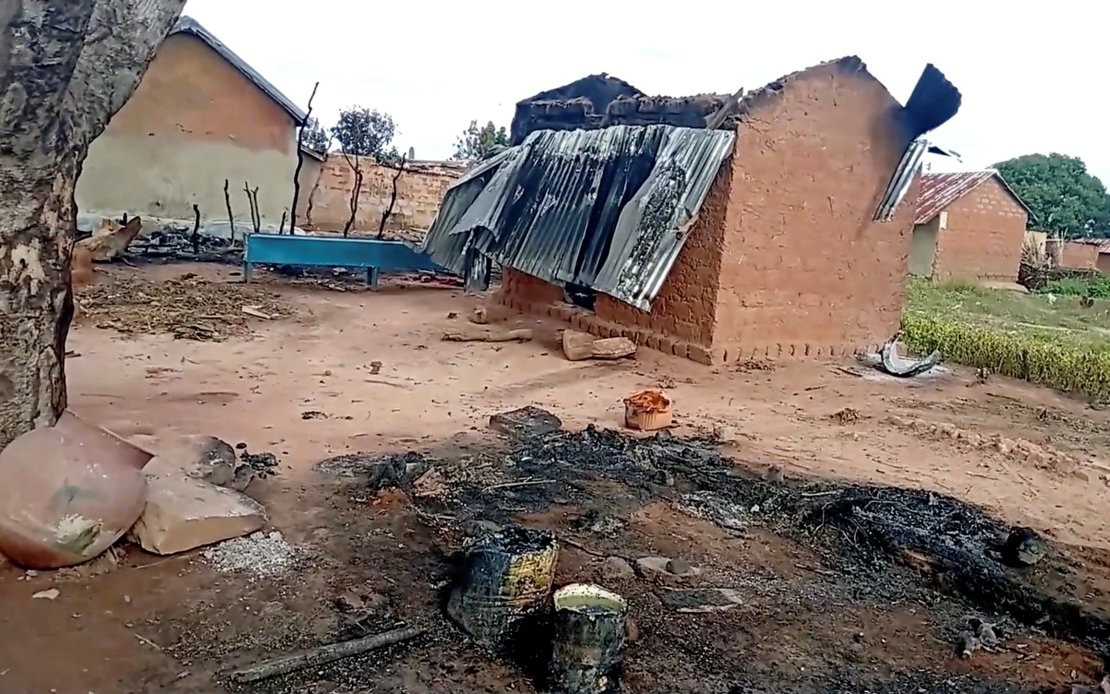
A devastating militant strike has claimed at least 16 soldiers' lives in Niger's western Tillabery region, with a further 23 personnel sustaining injuries during what authorities characterise as a coordinated terrorist operation. The assault targeted a Defence and Security Forces detachment positioned in the Tera area, an unstable corridor straddling the volatile borders shared with Mali and Burkina Faso—territories where armed insurgencies have flourished amid state fragmentation and competing geopolitical interests.
The incident, confirmed through statements released by Niger's Ministry of Defence on Sunday, represents another significant casualty toll in the country's grinding conflict against transnational militant networks. The Tillabery region has emerged as a critical flashpoint within the broader Sahel crisis, where porous borders facilitate the movement of fighters, weapons, and ideology across the subregion. For Malaysian readers tracking regional security dynamics, this escalation reflects how ungoverned spaces in West Africa continue serving as operational bases for organisations with transnational ambitions and occasional connections to global extremist movements.
Defence officials reported that responding military units, bolstered by aerial support assets, successfully repelled the attackers and forced their withdrawal from the engagement area. During the firefight, government forces killed approximately 15 militants, recovered five motorcycles used by the insurgents, and destroyed four additional two-wheelers—reflecting the operational methods increasingly favoured by non-state armed groups across the Sahel, who rely on motorised hit-and-run tactics to maximise mobility and minimise detection by conventional military assets.
The deployment of air power in support of ground operations signals Niger's continued dependence on technological advantages to compensate for manpower constraints and logistical limitations. However, the persistent ability of militant groups to inflict heavy casualties on uniformed personnel demonstrates that aerial reconnaissance and support alone cannot resolve the underlying security architecture challenges facing Nigerien forces, many of whom operate with inadequate training, equipment, and intelligence capacity.
Niger has endured intensifying violence over the past half-decade, particularly following a military coup in July 2023 that withdrew the country from regional security frameworks and foreign military partnerships. The junta's subsequent consolidation of power and controversial foreign policy decisions have complicated counter-insurgency efforts, even as militant organisations continue expanding territorial influence and recruitment networks. This attack exemplifies how internal political upheaval compounds already-severe security vulnerabilities in strategically significant but institutionally fragile states.
The Sahel's security deterioration holds implications extending well beyond Niger's borders. Regional instability drives migration flows toward North Africa and the Mediterranean, influences commodity markets through supply-chain disruptions affecting gold, uranium, and agricultural production, and creates environments where transnational criminal syndicates and terrorist organisations coordinate activities. Southeast Asian nations tracking global security trends should recognise how West African instability intersects with broader patterns of state fragility, where militant groups exploit governance vacuums to establish sanctuaries and operational infrastructure.
Military authorities indicated that comprehensive search, sweep, and security operations continue across the affected zone, suggesting a broader campaign to pursue fleeing insurgents and consolidate territorial control. Such follow-up operations typically involve cordon-and-search activities, intelligence gathering from local populations, and attempts to disrupt militant supply lines and command structures. However, their effectiveness remains constrained by resource limitations, environmental challenges posed by the Sahel's vast terrain, and the difficulty of distinguishing combatants from civilians in communities where militant groups have established social and economic influence.
The attack's timing and location suggest coordination by organised groups with intelligence regarding military positioning and deployment schedules. This capability indicates that militant organisations operating across the Mali-Burkina Faso-Niger tri-border region possess functional command structures, information networks, and sufficient operational experience to execute complex ambushes against uniformed forces—a troubling evolution from earlier insurgent activities. International observers have documented how groups affiliated with Al-Qaeda and Islamic State franchises have professionalised their tactics through experiential learning and knowledge transfer across conflict zones.
Niger's security challenges cannot be resolved through military means alone, notwithstanding the government's apparent prioritisation of force-centric responses. Underlying drivers of militant recruitment—including youth unemployment, perceived marginalisation of specific ethnic or regional communities, historical grievances against state institutions, and the appeal of Islamic governance ideologies—require parallel political, economic, and social interventions. The junta's isolationist orientation and reduced international cooperation have diminished access to technical assistance, intelligence sharing, and capacity-building support that might address these structural vulnerabilities.
For the broader Southeast Asian region, Niger's trajectory serves as a cautionary reminder regarding the consequences of state fragility, institutional collapse, and prolonged conflict. While West African terrorism networks currently lack direct operational reach into Southeast Asia, their continued strengthening and regional proliferation could eventually influence global jihadist strategies and create ideological inspiration for local extremist groups. Monitoring developments in the Sahel thus forms part of comprehensive regional security awareness practices for countries across Asia-Pacific.

