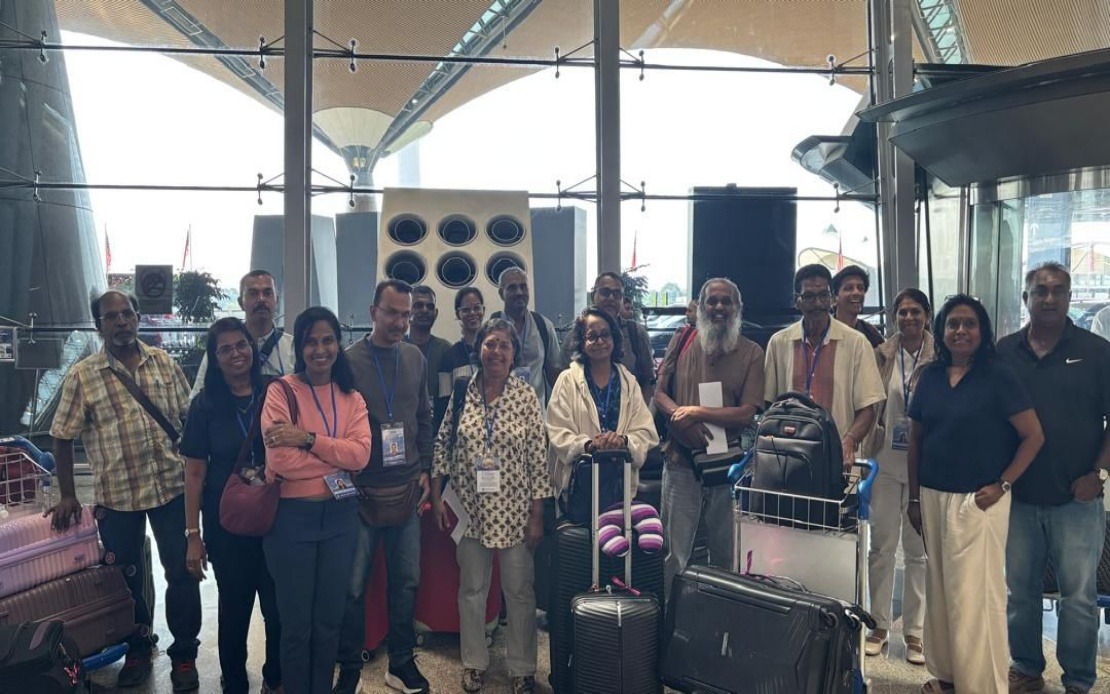
Seventeen Malaysians participating in a religious pilgrimage to Mount Kailash in Tibet have disappeared from contact following severe flash floods that ravaged the Nepal-Tibet border region on August 26. The group, organised by Nepal-based travel operator Fishtail Tours & Travels, lost all communication with their families and coordinating authorities just hours after the disaster struck, prompting emergency responses from Malaysian diplomatic and government institutions. The pilgrims, who arrived in Nepal on August 23, were scheduled to continue their sacred journey until September 5 before the catastrophe interrupted their plans.
The last confirmed contact with the missing group occurred at approximately 8.18 am Nepal time on August 26, when they were located roughly two kilometres from the Nepal-Tibet Immigration Checkpoint. Beyond this point, all attempts to reach the travellers have proven unsuccessful. R. Logadashini, a family member of four pilgrims in the group, revealed that her relatives—her father S. Raman, 59, mother M. Neelavany, 54, uncle S. Murukan, 60, and aunt G. Padmahwathi, 58—were among those unaccounted for. The family's final message came via WhatsApp at 8.40 am Malaysian time, leaving relatives to grapple with uncertainty and mounting anxiety about their loved ones' fate.
The scale of the communication blackout extends beyond the immediate group of seventeen. Wisma Putra, the Malaysian Ministry of Foreign Affairs, reported that 55 Malaysians registered with the Malaysian Embassy in Kathmandu have become unreachable in the wake of the floods. However, officials stressed that no formal confirmation of Malaysian casualties has been received, leaving some room for cautious optimism pending further developments. The distinction between confirmed missing persons and those simply unable to establish contact underscores the chaotic nature of the disaster and the difficulty in assembling reliable information from the affected border region.
The geological and meteorological factors behind the disaster reveal the extreme environmental hazards that pilgrims and trekkers regularly encounter in this mountainous region. Heavy rainfall combined with a significant glacial collapse triggered the destructive flash floods that swept through Nepal's Rasuwa and Nuwakot districts with devastating force. The flooding has severely disrupted critical infrastructure, severing communications networks and rendering key roads linking the affected areas to Kathmandu impassable. These physical barriers have substantially complicated search and rescue operations, as responders struggle to navigate the damaged terrain and reach isolated victims or stranded groups.
The Mount Kailash pilgrimage route represents one of the most popular trekking corridors in the Himalayan region, utilised not only by religious pilgrims seeking spiritual fulfilment but also by mountaineers and adventure tourists heading toward Mount Everest and other trekking destinations. This popularity underscores why the flash floods have created a regional crisis affecting nationals from multiple countries, not merely Malaysia. The corridor's significance to religious tourism, particularly among Buddhist and Hindu communities, makes such disasters especially poignant and consequential.
In response to the emergency, Prime Minister Datuk Seri Anwar Ibrahim issued immediate directives instructing all relevant government agencies to prioritise locating and establishing contact with affected Malaysians. The Malaysian Embassy in Kathmandu and the Malaysian High Commission in New Delhi have been activated to coordinate rescue and information-gathering efforts. These diplomatic missions are collaborating intensively with Nepalese authorities, professional search and rescue teams, travel agencies operating in the region, and other stakeholders capable of providing assistance. The mobilisation of Malaysia's diplomatic apparatus reflects the gravity government officials attach to the situation.
Amidst the alarming circumstances surrounding the missing pilgrims, a separate group of Malaysian religious tourists has been confirmed safe, providing some reassurance within the broader crisis. This group of 56 individuals, comprising 39 Malaysians alongside four Singaporeans and three Canadians, is being led by Datuk N. Mohanadas, a legendary Malaysian mountaineer renowned for his successful Everest expeditions. Mohanadas confirmed that his contingent remains unaffected by the flooding and has continued progressing safely along their designated route toward Mount Kailash. The group commenced their three-day pilgrimage circuit around the sacred mountain, demonstrating that not all travellers in the region have been imperilled by the disaster.
The divergent experiences of the two Malaysian pilgrimage groups illustrate how proximity and routing profoundly influence survival outcomes in the context of natural disasters in remote mountainous terrain. The seventeen unaccounted Malaysians were travelling on or near the primary Nepal-Tibet border crossing when the floods occurred, whereas Mohanadas's group had already traversed into Tibetan territory and away from the most affected zone. This geographic distinction has proven consequential, with Mohanadas's contingent successfully sidestepping the worst of the disaster while the other group became trapped or cut off by the flooding.
The incident highlights the inherent risks associated with high-altitude religious tourism in the Himalayas, where pilgrims and trekkers deliberately venture into regions characterised by severe weather patterns, challenging terrain, and limited infrastructure for emergency response. While Kailash pilgrimages attract thousands of devotees annually seeking transformative spiritual experiences, the journey demands acceptance of substantial personal risk. The flash flood disaster demonstrates that even well-organised, professionally operated tour groups cannot fully mitigate the dangers posed by natural phenomena like glacial collapses and intense precipitation in this extreme environment.
The Malaysian government's swift mobilisation reflects both humanitarian priorities and diplomatic considerations inherent in managing international crises affecting citizens abroad. The Ministry of Foreign Affairs and diplomatic missions will likely face sustained pressure from families and media to provide regular updates on rescue efforts and the welfare of missing nationals. The eventual resolution of the situation—whether positive outcomes emerge or tragic confirmations arise—will substantially influence public perception of government responsiveness and institutional effectiveness in protecting Malaysian citizens overseas.
As rescue operations continue amidst difficult terrain and disrupted communications, authorities in both Nepal and Malaysia maintain hope of establishing contact with the missing pilgrims. The absence of confirmed casualties provides a basis for optimism, though the passing hours increase concerns about the travellers' condition if they remain stranded without adequate supplies or shelter. The international dimensions of the disaster—involving Malaysian, Singaporean, and Canadian nationals—will likely prompt coordinated responses from multiple governments seeking to locate their respective citizens. The outcome of this ongoing crisis will underscore critical lessons about disaster preparedness, emergency communication systems, and the responsibilities of tour operators managing groups in high-risk environments.

