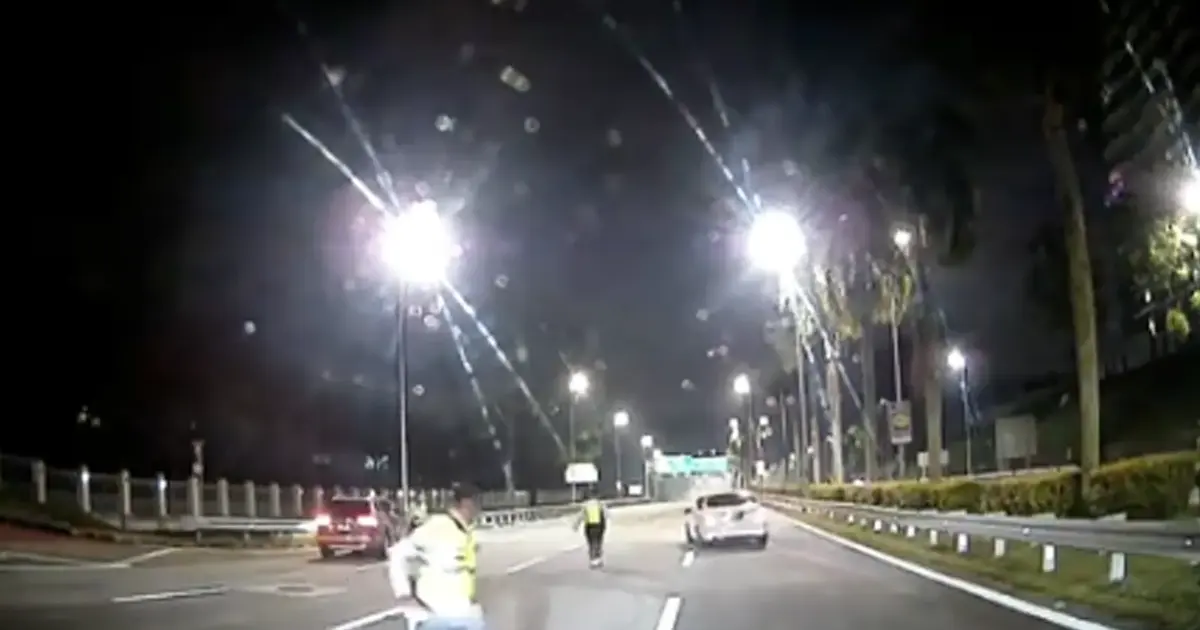
Authorities arrested a 20-year-old man today after he drove through an active police roadblock in a Mercedes, defying officers' instructions to stop. The incident underscores ongoing challenges law enforcement faces in managing traffic checkpoints and ensuring public compliance with security procedures, particularly when motorists demonstrate erratic behaviour that heightens officer concern.
The suspect's apparent nervousness during the encounter drew the attention of police personnel manning the checkpoint. Rather than halting as directed, he accelerated the vehicle and broke through the roadblock, forcing officers to pursue and ultimately apprehend him. Such incidents, while not uncommon, illustrate the unpredictable nature of roadside enforcement operations and the risks they pose to both police and the public.
Breach of a police roadblock represents a serious violation that compounds traffic offences with insubordination toward law enforcement. The charge of failing to comply with a police officer's lawful orders carries significant legal consequences in Malaysia and reflects the seriousness with which authorities treat such incidents. Courts typically view such behaviour as contemptuous, as it undermines the authority necessary for effective policing.
The circumstances surrounding why the driver attempted to evade the checkpoint remain under investigation. Whether he was fleeing a prior incident, carried contraband, lacked valid documentation, or simply panicked remains unclear. His apparent nervousness suggests internal distress that prompted the desperate manoeuvre rather than calm defiance, though this distinction carries little weight in legal proceedings. Police are likely conducting further interviews to establish motivation and determine whether additional charges are warranted.
Roadblocks serve multiple enforcement functions across Malaysia's highway system and urban areas. They allow officers to check vehicle documentation, identify wanted persons, detect driving under the influence, and intercept vehicles involved in crimes. Consequently, circumventing these checkpoints poses genuine public safety risks beyond the immediate regulatory violation. Such evasions complicate police intelligence-gathering and may signal criminal activity requiring investigation.
The incident highlights the vulnerability of officers stationed at roadblocks, who depend on motorist cooperation for both operational efficiency and personal safety. When drivers attempt forcible passage, situations can rapidly escalate and endanger everyone present. Training protocols for managing hostile encounters have become increasingly sophisticated, but preventative compliance remains the preferable outcome.
From a traffic management perspective, breaches occur periodically despite advanced warning signs and visible police presence. Some drivers misjudge stopping distances, others panic, and a minority deliberately attempt evasion. Modern checkpoints employ barriers, warning lights, and tactical positioning to prevent dangerous passages, yet determined drivers occasionally succeed in breaking through. This case illustrates why ongoing investment in checkpoint infrastructure and officer training remains essential.
The legal process ahead will determine appropriate sanctions for the offence. Malaysian courts consider factors including the driver's age, whether violence occurred, prior criminal history, and circumstances of the breach when determining sentences. A first-time offence by a young driver might result in substantial fines and driving license suspension, whereas repeat offenders or cases involving aggression face more severe penalties including imprisonment.
This arrest also reflects broader law and order operations within the jurisdiction. Police roadblocks occur with varying frequency depending on whether authorities are conducting focused enforcement campaigns against speeding, impaired driving, vehicle safety violations, or investigations into specific crimes. Understanding the operational context helps explain why checkpoints were positioned and what violation patterns officers were monitoring.
For motorists, the lesson remains straightforward: comply immediately with police instructions at roadblocks and raise any concerns through proper legal channels afterward. Attempting to breach checkpoints invariably worsens legal outcomes and creates unnecessary danger. The 20-year-old's situation demonstrates how momentary decisions during traffic enforcement encounters generate consequences extending far beyond the immediate checkpoint interaction.
Regionally, Southeast Asian countries employ similar roadblock protocols, though enforcement intensity and motorist compliance vary significantly. Malaysia's established checkpoint system serves as a model in some respects, though public perceptions of fairness and corruption occasionally undermine voluntary cooperation. Transparent operations and professional officer conduct strengthen overall compliance and public trust in enforcement initiatives.
Authorities have not yet disclosed whether the Mercedes vehicle itself featured in any outstanding investigation or whether it displayed documentation irregularities prompting additional police interest. Such details often emerge as investigations progress and may provide context for why the driver panicked. Regardless, deliberately breaching a police checkpoint constitutes an independent and serious violation requiring appropriate legal response.

