Two hundred motorcyclists in Renggam received RM5 fuel vouchers on June 25 as the National Security Council (MKN) rolled out a targeted assistance initiative aimed at providing immediate relief to daily commuters grappling with transportation costs. The distribution, carried out at the Jiwa@Komuniti MADANI Sembang Santai World Cup Edition programme in Kluang, underscores a policy shift towards direct support for grassroots communities, particularly those dependent on motorcycles for livelihood and daily travel.
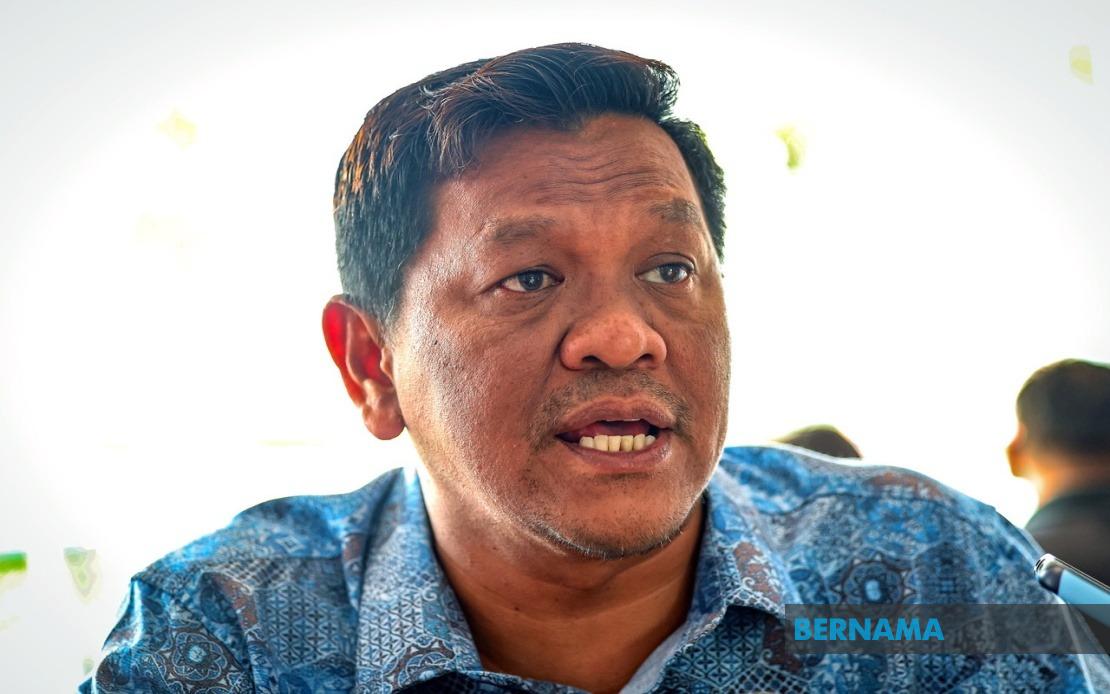
Abdullah Izhar Mohamed Yusof, political secretary to the Communications Minister, framed the initiative as evidence of government responsiveness to ordinary Malaysians facing economic pressures. He characterised the voucher scheme as a manifestation of broader concern for public welfare while simultaneously serving a secondary purpose of reinforcing national cohesion and solidarity. The timing and scale of the distribution—targeting a specific occupational group in a designated locality—suggests a calculated approach to building political goodwill among transport workers, a demographic often overlooked in national policy discussions.
The initiative diverges from conventional subsidy mechanisms by focusing on direct cash transfers rather than blanket fuel price controls. This approach allows the government to channel assistance precisely where it perceives need to be greatest, though it also raises questions about sustainability and equity across different regions and commuter groups. The deliberate engagement with motorcyclists, who represent a significant portion of Malaysia's informal transport sector, reflects acknowledgment that this population faces particular vulnerability to fuel price volatility.
Beyond the immediate economic relief, the programme served as a platform for broader government communication objectives. Concurrent with voucher distribution, representatives from MKN, the Information Department (JaPen), and the Department of Community Communications (J-KOM) conducted briefings on current policy matters and facilitated dialogue sessions with residents. This multifaceted approach suggests the government views local engagement as an opportunity not merely to distribute resources but to shape narrative around policy effectiveness and government legitimacy.
Abdullah Izhar emphasised that such programmes would become recurring fixtures rather than one-off gestures, positioning them as institutionalised channels for grassroots interaction. He articulated a vision of nationwide expansion, with the aim of ensuring equitable access to government information and initiatives across all societal segments. This rhetoric suggests the government perceives a significant information gap between its policy intentions and public understanding, viewing direct community engagement as essential to bridging that divide.
The voucher recipients themselves offered telling perspectives on the initiative's impact. M. Raja, a 56-year-old father of five from Taman Sri Jaya, expressed gratitude while simultaneously articulating hopes for programme enhancement and expansion to monthly distributions. His conditional optimism—appreciative yet aspirational—reflects the precarious financial circumstances of transport workers dependent on daily fuel costs. The modest RM5 voucher, while symbolically significant, addresses only a fraction of typical monthly fuel expenditure for motorcyclists who traverse considerable distances regularly.
Similarly, 66-year-old Hee Eeck Kwe from Kampung Baru emphasised appreciation that rural communities remained included in government assistance schemes. His comment underscores historical rural-urban disparities in service delivery and resource distribution, suggesting that grassroots communities have experienced exclusion from national initiatives. The fact that a voucher distribution warrants specific acknowledgment for including rural areas indicates broader structural inequities in how government programmes typically reach different communities.
For Malaysian readers and regional observers, this initiative reveals several important trends. First, it demonstrates government experimentation with targeted transfer mechanisms as an alternative or complement to universal subsidies, a policy direction increasingly common across Southeast Asia. Second, it highlights the political importance of transport-dependent informal sector workers, whose economic vulnerability makes them receptive to direct assistance. Third, the emphasis on concurrent information dissemination indicates government recognition that resource transfers must be accompanied by narrative management and policy communication.
The programme's significance extends beyond immediate financial assistance to reflect deeper questions about governance priorities and resource allocation. In an economic context where fuel costs remain substantial for lower-income groups, vehicle-dependent workers become important constituencies for government legitimacy. Yet the sustainability of such voucher schemes—and whether they represent long-term policy commitments or temporary political gestures—remains uncertain. The government's commitment to rolling out similar programmes nationally would require considerable budgetary allocation and administrative coordination across federal and state agencies.
From a regional perspective, Malaysia's approach to worker assistance through direct vouchers aligns with broader Southeast Asian trends toward means-tested and targeted transfers rather than universal subsidies. Countries throughout the region grapple with balancing fiscal responsibility against social safety net obligations, making targeted schemes increasingly attractive. However, the effectiveness of such programmes depends critically on accurate identification of beneficiaries, prevention of leakage, and public perception of fairness and sustainability.
The engagement dimension of these programmes also merits attention. By combining resource distribution with policy briefings and community dialogue, the government attempts to transform transactional assistance into relational governance. This strategy acknowledges that public trust depends not merely on resource transfers but on perceived government responsiveness to local concerns and effective communication about policy intentions. Whether such engagements genuinely influence public perception or function primarily as symbolic gestures remains an open question.
Looking forward, the trajectory of this initiative will indicate broader policy directions regarding income support, transport worker welfare, and government-community engagement in Malaysia. If expanded and sustained, such programmes could address genuine hardship among motorcyclists and informal transport workers. If instead they remain episodic and geographically limited, they may primarily serve political communication objectives without materially addressing systemic economic challenges facing transport-dependent workers throughout Malaysia's rapidly urbanising economy.

