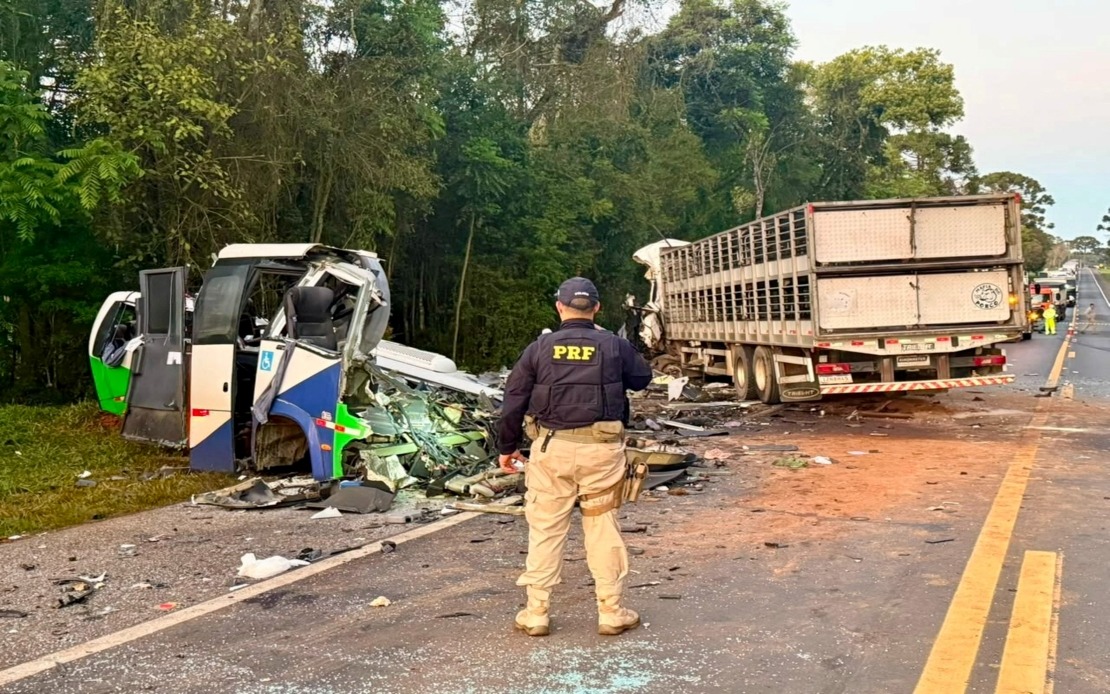
A catastrophic road accident in southern Brazil's Paraná state has claimed 23 lives after a minibus carrying hospital patients collided head-on with a heavy truck during the early hours of Wednesday morning. The collision occurred on a national highway near Ipiranga in the Campos Gerais region, marking one of the country's deadliest recent traffic incidents and prompting the state government to declare a three-day period of official mourning.
The minibus, operated by the local health service, was transporting patients to medical facilities in the greater Curitiba metropolitan area, approximately 200 kilometres from the accident site. According to preliminary investigations and eyewitness accounts, the truck appears to have crossed into the opposing lane, directly striking the minibus in a devastating head-on impact. The exact sequence of events leading to the vehicle encroachment remains under investigation by local authorities, though the catastrophic nature of the collision suggests neither driver had sufficient time to take evasive action.
Among the 23 fatalities were 13 women, eight men, and two children. The truck driver was also killed in the collision. Five additional passengers sustained injuries and were transported to nearby hospitals for treatment. The identity of the patients and their medical conditions at the time of travel have not been publicly disclosed, though officials confirmed they were being moved between healthcare facilities as part of routine patient transfers.
The accident site, located on a national highway that connects multiple regions across southern Brazil, was completely sealed off and secured for investigation purposes over several hours. The road in question operates as a two-lane thoroughfare in numerous sections, limiting capacity for emergency manoeuvring and leaving vehicles vulnerable in head-on collision scenarios. This infrastructure limitation has long been flagged as a safety concern, particularly for high-traffic routes serving major population centres.
For Malaysian readers and broader Southeast Asian observers, this tragedy underscores critical road safety challenges that transcend national boundaries. Patient transport operations across the region often utilise similar minibus arrangements, and the circumstances here—a daytime accident on a major highway involving a medical convoy—represent risks that highway authorities and health ministries throughout Southeast Asia must actively manage. The collision's severity raises questions about vehicle maintenance standards, driver fatigue protocols, and whether proper safety oversight exists for health service transport operations.
The Paraná State Secretariat for Public Security released an official statement confirming casualty figures and indicating that investigations into the incident's cause are ongoing. Preliminary forensic examination of both vehicles, roadway conditions, and weather patterns will form the basis of the formal accident reconstruction report. The decision to declare three days of state mourning reflects the gravity of the incident within the regional consciousness and acknowledges the tragedy affecting multiple families simultaneously.
Road safety statistics consistently demonstrate that head-on collisions produce among the highest fatality rates in vehicular accidents, particularly when vehicles are travelling at highway speeds and one or both are unable to manoeuvre away from impact. The two-lane configuration of many sections along this national corridor creates a heightened danger zone where any loss of vehicle control or momentary driver inattention can have lethal consequences across multiple occupants. Infrastructure improvements, including the installation of physical barriers separating opposing traffic streams in high-risk sections, are standard safety interventions in developed road systems but remain incomplete across many Latin American highways.
The incident also raises operational questions about medical transport scheduling and driver welfare policies. Patient transfer operations frequently occur during overnight or early morning hours to minimise disruption to hospital operations and reduce traffic congestion. However, such timing can coincide with driver fatigue cycles, potentially compromising reaction times at critical moments. Whether adequate rest periods and fatigue management protocols were in place for the minibus driver cannot yet be determined from available information.
Brazilian federal and state authorities will likely intensify investigations into the truck driver's background, including recent driving records, mechanical condition of the vehicle, and any prior citations for traffic violations or unsafe driving patterns. Similarly, the minibus operator's maintenance records and driver scheduling practices will come under scrutiny to determine whether organisational factors contributed to the collision.
For the broader regional context, this tragedy serves as a sobering reminder that despite economic development and urbanisation, highway safety remains a critical vulnerability across South America and indeed throughout the developing world. Investments in modern road infrastructure, enforcement of traffic regulations, and comprehensive driver training programmes remain essential priorities if fatality rates on major trunk routes are to decline substantially. The incident will likely prompt renewed discussions within Brazilian transport ministry circles regarding mandatory safety features for patient transport vehicles and revised protocols for overnight medical transfers on high-risk routes.

