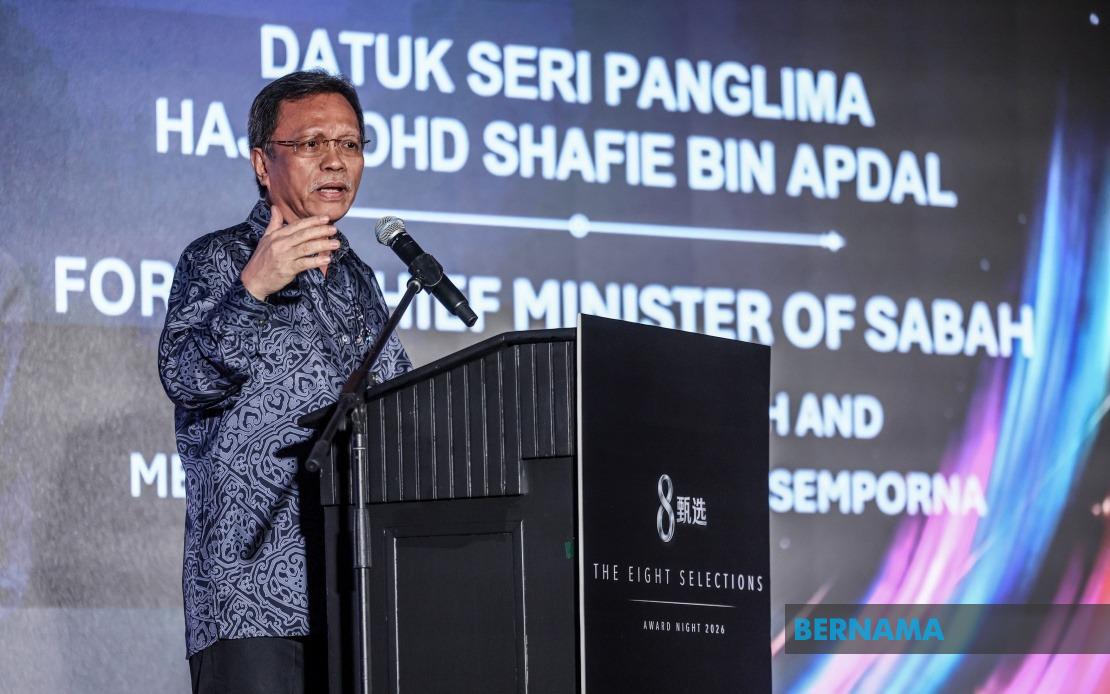
Malaysia's entrepreneurial community gathered for a prestigious recognition ceremony as 28 business leaders and brand founders received honours for their contributions to the nation's commercial landscape at the G Forty Top 40 The Eight Selections Award 2026, held in Kuala Lumpur on July 18. The event, orchestrated by G Media Asia in collaboration with Media Prima OMNiA, drew approximately 300 attendees spanning industry executives, founders, professionals and corporate representatives from diverse sectors across the country. The recognition programme underscores the growing emphasis on documenting and celebrating the individuals and organisations shaping Malaysia's evolving business environment.
Former Sabah Chief Minister Datuk Seri Mohd Shafie Apdal officiated the ceremony, lending high-level political endorsement to the event. G Media Asia chairman Datuk Wira Dr Calvin Khiu and Media Prima OMNiA Chief Operating Officer of Agency Solutions Stephanie Wong also graced the occasion, reflecting the collaboration between media, business and corporate sectors in recognising entrepreneurial achievement. The participation of such figures highlights the recognition that Malaysia's business narrative carries significance beyond commercial metrics, touching on broader questions of economic leadership and national development.
The awards structure encompasses eight primary categories designed to capture different dimensions of entrepreneurial success. Young Entrepreneur of the Year acknowledges emerging business leaders, while Male Entrepreneur of the Year and Female Entrepreneur of the Year recognise gender-specific achievements in entrepreneurship. The Era Influence Representative of the Year category captures contemporary business figures whose impact resonates beyond their immediate ventures. Brand-focused categories—Brand Heritage of the Year, Brand Innovation of the Year, Brand Influence of the Year, and Brand Social Value of the Year—acknowledge that modern business success extends beyond product quality to encompass brand positioning, consumer perception and corporate social responsibility.
Supplementing the main awards, the Icons of the Era Honours programme provides special recognition through the G Icon Legacy Award and G Icon Award, specifically designed to celebrate enterprises demonstrating sustained industry leadership, widespread influence and enduring market viability. This dual-tiered approach reflects a nuanced understanding that entrepreneurial impact operates across multiple timescales and dimensions. Newer ventures and emerging leaders gain visibility alongside established enterprises that have weathered market changes and maintained relevance across decades.
According to Cathy Ooi, Chief Executive Officer of G Media Asia, the fundamental purpose of such recognition programmes transcends the presentation of trophies and certificates. Ooi articulated that measuring an entrepreneur's or organisation's true value involves considerations far broader than conventional accolades alone. The media's role, she argued, extends to documentation, dissemination and validation of business narratives—functions increasingly vital as marketplace complexity deepens and consumer decision-making incorporates factors beyond transactional economics.
Ooi emphasised that contemporary business competition operates on multiple fronts simultaneously. Product and service quality remain important, certainly, but brand reputation, public trust and perceived values now constitute decisive competitive factors. Consumers increasingly align their purchasing decisions with organisations whose missions, ethics and community engagement mirror their own convictions. This shift demands sophisticated engagement with public narratives and stakeholder communication strategies, not mere operational excellence.
G Media Asia's strategic approach seeks to leverage media platforms to chronicle business achievements and entrepreneurial narratives deserving preservation and dissemination. By positioning Malaysian entrepreneurship as a catalyst for social and economic advancement, the organisation connects individual business success to broader national development objectives. This framing resonates particularly in Southeast Asia, where entrepreneurship increasingly represents pathways for economic mobility, job creation and competitive positioning amid global economic shifts.
The gathering itself constituted a microcosm of Malaysia's contemporary business environment. The geographic and sectoral diversity represented among the 300 attendees suggests that entrepreneurial activity spans traditional industries alongside emerging sectors driven by technological innovation and changing consumer preferences. Such representation provides valuable intelligence regarding which business narratives and leadership models currently command industry respect and media attention.
The timing of the awards ceremony—occurring in mid-2026—positions these recognitions within a critical juncture for Malaysian business. The economy navigates post-pandemic normalisation while confronting international competitive pressures, technological disruption and shifting consumer behaviours. Platforms that identify and celebrate effective adaptive strategies within the business community serve important functions beyond ceremonial acknowledgment, potentially offering other entrepreneurs and organisations instructive examples of successful navigation through complex environments.
For Malaysian and Southeast Asian business observers, such recognition programmes offer insight into qualities currently valued within regional entrepreneurial contexts. The emphasis on brand influence, innovation capacity, social value and heritage sustainability suggests that Malaysian business leadership increasingly incorporates dimensions of corporate citizenship alongside profit generation. The inclusion of women entrepreneurs as a discrete award category reflects both growing female participation in business ownership and deliberate efforts to amplify women's contributions to economic development.
The G Forty Top 40 awards framework ultimately reflects broader transformations in how entrepreneurial achievement is conceptualised and celebrated. Rather than focusing exclusively on financial metrics or market share, the programme's structure recognises that modern business success involves storytelling, brand stewardship, stakeholder engagement and contribution to social objectives. For aspiring entrepreneurs and established business leaders throughout Malaysia and the region, such recognition mechanisms signal which entrepreneurial qualities enjoy contemporary currency and respect, thereby potentially influencing strategic priorities and organisational culture development across the business landscape.

