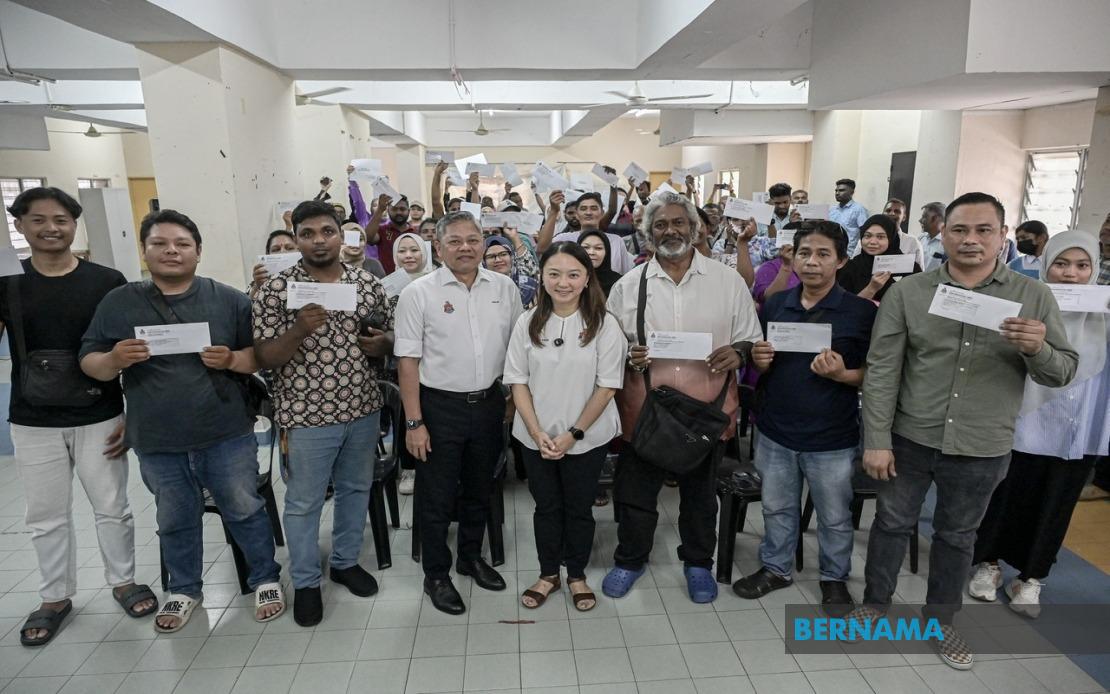
Nearly 3,000 applicants continue to wait for public housing units managed by Kuala Lumpur City Hall under the People's Housing Programme, Federal Territories Minister Hannah Yeoh revealed during a visit to PPR Seri Pantai in Pantai Dalam. The persistent backlog reflects ongoing demand for affordable housing in Malaysia's capital, where lower-income families face significant barriers to homeownership. Yeoh's remarks underscore the challenges facing the government's efforts to address housing shortages for the B40 income group, who form the primary beneficiaries of the PPR scheme.
The allocation process for available PPR units follows a strictly merit-based approach centred on application order, with priority extended only to B40 households that satisfy DBKL's specified requirements. This transparent methodology aims to ensure fairness, though the extended waiting period suggests the supply of vacant units falls considerably short of demand. Beyond standard residential allocations, the housing authority has strategically reserved units for personnel from the police and fire departments, recognising the value of having emergency responders embedded within residential communities. Such placements enable faster response times during crises and foster closer relationships between enforcement agencies and residents, a model increasingly adopted in urban housing schemes across the region.
The same allocation batch included designated units for families displaced by fire or other catastrophic losses, acknowledging the role public housing plays as a safety net for vulnerable populations. On a single visit, Yeoh presented offer letters to 29 successful recipients, providing them access to the newly vacant units. The ceremony demonstrated the government's continued commitment to processing applications and moving families into permanent homes, though the rate of allocation relative to the 3,000-strong queue suggests the process will extend considerably into the future.
Beyond residential matters, Yeoh's visit addressed livelihood concerns affecting the broader community. The delegation distributed offer letters for hawker centre premises to 40 local traders operating across eight parliamentary constituencies throughout Kuala Lumpur. This initiative reflects recognition that affordable housing addresses only part of the affordability challenge; securing stable commercial spaces at reasonable rates directly impacts the incomes of street-level entrepreneurs who sustain the city's informal economy. Traders operating from government-managed hawker centres benefit from regulated rental rates and municipal support, reducing vulnerability to sudden rent increases or eviction.
Infrastructure improvements at PPR Seri Pantai, completed at a cost of RM2,587,100, exemplify the government's broader maintenance strategy for public housing estates. The 936-unit complex, which began operations in 1998, underwent comprehensive upgrades spanning multiple systems. Lift facilities received renewed attention to ensure reliability and safety in high-rise buildings where mechanical access proves essential for elderly residents and those with mobility constraints. Resurfaced roads and enhanced lighting systems improve both functionality and security, addressing common safety concerns in densely populated estates. Water pump systems underwent modernisation to ensure consistent supply, a critical service in humid tropical climates. Upgraded fire prevention infrastructure represents a particularly vital investment in residential safety, complementing the presence of dedicated fire personnel stationed within such communities.
The RM2.59 million expenditure at PPR Seri Pantai forms part of an ambitious RM300 million citywide initiative aimed at upgrading all Public Housing and PPR units across Kuala Lumpur. This substantial financial commitment reflects official recognition that public housing stock accumulated over decades requires systematic renewal to maintain livability standards. The children's playgrounds upgraded at PPR Seri Pantai serve multiple purposes: they provide safe recreational spaces for young residents, encourage community interaction, and contribute to psychological well-being in urban settings. Such amenities transform public housing from purely functional shelter into environments supporting healthy development.
Progress toward completing the broader upgrade programme remains on schedule. Twenty-five of sixty-four PA and PPR projects have already concluded their enhancement works, with remaining sites targeted for completion by year's end. This phased approach allows the city hall to manage budgets and contractor resources efficiently while maintaining momentum across the programme. The timeline suggests the government expects to deliver modernised facilities to tens of thousands of residents within a defined period, delivering measurable improvement in housing quality for a significant segment of Kuala Lumpur's population.
Yeoh's emphasis on resident stewardship of upgraded facilities carried particular significance. She noted that the public funds invested in these improvements ultimately belong to the community itself, framing maintenance and care as a collective responsibility rather than external imposition. This message acknowledges that even well-executed upgrades require ongoing protection from vandalism and neglect to retain their value. In Malaysian public housing estates, resident engagement and community pride directly correlate with facility longevity and the success of maintenance efforts.
For Malaysian policymakers and housing advocates, the persistent 3,000-strong waiting list poses a strategic question: whether current production rates can eventually clear the backlog or whether underlying demand fundamentally exceeds supply capacity. The situation mirrors challenges facing other Southeast Asian capitals grappling with rapid urbanisation and limited affordable housing. The PPR scheme demonstrates government commitment to B40 housing, yet the data suggests that expanding unit production may require additional funding mechanisms or development approaches. The simultaneous focus on trader livelihoods through hawker centre allocations reflects holistic thinking about urban poverty, recognising that housing alone cannot address economic vulnerability without complementary efforts supporting income generation. Kuala Lumpur Mayor Datuk Seri Fadlun Mak Ujud's presence at the event signalled municipal-level alignment with federal initiatives, essential for implementing citywide housing and livelihood improvements.

