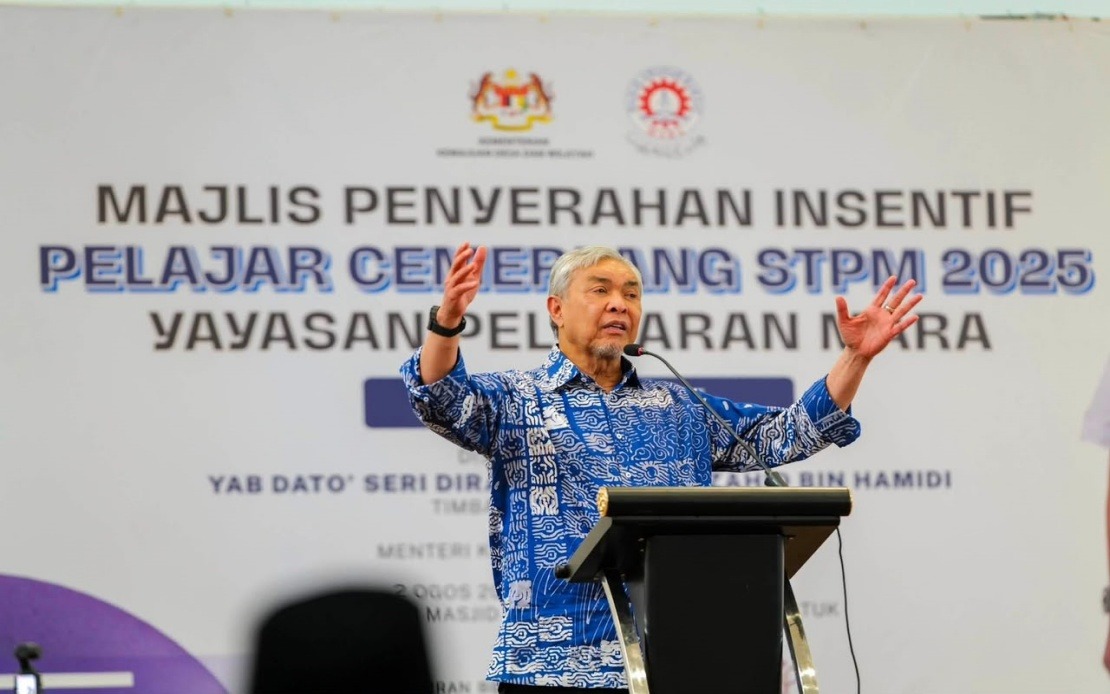
Thirty-eight students from two secondary schools in Bagan Datuk have been recognised for their exceptional performance in the 2025 Sijil Tinggi Pelajaran Malaysia examination, receiving incentive awards from Yayasan Pelajaran MARA (YPM). The honour reflects the strong academic calibre emerging from Sekolah Menengah Kebangsaan Khir Johari and SMK Tun Abdul Razak, both institutions serving the Perak constituency.
Deputy Prime Minister Datuk Seri Dr Ahmad Zahid Hamidi, who represents Bagan Datuk in Parliament, presented the recognition and took the opportunity to highlight broader success stories from the district's education sector. Beyond the STPM cohort, three students from the area have earned admission to Al-Azhar University in Egypt, where they plan to pursue specialist studies in Islamic Syariah and Usuluddin. This international achievement underscores how local talent, when properly nurtured, can access world-class educational opportunities across traditional fields of Islamic scholarship.
The recognition extends further into the community. Alongside the STPM Excellence Incentive recipients, an additional 23 students from the same schools qualified for support under the YPM Education Compassionate Fund. This layered approach to educational assistance demonstrates how scholarship programmes can address both merit-based achievement and financial need, ensuring that economic circumstances do not prevent capable students from progressing through higher education.
Zahid emphasised that the scale of achievement in Bagan Datuk validates a fundamental philosophy about human potential. He argued that students from the district possess significant capability when provided with the necessary environment, expert guidance, and sustained encouragement. This observation carries particular resonance in Malaysia's context, where regional disparities in educational infrastructure and resource allocation remain a persistent challenge. The success emerging from Bagan Datuk suggests that commitment and proper institutional support can substantially overcome such geographical disadvantages.
The Deputy Prime Minister positioned education as a transformative force extending beyond individual advancement to reshape entire communities. His remarks reflect a broader policy perspective within government circles that views educational investment as foundational to long-term development and social mobility. For Bagan Datuk specifically, the emergence of high-achieving cohorts signals momentum that can attract further institutional attention and resources to the district's schools.
Parental involvement features prominently in Zahid's analysis of these results. He called upon families to recognise their critical role as sources of strength and motivation as young people navigate the demands of rigorous academic programmes. This emphasis on family support acknowledges that examination success, particularly in advanced qualifications like STPM, requires encouragement and stability beyond what schools alone can provide. Malaysian educational culture has increasingly recognised that parental engagement correlates strongly with student outcomes, making Zahid's appeal to families a pragmatic dimension of educational policy messaging.
The Deputy Prime Minister expressed optimism about the trajectory of Bagan Datuk's youth, articulating hope that more students will pursue tertiary education at recognised institutions both domestically and internationally. Importantly, he framed this aspiration within a narrative of return and contribution, suggesting that the ultimate purpose of advanced education extends beyond individual career advancement to encompassing service to one's community. This perspective reflects traditional Malaysian values emphasising reciprocal obligations between individuals and their constituencies, where educational opportunity carries implicit expectations of future engagement with community development.
The YPM scheme operates as a significant instrument of educational policy in Malaysia, particularly for students demonstrating academic excellence at pre-university level. The foundation's role in identifying and supporting high-performing cohorts creates pipelines into further education that might otherwise remain inaccessible to students from modest backgrounds. The concentration of awards in Bagan Datuk suggests effective institutional collaboration between schools and YPM in identifying deserving candidates and facilitating their progression.
The recognition of these students also carries political dimensions worth noting. As the local Member of Parliament, Zahid's public celebration of educational achievement in his constituency demonstrates investment in narratives of progress and development. For residents of Bagan Datuk, the visibility of their children's accomplishments through official channels reinforces perceptions of constituency advocacy and government attention to local priorities. Such recognition, though symbolic, contributes to political messaging around developmental outcomes in the area.
Looking forward, the concentration of STPM success and international scholarship placements in Bagan Datuk suggests that the district may be developing educational momentum that could benefit younger cohorts. As these high-achieving students progress into professional fields and potentially return to contribute locally, they may become mentors and advocates for education within their own communities. This intergenerational effect, where educational success breeds further achievement, remains one of the most significant long-term benefits of merit-based scholarship programmes in Malaysia.

