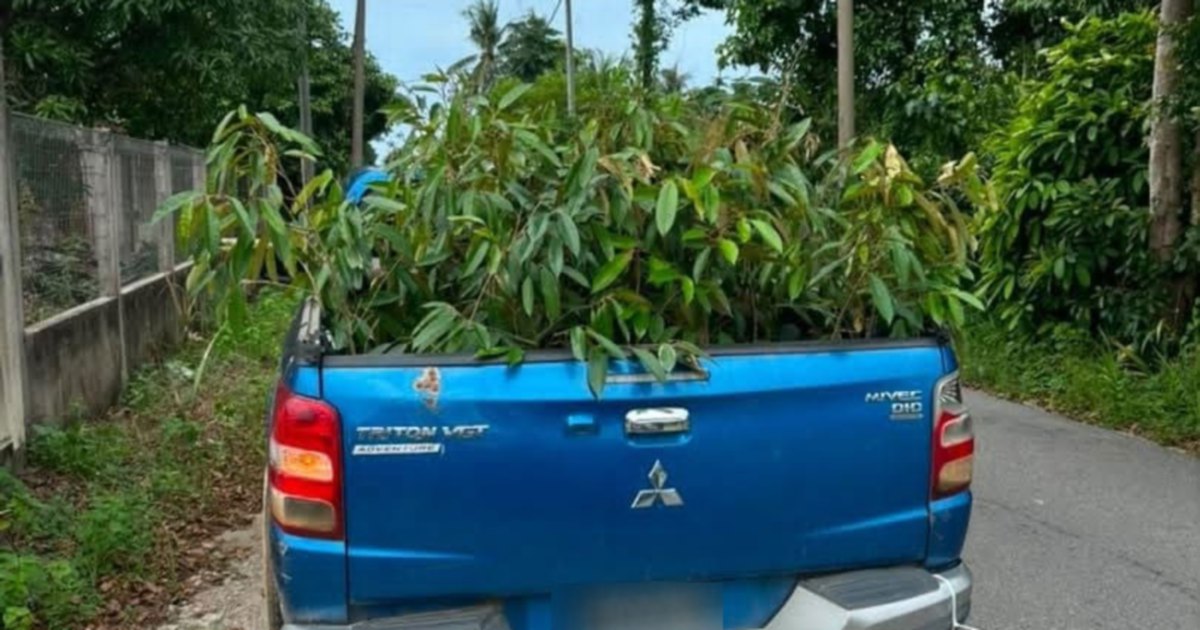
A 55-year-old man has been taken into custody following a swoop by the General Operations Force (GOF) in Tumpat, Kelantan, which resulted in the seizure of 52 durian saplings suspected to be contraband from Thailand. The operation, conducted yesterday, highlights persistent challenges Malaysian authorities face in combating agricultural smuggling at the northern border—a region where porous boundaries and high-value crop trafficking continue to vex enforcement agencies.
The detention underscores growing concerns about illicit movement of plant material across the Malaysia-Thailand frontier. Durian, Malaysia's celebrated "King of Fruits," commands premium prices both domestically and internationally, making saplings and breeding stock attractive targets for smugglers seeking to circumvent regulatory controls and export duties. The capture of such a substantial quantity suggests a coordinated effort rather than casual border activity, pointing to organised networks engaged in moving botanical contraband.
Border security remains a critical flashpoint in the northern corridor, where Kelantan's topography—marked by river systems, rural pathways, and dispersed settlements—creates enforcement difficulties. The Tumpat district, positioned at the gateway between Malaysia and Thailand, experiences steady cross-border trade and movement, both legal and otherwise. Authorities must balance legitimate commercial activity with preventing unauthorised import of plants that could carry disease, genetic material, or represent theft of intellectual property or regional botanical resources.
The confiscation exemplifies the broader challenge of protecting Malaysia's agricultural sector from external threats. Durian cultivation requires significant investment and knowledge accumulated over generations of farming. Unauthorised saplings from neighbouring jurisdictions could potentially carry pathogens, alter genetic diversity, or undermine the value of domestically-bred varieties that have been developed and protected through agricultural research programmes. The smuggling route also suggests potential gaps in import documentation and phytosanitary controls that regulate plant movement.
Durian's economic significance cannot be overstated. Malaysia remains one of the world's largest durian producers, with the fruit generating substantial export revenue—particularly to China and other Asian markets where demand has surged dramatically in recent years. Any disruption to supply chains, genetic integrity, or market confidence carries implications beyond the immediate seizure. Legitimately-imported breeding stock and saplings flow through official channels with proper quarantine and documentation; contraband material bypasses these safeguards entirely.
The GOF operation reflects increased attention to border smuggling that extends beyond drugs to encompass high-value agricultural commodities. Malaysian enforcement agencies have increasingly recognised that cross-border trafficking encompasses wildlife, timber, plants, and agricultural products alongside traditional contraband. This expansion of focus represents a maturation of border security strategies that acknowledge economic crimes with environmental and agricultural dimensions.
Thailand and Malaysia have long navigated complex trade relationships in agricultural products, with durian cultivation developing substantially on both sides of the border. Farmer networks and commercial interests sometimes clash with regulatory frameworks designed to protect domestic production, ensure biosecurity, and maintain export standards. Smuggling typically emerges where regulations create perceived inequities, costs, or delays that incentivise circumvention, suggesting that enforcement alone cannot fully address root causes without complementary policy frameworks.
The arrest and seizure will likely trigger investigation into supply sources and intended recipients. Authorities will seek to establish whether the saplings were destined for domestic cultivation by individuals seeking to bypass licensing requirements, or whether they represented part of broader export-oriented schemes. Understanding the distribution network becomes essential for disrupting similar operations and identifying organisers rather than merely apprehending individuals found with contraband.
For Malaysian durian growers, border enforcement efforts provide some assurance that domestic markets and genetic lines face reduced pressure from uncontrolled foreign importation. However, the continued discovery of smuggled saplings suggests that regulatory deterrents remain insufficient, and that demand—whether from individual farmers wanting to expand operations or from speculators betting on durian profitability—continues to fuel illicit trade. The case demonstrates that agricultural security comprises a critical but often overlooked dimension of national border integrity, with implications for rural livelihoods, food security frameworks, and Malaysia's competitive position in premium global fruit markets.

