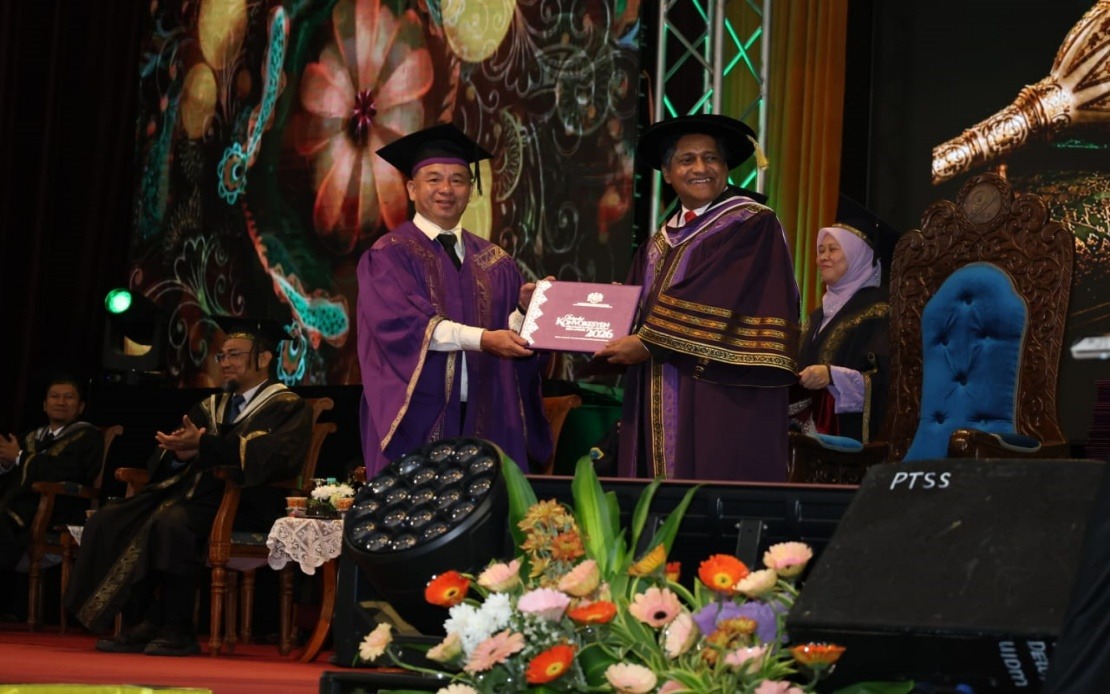
Heng Meng Lai's achievement at Seberang Perai Polytechnic (PSP) this year stands as a powerful reminder that educational aspirations need not be constrained by the passage of time. At 57, the Bukit Mertajam resident made history by becoming the institution's oldest diploma graduate, receiving his qualification in Electrical and Electronic Engineering during the PSP Convocation Ceremony 2026. His journey from dreaming of further education to finally holding his diploma represents not merely a personal milestone but also a statement about the transformative potential of adult learning in Malaysia's emerging lifelong education landscape.
The path leading to Heng's graduation spans nearly five decades of deferred ambitions. Born into a family of seven siblings, he experienced early hardship when his father's death left his mother as sole provider, working long hours in a sewing factory to sustain the household. These formative struggles became the wellspring of his determination to pursue education as a means of self-improvement. Despite facing financial constraints and the pressing demands of earning a livelihood, Heng harboured an unwavering conviction that educational advancement remained within his reach, even if it would require patience and persistence.
Heng's career trajectory prior to his polytechnic studies provided both stability and inspiration for his chosen field. He worked initially as a storekeeper before progressing to a supervisory role on production lines at an electronics manufacturing facility. This professional experience proved instrumental in directing his academic interests toward electrical and electronic engineering. Rather than viewing his work history as separate from his studies, Heng recognised the synergy between practical factory experience and formal technical education, understanding that his polytechnic qualification would deepen and formalise knowledge he had already begun acquiring through years of hands-on employment.
What distinguishes Heng's experience at PSP is the institutional culture that welcomed him despite the significant age gap separating him from his classmates. Lecturers provided patient guidance tailored to his needs, recognising that returning to structured learning after such a prolonged absence presented particular challenges. Rather than experiencing marginalisation or feeling out of place, Heng encountered consistent encouragement from faculty members committed to his success. This supportive environment proved crucial in enabling him to navigate the academic rigours of the programme while simultaneously adjusting to the rhythms and expectations of student life in an era vastly different from his youth.
The significance of Heng's achievement extends beyond personal satisfaction into broader questions about Malaysia's human capital development strategy. PSP's director, Mohd Ruzi Hamzah, positioned the graduate's success within the national framework of lifelong learning and skill development. The institution's commitment to serving all segments of society—regardless of age or prior educational attainment—reflects government policy objectives around creating a flexible, inclusive education system capable of responding to diverse population needs. As Malaysia navigates technological transitions and evolving labour market demands, adult learners like Heng represent untapped reservoirs of motivation and experience.
Heng's forward trajectory demonstrates that his polytechnic diploma represents an intermediate milestone rather than a terminus. He intends to return to employment, applying his newly formalised technical knowledge in practical settings before subsequently pursuing a bachelor's degree. This phased approach reveals sophisticated planning around career progression and continuous skill acquisition. His determination to undertake further study following diploma completion suggests that once barriers to returning to education have been overcome, the momentum toward continued learning often accelerates. For other adults contemplating return to study, Heng's progression pathway offers tangible evidence that advancing educational credentials remains achievable across multiple stages of life.
The Malaysian context renders Heng's accomplishment particularly noteworthy. In a region where rapid economic transformation and technological disruption frequently outpace the skills available in the existing workforce, adult education and reskilling initiatives assume critical importance. Many workers in their fifties face potential obsolescence as industries evolve, yet conventional education pathways often seem inaccessible or prohibitively demanding. Heng's experience at PSP suggests that polytechnic institutions can serve this demographic effectively, bridging the gap between aspirational adults and structured technical qualifications.
Heng's personal circumstances—unmarried, without dependent dependents—certainly facilitated his ability to commit two to three years to full-time study. Not all adults contemplating return to education enjoy similar flexibility. His story, while inspiring, implicitly raises questions about accessibility for those managing family obligations, caregiving responsibilities, or financial pressures that may prevent extended absence from the workforce. Nonetheless, his example establishes that even under favourable circumstances, the psychological and logistical hurdles to returning to formal education at an advanced age remain substantial. His persistence in surmounting these obstacles commands recognition.
The intergenerational dimensions of Heng's achievement merit consideration as Malaysia ages demographically. With life expectancy increasing and retirement ages potentially extending, the population cohort aged 55 and beyond represents an expanding segment with potentially decades of productive contribution remaining. Educational institutions capable of engaging this population effectively position themselves to address skills shortages while simultaneously enhancing quality of life and social engagement for older Malaysians. PSP's demonstrated success with Heng suggests a replicable model for other polytechnics and educational institutions across Southeast Asia confronting similar demographic shifts.
Heng's reflection that learning carries no age limit encapsulates a philosophical stance increasingly embraced by progressive educators and policymakers. Yet translating this sentiment into institutional practice requires deliberate effort. Faculty training around pedagogical approaches suitable for adult learners, curriculum design reflecting diverse maturity levels, and support systems acknowledging the particular challenges facing older students all demand resource allocation and institutional commitment. PSP's success with Heng indicates that such investments yield measurable returns in retention, achievement, and institutional reputation.
Looking forward, Heng's trajectory within the electronics field aligns with Malaysia's broader industrial development ambitions. The nation's continued advancement in high-technology manufacturing and electronics-based industries depends substantially on workers possessing formal technical qualifications. Heng's determination to translate his practical factory experience into certified expertise contributes, however incrementally, to this national objective. His subsequent pursuit of a bachelor's degree could potentially position him for supervisory, training, or technical support roles leveraging both his field experience and advanced qualifications.
The ripple effects of Heng's achievement within his family and community may prove as significant as the immediate accomplishment. Having overcome substantial barriers to education, he now exemplifies to younger relatives that formal qualifications remain attainable across the lifespan. In Malaysian families where educational aspiration often centres on children and young adults, Heng's maturity-stage success might inspire aunts, uncles, and other family members to reconsider their own educational possibilities. Communities witnessing such achievements become more receptive to lifelong learning messaging and more willing to invest in continued skill development.
Ultimately, Heng Meng Lai's record at Seberang Perai Polytechnic transcends a simple feel-good narrative about overcoming obstacles. His achievement illuminates possibilities within Malaysia's education system, demonstrates institutional capability to serve non-traditional learners effectively, and provides evidence supporting policy commitments to lifelong learning. As the nation confronts economic transitions requiring continuous workforce reskilling, examples like Heng's validate the significance of keeping educational pathways open, welcoming, and practically accessible to citizens at all life stages. His diploma represents not merely personal accomplishment but a template for institutional response to demographic and economic imperatives reshaping Malaysian society.

