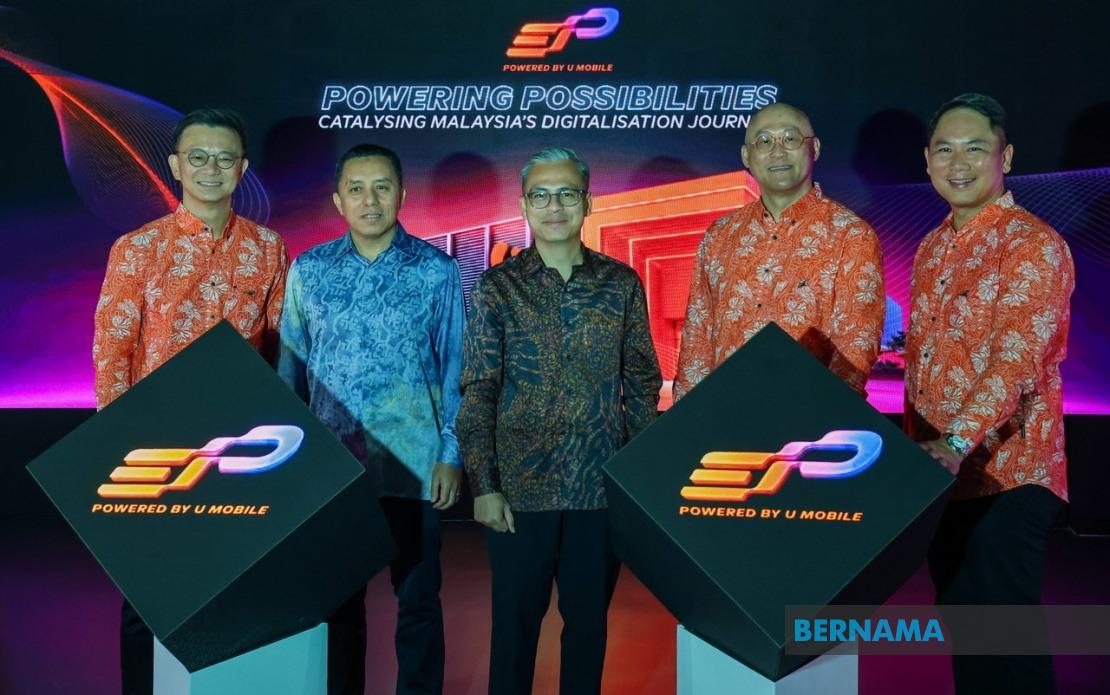
Communications Minister Datuk Seri Fahmi Fadzil has thrown his weight behind 5G Advanced technology as a transformative tool for Malaysia's key economic sectors, emphasising its capacity to reshape operational practices in healthcare, agriculture and retail. Speaking at the launch of the U Mobile Enterprise Innovation Platform Hub here today, Fahmi underscored the substantial opportunities presented by the latest evolution of mobile network architecture, positioning the technology as a catalyst for nationwide productivity gains across multiple industries.
The minister's vision extends beyond theoretical benefits, grounding his assessment in practical applications already visible across Malaysian enterprises. In hospital settings, he noted that 5G Advanced could materially alleviate pressure on nursing staff by automating routine tasks and streamlining ward operations, ultimately freeing healthcare professionals to focus on patient care. The underlying technology harnesses both artificial intelligence and robotics capabilities, creating an ecosystem where machines handle repetitive labour while humans concentrate on higher-value clinical decision-making. This integration represents more than incremental efficiency—it addresses Malaysia's well-documented healthcare workforce challenges, where nurse-to-patient ratios remain a persistent bottleneck in expanding capacity.
The agricultural sector stands to gain equally substantial benefits from 5G Advanced deployment, particularly across palm oil plantations where the government has sought technological modernisation to maintain global competitiveness. Ultra 5G networks enable remote monitoring systems, automated harvesting coordination, and predictive maintenance capabilities that collectively enhance yields while reducing labour strain. Fahmi explicitly cited oil palm operations as a sector where productivity improvements could measurably improve economic returns, signalling that the government views this technology adoption as integral to Malaysia's agricultural modernisation strategy.
Retail applications leverage 5G Advanced's sophisticated data analytics infrastructure to furnish businesses with granular insights into consumer behaviour patterns and inventory dynamics. Real-time analytics powered by the technology's enhanced processing capabilities allow retailers to optimise stock levels, anticipate demand fluctuations, and customise product offerings to match regional preferences. For Malaysian retailers competing against increasingly sophisticated e-commerce platforms, this represents a meaningful opportunity to enhance the in-store experience while reducing operational costs associated with excess inventory or stockouts.
Beyond commercial applications, Fahmi identified strategic security advantages from 5G Advanced infrastructure, particularly regarding border surveillance and protection. The minister highlighted that drone operations powered by 5G networks are already being tested in select locations across Malaysia for monitoring purposes, with specific applications at border areas where traditional surveillance methods face geographic and logistical constraints. Drones equipped with high-resolution imaging and real-time data transmission capabilities offer Malaysian authorities enhanced situational awareness across maritime and terrestrial boundaries, addressing security challenges in regions where infrastructure development has historically lagged.
The minister called upon relevant agencies including the Malaysian Border Control and Protection Agency (AKPS) and the Royal Malaysia Police (PDRM) to conduct thorough assessments of 5G-powered surveillance technology suitability. This measured approach reflects recognition that while technological potential is substantial, implementation must align with operational requirements, budgetary constraints, and coordination across multiple agencies. Effective deployment requires inter-agency collaboration and careful integration with existing security protocols rather than wholesale technological replacement.
Fahmi further emphasised that the Malaysian Communications and Multimedia Commission (MCMC) stands ready to partner with relevant government ministries, particularly the Home Ministry, to expand internet coverage in border regions. This commitment signals understanding that surveillance technology deployment depends upon robust underlying connectivity infrastructure. Border areas, often characterised by sparse population density and challenging terrain, require targeted investment in network coverage to enable drone operations and other intelligence-gathering systems. MCMC's proactive positioning suggests the communications sector is prepared to support national security objectives through infrastructure development.
5G Advanced, formally designated as Ultra 5G, represents the latest iteration of fifth-generation mobile technology, built upon a 5G Standalone (SA) architecture that distinguishes it from earlier-generation 5G implementations relying on legacy 4G infrastructure. This architectural foundation enables genuine enterprise-grade connectivity characterised by ultra-low latency, a critical requirement for real-time applications in healthcare, industrial automation, and security operations. Network slicing capabilities allow operators to partition bandwidth according to specific application requirements, ensuring that mission-critical operations maintain consistent performance even during periods of high overall network utilisation.
The technology delivers doubled network capacity compared with conventional 5G standards, addressing anticipated bandwidth demands from emerging applications including augmented reality, autonomous systems, and high-definition video streaming. Enhanced artificial intelligence-powered security represents another significant advancement, incorporating machine learning capabilities to identify and respond to cyber threats more rapidly than traditional approaches. For Malaysian enterprises handling sensitive data across healthcare, financial, and government sectors, this security enhancement addresses growing vulnerabilities from increasingly sophisticated cyber attacks targeting critical infrastructure.
From a regional perspective, Malaysia's exploration of 5G Advanced applications positions the country alongside global technology leaders in adopting next-generation mobile capabilities. The technology adoption signals confidence in Malaysia's digital infrastructure maturity and readiness to support advanced enterprise applications. As Southeast Asian nations compete for investment in technology manufacturing and digital services, demonstrable 5G Advanced deployment creates competitive advantage in attracting multinational corporations seeking locations with sophisticated connectivity infrastructure.
The government's measured approach—combining enthusiastic endorsement with calls for systematic agency assessment rather than rushed implementation—reflects pragmatic policymaking. This suggests that while 5G Advanced enjoys strong political backing, deployments will proceed according to genuine operational need and technical feasibility rather than prestige considerations. For Malaysian businesses evaluating technology investments, this governmental position provides reassurance that infrastructure deployment will prioritise practical utility over symbolic advancement.

