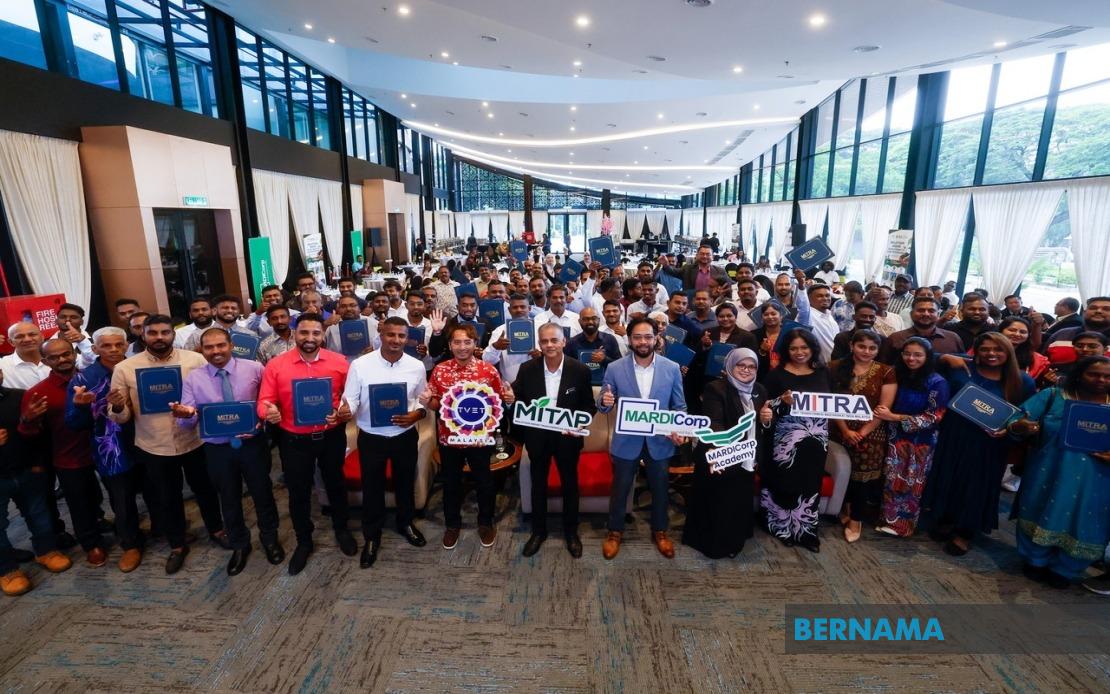
The Malaysian Indian Community Transformation Unit (MITRA) has successfully distributed RM30,000 grants to 68 young agropreneurs as part of its broader initiative to strengthen agricultural participation within the Indian community. The Agricultural Transformation Grants (GTP), presented during a ceremony in Putrajaya on August 13, represent a significant push to diversify economic opportunities beyond traditional sectors and anchor youth in agricultural entrepreneurship.
MITAP, the Malaysian Indian Transformative Agri Programme, operates as a structured two-pronged effort combining immediate financial support with intensive skills development. According to K. Raveendran Nair, MITRA's director-general, the initiative encompasses QuickWin MITRA, which channelled the RM30,000 grants to the 68 recipients, alongside the Young Agropreneur Programme (PUM), a 10-month immersive training course designed to build technical and business competencies. Eight participants have already completed this formal training component, positioning them for scaled operations and market integration.
The scope of supported agricultural activities reflects deliberate sectoral diversity aimed at matching individual interests with viable market opportunities. Beneficiaries are pursuing food crop production, dairy cattle management, beekeeping, oyster mushroom cultivation, freshwater fish farming, and food processing technology. This breadth ensures that grant recipients can leverage existing resources, land access, and regional agricultural strengths rather than forcing uniform models onto heterogeneous circumstances across the community.
Beyond the immediate capital injection, grant recipients gain access to ongoing technical support through MARDICorp, the Malaysian Agricultural Research and Development Institute's commercialisation arm. Mohamad Zamir Ghazali, MARDICorp's managing director, underscored the corporation's commitment to guiding participants through product development, market linkages, and technology adoption. This institutional scaffolding proves critical for translating initial grants into sustainable enterprises, particularly for first-time agropreneurs navigating supply chains, regulatory compliance, and competitive pricing dynamics.
The initiative intentionally incorporates a networking dimension that extends beyond conventional agricultural extension services. By formalising participant membership within existing agricultural associations and clusters, MITRA elevates individual farmers into collective structures where they access bulk purchasing, shared equipment, and coordinated marketing. Ghazali's emphasis on bringing participants together to remain visible to government programmes reflects recognition that sustainable scaling requires embedding smallholders within institutional ecosystems capable of addressing market failures that typically constrain rural entrepreneurs.
For Malaysia's broader agricultural transformation agenda, this programme addresses a persistent challenge: attracting and retaining young people in farming at a time when rural-to-urban migration and generational shifts threaten agricultural labour supply and innovation capacity. The Indian community, which has substantial presence in rubber, coconut, and vegetable cultivation, represents a demographic segment where targeted intervention can yield measurable economic and social returns. By positioning farming as a viable entrepreneurial pathway rather than subsistence livelihood, MITRA reframes agricultural work within aspirational rather than necessity-driven frameworks.
The programme also acknowledges the financing gap that typically excludes smallholders from commercial banking while recognising that microcredit alone cannot catalyse enterprise development. The combination of capital, training, and market facilitation through government institutions addresses structural constraints that would otherwise doom even motivated entrepreneurs to failure. For Malaysian policymakers, the model demonstrates how targeted community-specific programmes can address inclusion objectives while advancing sectoral productivity goals.
Implementation through partnership with MARDICorp rather than direct government delivery introduces technical expertise and market linkage capabilities that purely administrative structures lack. This quasi-institutional arrangement balances accountability to beneficiaries with flexibility to adapt support mechanisms based on emerging enterprise challenges. It also creates pathways for government agricultural programmes to identify and nurture high-potential operators for expansion into larger-scale production, export initiatives, or technology demonstration roles.
The timing of this initiative aligns with Malaysia's broader efforts to strengthen food security and reduce import dependency, particularly in protein sources where domestic production lags demand. Young farmer participation in dairy, aquaculture, and mushroom cultivation directly addresses these strategic priorities while building competitive supply chains capable of supporting agro-processing and value-added manufacturing. The food processing component explicitly recognises that agricultural transformation increasingly requires backward integration into processing and packaging rather than reliance on commodity-price volatility.
For similar communities across Southeast Asia facing comparable agricultural transition challenges, the MITRA model offers instructive lessons on targeting support, sequencing interventions, and institutionalising ongoing engagement. The emphasis on skills development alongside capital, community networking alongside individual enterprise, and government partnership alongside market orientation reflects maturation in development thinking beyond simple subsidy distribution. Success in retaining these 68 agropeneurs within farming over the critical first three to five years will substantially influence whether subsequent cohorts and communities adopt similar pathways.

