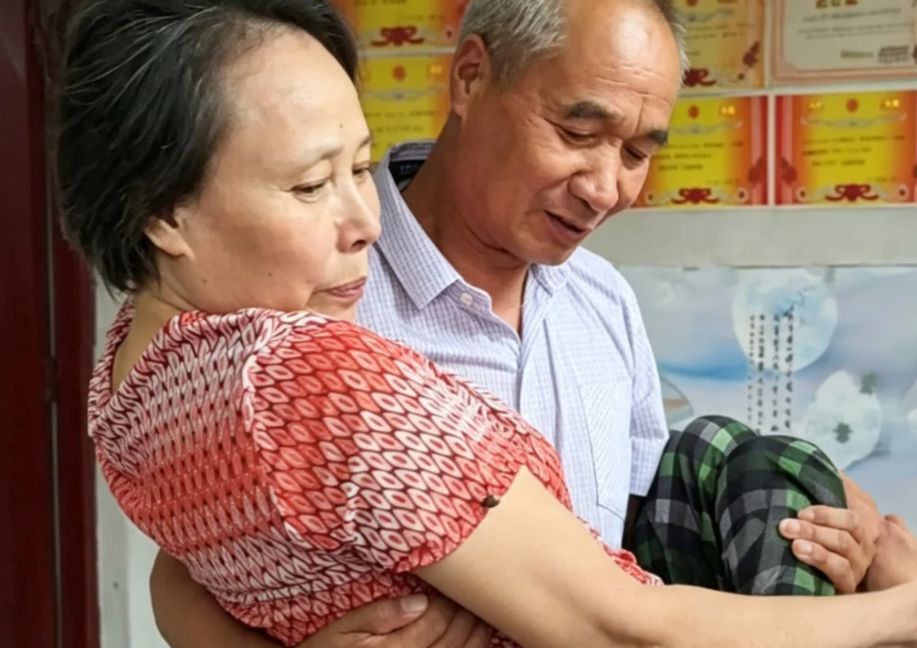
In the central Chinese city of Pingdingshan, Henan province, a marriage has endured one of life's cruellest tests—and emerged as a testament to commitment that has moved millions online. For the past quarter-century, Li Junliang has provided around-the-clock care to his wife, Jia Fang, ever since she became severely paralysed from the chest down following a devastating accident in 2001. The couple's story has captured hearts across mainland China, prompting reflection on the bonds that hold families together through unimaginable hardship.
The accident that transformed their lives occurred when Jia Fang, then 36, fell from a cliff while riding in a pedicab. The injury left her completely unable to move or care for herself. At that moment, with two young children—aged 10 and 13—still dependent on them, the family's entire world shifted. What might have fractured a weaker union instead became the foundation for a profound example of marital dedication. Li, who was a year older than his wife, chose immediately to become her full-time caregiver without hesitation, a decision that would consume his own life for the next 25 years.
The physical demands of such care are relentless and often invisible to outsiders. In the early years following Jia's paralysis, Li would reposition her body every two hours throughout the day and night to prevent bedsores—a dangerous complication that could prove fatal. As years passed, he adjusted this routine to every four hours, yet this change came at a cost: two and a half decades of forfeited sleep. Night after night, his own rest was interrupted by the needs of his wife, a sacrifice that has visibly marked him—his hair turned grey while Jia's remained predominantly black, as she herself observed with touching acknowledgment.
Beyond the mechanical aspects of disability care, Li has undertaken measures to preserve his wife's physical wellbeing and dignity. He regularly carries Jia to a wheelchair so she can experience sunlight and breathe fresh air outside their home, small gestures that speak volumes about maintaining quality of life even within severe constraints. He performs therapeutic massage on her limbs, working to slow the inevitable muscular deterioration that accompanies paralysis. These actions reveal the difference between mere survival care and care delivered with genuine affection—each task performed not merely as obligation but as expression of ongoing commitment.
While the financial circumstances of the family remain somewhat opaque—Li's profession has not been widely documented—the household itself provides visual evidence of priorities carefully ordered. The walls of their home display certificates of academic achievement earned by their two children, now grown with families of their own. This suggests that even while managing his wife's intensive needs, Li ensured his children received the emotional support and encouragement necessary for educational success. The visible reminders suggest a father who, despite overwhelming personal burden, did not allow his own struggles to diminish his role in his children's development.
Jia's own reflections on her husband's sacrifice carry particular weight precisely because they come from the person who has experienced his care most intimately. She has publicly acknowledged the toll his devotion has taken, noting how his hair greyed while managing responsibilities she cannot shoulder. Yet rather than dwelling on loss, she expressed profound gratitude: "Junliang, thank you for taking care of me for 25 years!" Her statement carries no bitterness, only appreciation for a man who could have abandoned the marriage or resented the burden, but instead chose to remain.
Li's response to her gratitude reveals the philosophy underlying his actions. He framed his caregiving not as sacrifice but as fulfilment of a promise made on their wedding day—that home would be complete only with her presence. This reframing is significant; it suggests he does not view his role as one imposed by circumstance, but rather as a conscious extension of the commitment he made years before the accident. When asked about his future, he spoke of willingness to continue caring for another 25, 35, or even 45 years, language that suggests not grim resignation but genuine acceptance of a life that, while challenging, remains his chosen path.
The couple's story has resonated far beyond their immediate community, touching something fundamental in the consciousness of millions across mainland China. Neighbours and online observers alike have expressed amazement at Li's unwavering dedication, with one unnamed neighbour particularly noting that despite the immense challenges of his situation, Li maintains a clean and orderly household—evidence that caregiving has not consumed all capacity for dignity and organization. Comments across social media platforms have repeatedly emphasised how rare such commitment has become, with observers noting that "many men would find it difficult to endure" such circumstances, suggesting an implicit commentary on evolving attitudes toward marital obligation and family duty.
This story acquires additional resonance when considered within broader regional and cultural contexts. Across East and Southeast Asia, including Malaysia, rapid urbanization and changing family structures have transformed traditional caregiving arrangements. The expectation that spouses will provide intensive personal care has shifted, with professional healthcare workers and institutional facilities increasingly assuming roles once managed within families. Li and Jia's story stands as counterpoint to this trend—not as judgement of modern choices, but as reminder of what commitment can look like when tested by genuine crisis. It prompts reflection on whether contemporary societies have lost something valuable in outsourcing care, even as they have perhaps gained efficiency and reduced individual burden.
The religious and philosophical dimensions of the couple's experience have not escaped observers. Several commentators have invoked spiritual language, suggesting that Li's loyalty and kindness will bring divine blessing upon his family. Whether framed in explicitly religious terms or simply as recognition of moral excellence, the widespread response indicates that the couple's story taps into deep human values regarding compassion, fidelity, and the obligations we bear toward those we love. In an era characterized by rapid social change and sometimes cynical assessments of human nature, the enduring commitment of Li and Jia offers a counternarrative—evidence that profound love and selflessness remain possible, even in the face of circumstances that might reasonably seem unbearable.
For Malaysian readers and observers across Southeast Asia, the story invites contemplation of several intersecting themes. It raises practical questions about long-term disability care in societies where family structures are fragmenting and professional care options remain expensive or limited. It poses ethical questions about the boundaries of spousal obligation and personal sacrifice. But perhaps most importantly, it presents an example of human resilience and love that transcends the particular economic and cultural context of Henan province, speaking instead to universal human capacity for devotion and the ways that commitment can transform suffering into meaning.

