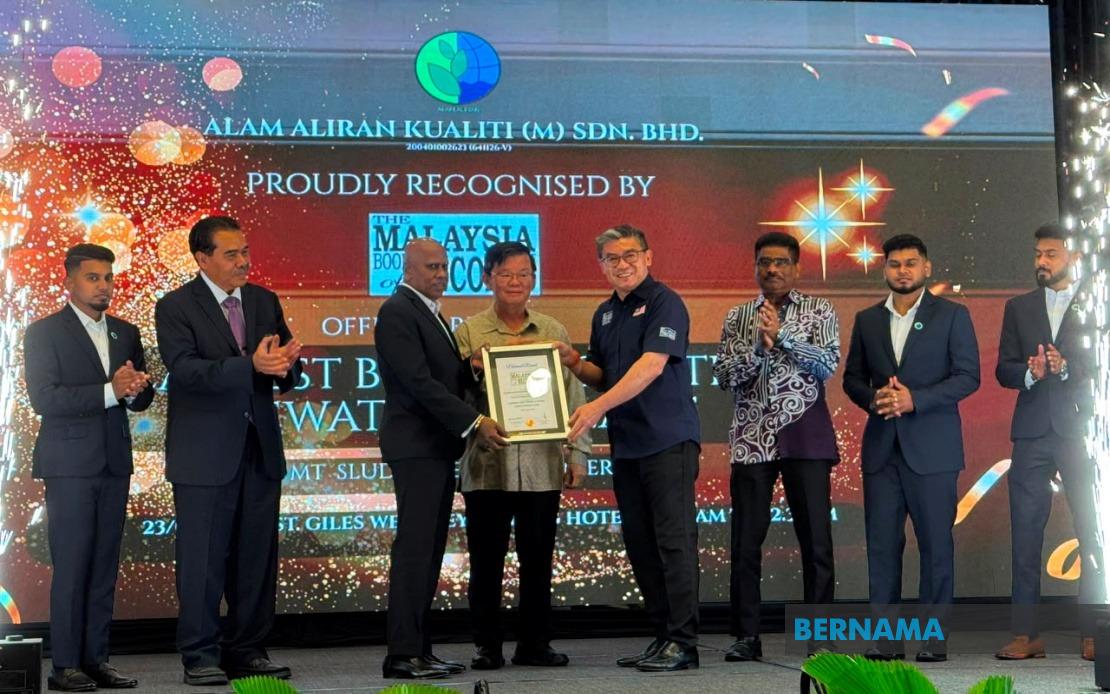
Environmental engineering firm Alam Aliran Kualiti (M) Sdn Bhd (AAK) has secured Malaysian Book of Records (MBOR) recognition for operating the largest belt press system dewatering plant in the country at its Sungai Dua facility in Penang. The achievement, announced in George Town on July 23, underscores how Malaysian companies are advancing infrastructure innovation in critical sectors like water treatment and waste management, areas increasingly vital for the region's growing urban populations.
The Sungai Dua Dewatering Plant, developed in partnership with Perbadanan Bekalan Air Pulau Pinang (PBAPP), processes an impressive 10 million litres of water treatment residuals daily while managing approximately 450 tonnes of alum sludge. According to AAK director Gokulaan Balan, this capacity represents a substantial leap in Malaysia's wastewater infrastructure capabilities, positioning the nation alongside global leaders in environmental engineering technology. The recognition highlights how domestic expertise can deliver engineering solutions that meet international standards without relying entirely on foreign suppliers or technology transfers.
What distinguishes this facility from conventional dewatering plants is its integration into a circular economy framework. Rather than treating sludge as waste destined for landfills, AAK has developed a complementary Eco Green Brick Manufacturing Plant that transforms treated SW204 scheduled waste into construction-grade materials. This approach addresses a persistent challenge in Southeast Asian environmental management: the accumulation of treatment residuals that consume valuable landfill space and pose long-term contamination risks. By converting these materials into marketable products, the facility demonstrates how environmental responsibility and economic value creation need not be competing objectives.
Penang Chief Minister Chow Kon Yeow emphasised how the project exemplifies sustainable development in action. He noted that the facility recovers treated water from the dewatering process, channelling it back into treatment operations and thereby reducing overall water losses across Penang's supply network. For a state managing water security amid population growth and climate variability, such water recovery mechanisms become increasingly critical. Penang's long-standing challenges with water supply during dry seasons make innovations that enhance system efficiency particularly significant for maintaining service reliability and reducing dependency on external water sources.
The dewatering system's technical capabilities extend beyond simple solids removal. By processing such high volumes of sludge daily, the plant prevents the bottlenecks that typically occur when treatment facilities accumulate residuals faster than they can be disposed. This operational efficiency translates to improved water treatment performance across PBAPP's entire network, as treatment plants can continue operating without interruption due to sludge accumulation. For Malaysian water authorities managing aging infrastructure, such technological upgrades offer pathways to enhance service delivery without massive capital expenditure on entirely new treatment plants.
Gokulaan Balan framed the MBOR recognition not as a destination but as validation for continued innovation. This perspective reflects an important strategic positioning: as Malaysia seeks to establish itself as a regional hub for environmental technology and sustainable infrastructure solutions, companies like AAK are building technical expertise that could eventually drive exports and technology licensing across Southeast Asia. Nations like Indonesia, Thailand, and Vietnam face comparable wastewater challenges, creating potential markets for proven dewatering systems and circular economy solutions developed in Malaysia.
The involvement of Pengurusan Aset Air Berhad (PAAB) chairman Datuk Seri Jaseni Maidinsa and other government officials in the recognition ceremony signals official backing for such environmental initiatives. This political endorsement matters because it encourages other private sector companies to invest in similar sustainable infrastructure. Malaysia's stated commitments to circular economy development and environmental sustainability require not just policy declarations but practical demonstrations that profitability and ecological responsibility can align. The Sungai Dua facility provides that tangible proof.
Established in 2004, AAK has spent nearly two decades building specialisation in environmental engineering and scheduled waste management. The company's evolution from a service provider to an innovator developing integrated solutions reflects broader trends in how Malaysian firms are positioning themselves in the green economy. Rather than simply managing waste, contemporary environmental companies are increasingly focused on resource recovery and value extraction from residual streams. This philosophical shift, evident in AAK's operations, aligns Malaysia with global best practices in circular economy thinking.
The recognition arrives at a time when water infrastructure faces mounting pressure across Southeast Asia. Climate change is intensifying weather variability, with extreme droughts and floods becoming more frequent. Treatment plants must simultaneously handle concentrated seasonal flows while maintaining efficiency during dry periods. Technologies like the Sungai Dua system, which optimise sludge handling and recover water, offer solutions to these dual challenges. For Malaysian policymakers planning infrastructure investments over the coming decade, domestically-proven technologies provide confidence and reduce the risks associated with importing unproven systems.
The Eco Green Brick initiative adds another dimension to the facility's significance. Construction materials derived from treated waste offer potential cost advantages for the building industry while addressing environmental concerns about conventional brick and cement production, which are carbon-intensive. As Malaysia and its neighbours pursue green building standards and carbon reduction targets, availability of sustainable construction materials becomes strategically important. AAK's facility demonstrates how water treatment operators can serve as feedstocks for the construction sector, creating inter-sectoral linkages that strengthen circular economy ecosystems.
The MBOR recognition also carries symbolic weight for Malaysia's international positioning. Receiving such recognition for environmental infrastructure demonstrates to regional and global audiences that Malaysian engineering capacity has matured beyond routine maintenance and operations to embrace innovation and technology development. This matters as countries across Asia compete for investment in sustainable infrastructure and environmental technology expertise becomes a soft power asset.
Looking forward, the Sungai Dua facility's success could catalyse similar projects elsewhere in Malaysia and beyond. Water authorities managing treatment residuals at other locations might adopt similar dewatering and resource recovery approaches, gradually transforming how the country's water infrastructure manages its waste streams. For AAK and comparable firms, such expansion represents significant commercial opportunity, while for broader society it signals progress toward more circular and sustainable resource management systems.

