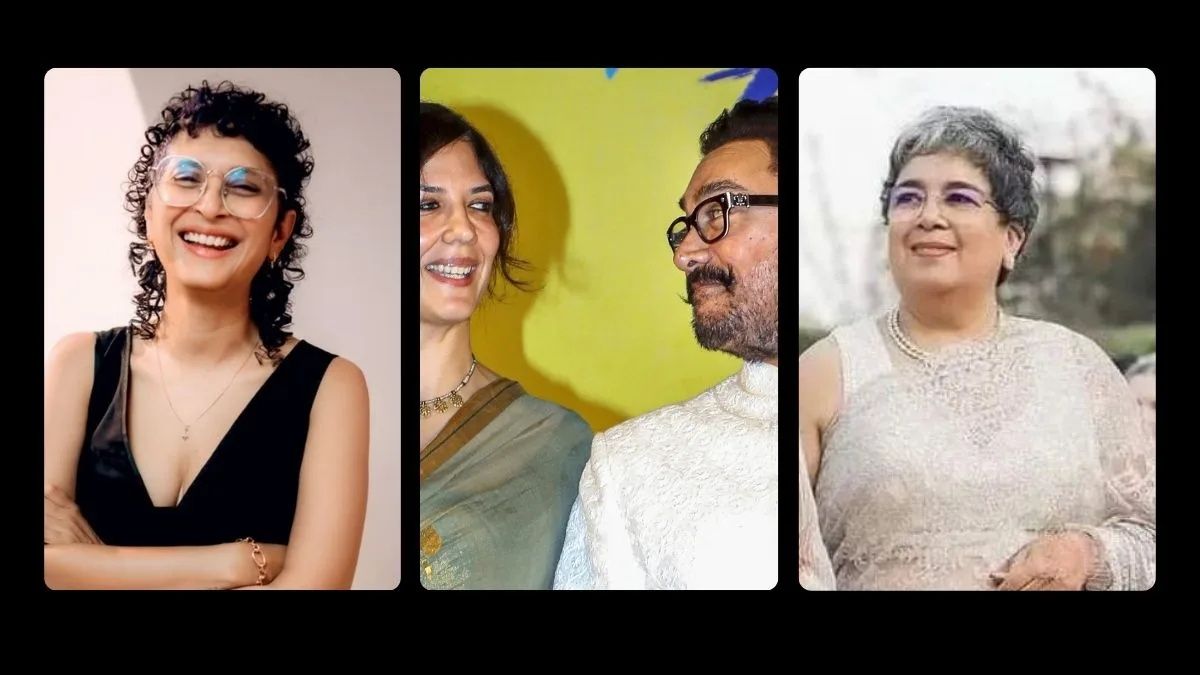
Bollywood star Aamir Khan has broken his silence on inflammatory claims that characterised him as a 'love jihad brand ambassador' in the wake of his recent marriage to longtime companion Gauri Spratt. Speaking with Rediff, the actor firmly rejected the allegations and used the opportunity to articulate his family's fundamental approach to relationships across religious lines—one built on acceptance rather than assimilation. His intervention addresses a recurring controversy that has targeted celebrities in India, particularly those involved in interfaith unions, with 'love jihad' discourse serving as a flashpoint in contemporary cultural and political debates.
The actor's response centred on a straightforward assertion: no member of his immediate or extended family has ever required a spouse to abandon their faith to enter into marriage. This position reflects the secular values embedded in India's constitutional framework, though it has become increasingly contentious in recent years as communal tensions have risen across the country. Khan underscored that his family has embraced interfaith partnerships as a normal facet of personal relationships, treating religious difference as incidental rather than consequential to marital commitment. His public articulation of this stance carries particular weight given his prominence in Indian cinema and his platform to influence discourse around religious tolerance.
To substantiate his argument, Aamir catalogued several instances from his own family tree where individuals of different faiths have married without any conversion taking place. Both his sisters have chosen Hindu partners as life companions, while his daughter has similarly married within the Hindu community. These arrangements, he explained, proceeded without any expectation that either party would renounce their religious identity. The inclusion of filmmaker Mansoor Khan—his cousin married to a Christian woman—further illustrated the normality of such unions within the Khan household. By presenting these examples methodically, the actor sought to demonstrate that interfaith marriage represents an established, comfortable pattern in his family rather than an anomaly warranting scrutiny or suspicion.
Aamir's own marital journey has itself embodied this interfaith narrative. His first marriage, solemnised in 1986 to Reena Dutta, endured until their separation in 2002. Subsequently, he married filmmaker Kiran Rao in 2005, a union that lasted until they announced their separation in 2021, though both have maintained a collaborative professional relationship and shared parental responsibilities. Most recently, on July 5 this year, he married Gauri Spratt at his residence in Mumbai. Throughout all three marriages, according to the actor, no religious conversion occurred. Each union was formalised through civil ceremonies, a legal arrangement that bypasses religious institutional frameworks entirely. By highlighting the secular, legal nature of these marriages, Khan implicitly contrasted his approach with the religious conversion allegations levelled against him.
The actor provided additional context regarding Gauri Spratt's religious background and practice. He identified her as Christian by faith, though notably clarified that she does not actively engage in religious observance or practice. This detail appears designed to further complicate the 'love jihad' narrative, which posits aggressive religious conversion as a primary motivation. If Gauri maintains minimal religious attachment or practice, the logic of such accusations loses purchase. Khan's willingness to disclose such personal information suggests he views transparency as his most effective counter-strategy against what he characterised as baseless allegations fuelled by an increasingly polarised media environment.
Prior to their July marriage, Khan and Spratt had maintained a relationship spanning over two years. Their reconnection occurred approximately two years ago in Bengaluru, facilitated by Khan's cousin Nuzhat Khan. What began as renewed friendship between two individuals who had known each other for roughly a quarter-century gradually evolved into romantic partnership. The couple chose to make their relationship public during Aamir's 60th birthday celebrations in March of the preceding year, introducing Gauri to media representatives at that time. This gradual, transparent unveiling of their relationship stood in contrast to the secretive scenarios often implied in 'love jihad' discourse.
The 'love jihad' concept has gained considerable traction in Indian political and cultural discourse, particularly in states governed by parties emphasizing Hindu nationalism. The term purports to describe a phenomenon wherein Muslim men deliberately marry Hindu or Christian women with the supposed ulterior motive of engineering religious conversions. However, scholars and fact-checkers have consistently found evidence supporting such coordinated campaigns to be thin or non-existent, with the discourse functioning primarily as a rhetorical tool to generate communal anxiety and polarisation. That a prominent Bollywood figure has felt compelled to issue a detailed rebuttal speaks to how deeply this narrative has penetrated public consciousness.
Aamir's response carries significance beyond the personal sphere, touching upon broader questions about religious pluralism and coexistence in contemporary India. His insistence that his family has historically accommodated interfaith relationships without demanding conformity represents a challenge to narratives that frame such unions as inherently problematic or suspicious. For Malaysian audiences, where the country navigates its own complex landscape of religious diversity and constitutional arrangements around Islamic law, Khan's explicit articulation of interfaith acceptance may resonate as either a model worth emulating or a perspective requiring cautious localisation given differing constitutional and legal frameworks.
The actor's final observation—that life increasingly becomes 'more comical as time passes'—suggests frustration with what he perceives as the absurdity of ongoing accusations against him. His tone shifted from systematic rebuttal to sardonic commentary, implying that the persistence of such allegations despite clear evidence to the contrary reflects not substantive concern but rather the amplification of divisive narratives by media and political actors pursuing alternative agendas. In choosing to break silence now, months after his July marriage, Khan appears to have calculated that providing comprehensive clarification would more effectively neutralise the controversy than continued silence might achieve.

