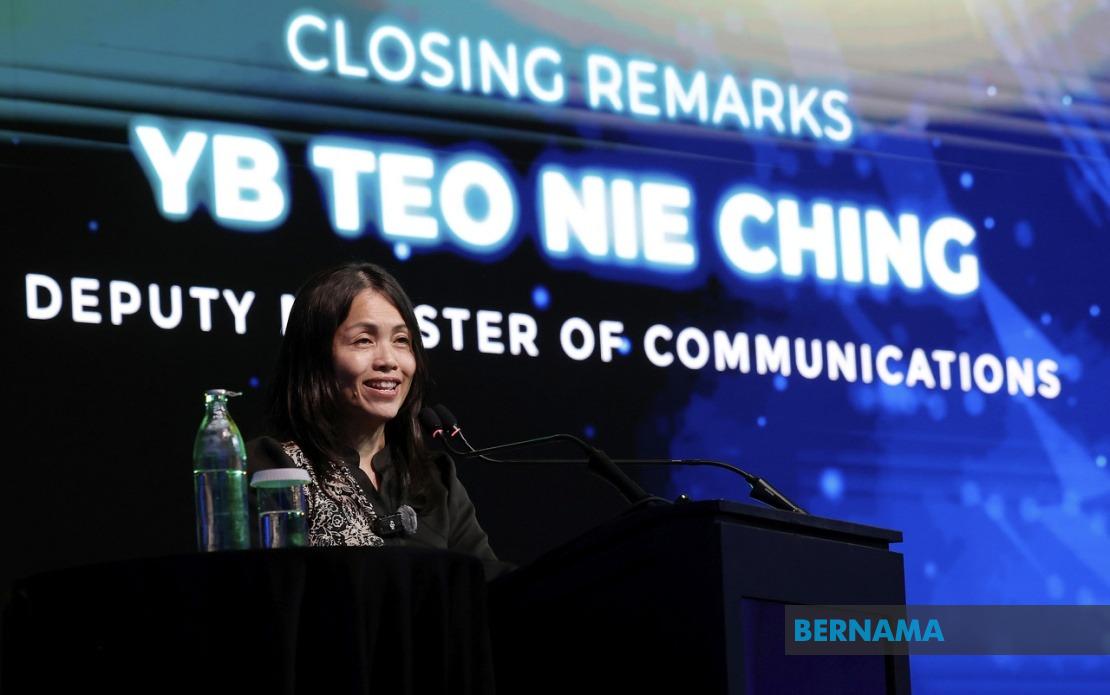
Deputy Communications Minister Teo Nie Ching has repositioned the conversation around digital transformation, arguing that technological advancement alone cannot define progress without corresponding safeguards for public trust and safety. Speaking at the conclusion of the International Regulatory Conference (IRC) 2026 in Kuala Lumpur, Teo articulated a vision where digital development is evaluated not primarily through measures of technical sophistication but rather through the lens of whether innovations remain trustworthy, equitable and genuinely serve societal interests. This framing reflects growing recognition across the Asia-Pacific region that governance structures must evolve in tandem with technological capabilities to prevent widening gaps between innovation speed and regulatory responsiveness.
The minister underscored a fundamental shift in how citizens assess digital tools and platforms. Rather than consumers celebrating merely cutting-edge features, Teo noted that public confidence increasingly depends on demonstrable safety mechanisms, fair treatment, and verifiable accountability from technology providers. This observation carries particular weight in Southeast Asia, where rapid digital adoption has outpaced institutional capacity in several countries, creating vulnerabilities that affect millions of internet users daily. The emphasis on alignment between technology development and governance frameworks addresses a persistent challenge: the tendency for innovation to sprint ahead while regulatory structures struggle to catch up.
To illustrate the magnitude of online harms facing Malaysia and the corresponding enforcement burden, Teo disclosed figures that underscore the intensity of content moderation efforts. Between January 2022 and mid-July 2026, the Malaysian Communications and Multimedia Commission (MCMC) had issued 1.2 million content removal requests directed at social media platforms, with 1.138 million pieces of harmful material successfully removed by the platform operators. These numbers reveal not only the scale of problematic content circulating on digital channels but also the resourceintensive nature of maintaining online safety in a digitally engaged society with over 25 million internet users.
The trajectory of removal requests has accelerated notably in 2026. During the first seven and a half months of the year alone, MCMC issued 377,502 removal requests, a volume representing nearly 78 percent of all requests processed throughout the entirety of 2025. Breaking this down further, the commission has been issuing approximately 1,900 removal requests daily on average during this period. Platforms responded by removing 350,332 pieces of harmful content during the January-to-mid-July window, demonstrating reasonably high compliance rates but also indicating that a growing volume of prohibited material continues to emerge online faster than traditional enforcement mechanisms can process.
Teo articulated an important limitation to regulatory approaches, cautioning that legal frameworks and enforcement actions by government bodies alone cannot shoulder the entire responsibility for maintaining digital safety and protecting vulnerable populations. This acknowledgment reflects lessons learned in other jurisdictions where exclusive reliance on regulatory punishment proved insufficient without complementary industry self-regulation and community engagement. The minister therefore advocated for a multilayered collaborative ecosystem encompassing technology platforms, government regulators, educational institutions, grassroots communities and broader industry participants, all coordinating toward shared safety objectives.
Critically, Teo emphasized that safety must be incorporated into digital systems from inception through design phases rather than being retrofitted after harms manifest. This preventative philosophy contrasts with reactive approaches that address problems only after users experience damage. The principle of "safety by design" has gained traction among leading technology companies globally and represents an aspiration for regulatory frameworks worldwide, yet implementation remains inconsistent across platforms and jurisdictions. For Malaysia and the region, embedding this principle into platform governance standards could substantially reduce the volume of harmful content requiring removal and mitigate user exposure to threats.
The IRC 2026, now in its third iteration, convenes a global assembly of telecommunications regulators, corporate technology leaders and subject matter experts to deliberate on the rapidly evolving digital economy landscape and associated regulatory challenges specific to communications and multimedia sectors. This year's conference carried the thematic focus "Shaping the Next Digital Era: Regulation, Resilience and Trust," reflecting international consensus that technology governance must balance innovation enablement with public protection. As a platform organised by MCMC, the gathering positions Malaysia as a thought leader in digital regulation discourse within Southeast Asia and the broader Asian region.
The convergence of escalating online harms, accelerating removal request volumes and the inadequacy of purely regulatory responses creates an imperative for the ecosystem transformation Teo outlined. Platforms face mounting pressure to invest in content moderation infrastructure and employ advanced detection technologies, particularly for harmful material targeting vulnerable groups including children and minority communities. Regulators must clarify standards and enforcement timelines without stifling beneficial innovation. Educational institutions bear responsibility for building digital literacy and critical thinking capabilities among younger generations. Communities and civil society organisations play crucial roles in reporting violations and advocating for victim support mechanisms.
The minister's emphasis on accountability structures reflects sensitivity to public scepticism regarding technology companies' commitment to safety when profit incentives may suggest otherwise. Without transparent reporting of removal metrics, clear appeals processes for wrongly flagged content, and independent auditing of platform decisions, public trust deteriorates regardless of actual safety improvements. Malaysia's experience managing a relatively young but fast-growing digital ecosystem offers valuable insights for other nations navigating similar transitions, particularly those where regulatory capacity remains limited relative to internet user populations and content volumes.
Looking forward, Teo's framing suggests Malaysia intends to position itself as advocating for balanced, multi-stakeholder approaches to digital governance that resist both extremes of technological determinism and heavy-handed censorship. This positioning aligns with regional interests in maintaining open digital markets while protecting citizens from genuine threats. The challenge lies in execution, requiring sustained investment in regulatory capacity, genuine cooperation from platforms operating under different jurisdictional incentives, and public education supporting informed citizenship in digital spaces. The findings and recommendations emerging from IRC 2026 will likely inform MCMC's policy directions for the coming years and potentially influence broader Southeast Asian regulatory harmonisation efforts.

