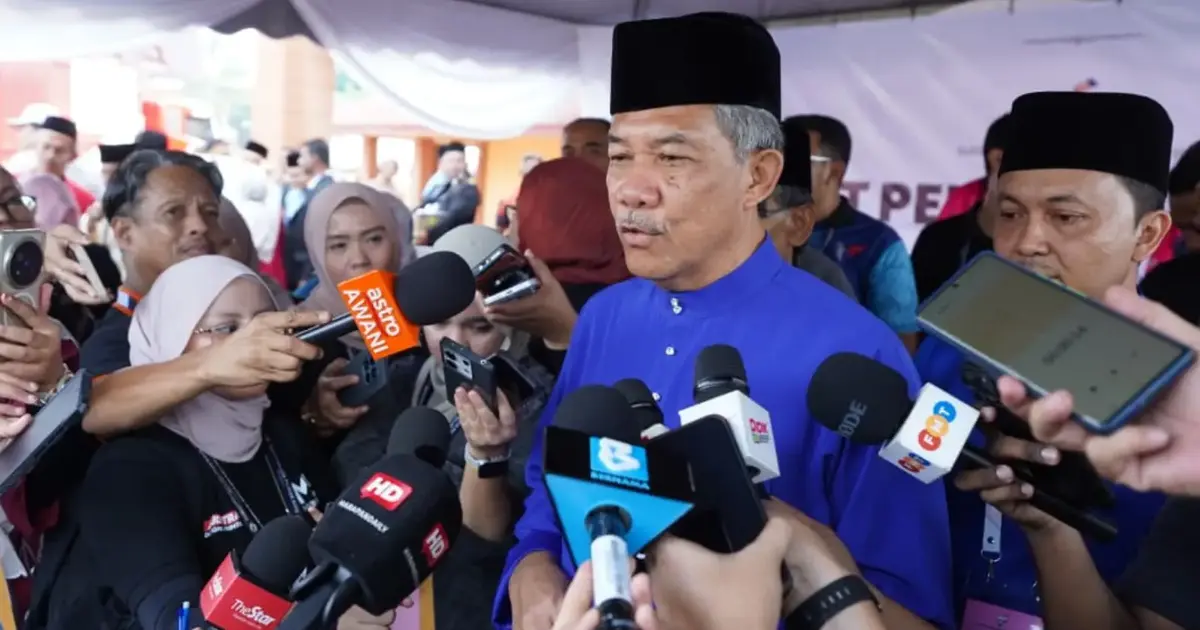
Mohamad Hasan, a senior Barisan Nasional figure, has issued a clear directive to party candidates competing in Negeri Sembilan, instructing them to refrain from drawing the state's adat institution into their campaign messaging. The seasoned politician's warning reflects broader concerns about preserving the sanctity of customary governance structures whilst the nation conducts its electoral contests.
The adat institution in Negeri Sembilan occupies a unique constitutional and cultural position within Malaysia's political landscape. Unlike other states where traditional governance follows more standardised patterns, Negeri Sembilan's matrilineal inheritance system and its adat council represent a living example of Malaysia's rich tapestry of indigenous customs and legal traditions. These institutions have been woven into the fabric of the state's identity for centuries, commanding deep respect amongst communities who view them as fundamental to their way of life.
Hasan's intervention suggests that some candidates may have already ventured into dangerous territory by attempting to leverage adat-related issues for electoral advantage. The impulse to mobilise traditional or cultural grievances during campaigns is not unusual in Malaysian politics, where identity politics frequently intersects with grassroots mobilisation. However, when such tactics target institutions that lie outside the conventional electoral sphere, they risk destabilising delicate social equilibriums that have been maintained through careful respect for customary authority.
The risk of escalating tensions through campaign politicisation of adat matters is real and substantive. These institutions carry symbolic and practical weight for their communities. When political parties treat them as campaign fodder, they invite countervailing mobilisation and defensive responses from those who feel their traditions are under threat. What begins as electoral positioning can quickly metastasise into genuine communal friction, creating divisions that persist long after voting concludes and normalcy should theoretically resume.
For Malaysian voters in other states, this episode offers important perspective on how regional variations in governance structures require sensitive handling. Negeri Sembilan's adat system is not merely decorative heritage; it forms part of the constitutional order and continues to exercise real authority over inheritance, family law, and land matters affecting thousands of families. Treating such institutions as campaign material trivialises their ongoing relevance and demonstrates insufficient respect for systems that predate modern political parties by generations.
The timing of Hasan's directive matters significantly within the electoral cycle. By establishing clear boundaries early in the campaign period, party leadership attempts to prevent lower-level candidates from getting carried away in the competitive fervour of political contests. Grassroots campaigners, eager to mobilise voters and distinguish themselves from opponents, sometimes lack the institutional perspective that senior figures maintain. This guidance serves as a necessary guardrail against overreach by enthusiastic activists who might not fully appreciate the complications their rhetoric could create.
Moreover, the intervention carries implications for how political parties in Malaysia generally manage cultural and traditional governance matters. If Barisan Nasional leadership is signalling that certain issues should remain off-limits during campaigns, it establishes a standard that competing coalitions might reasonably be expected to follow. Such tacit agreements about acceptable campaign boundaries, even when unspoken and incomplete, help prevent races from descending into contests where every conceivable social institution becomes a battleground for partisan advantage.
For Negeri Sembilan residents, particularly those communities most directly connected to adat traditions, Hasan's warning may provide reassurance that established political actors recognise the need for protective boundaries around customary institutions. It signals that at least some elements within the electoral competition acknowledge limits to their legitimate authority to campaign. This restraint reflects maturity in how societies manage the tension between democratic political contestation and preservation of non-democratic traditional structures that many citizens value alongside democratic rights.
The broader context includes Malaysia's evolving approach to balancing modernisation with respect for traditional governance. The nation continues navigating questions about how customary law, constitutional monarchy, and democratic institutions can coexist and reinforce one another. Campaigns that weaponise cultural and traditional grievances risk undermining this delicate equilibrium by suggesting that everything is properly subject to electoral competition and partisan advantage.
Looking forward, whether other party leaders adopt similar positions regarding cultural sensitivity during campaigns remains unclear. Hasan's statement may catalyse broader reflection within Malaysian political circles about establishing shared expectations around what falls within and outside the permissible scope of campaign messaging. Such norms, when respected across party lines, strengthen democratic institutions by ensuring that certain social foundations remain stable even as electoral competition intensifies around other issues.
Ultimately, the restriction reflects a mature understanding that democracy functions best when not every social institution becomes a campaign commodity. By instructing his candidates to leave adat matters off the campaign trail, Hasan recognises that electoral success built on mobilising respect for established traditions proves more durable and socially constructive than campaigns built on instrumentalising those same traditions for momentary political gain.

