The African Union's Peace and Security Council has moved to reassert continental consensus on Sudan's political future, explicitly rejecting external meddling and the formation of rival administrative structures that could fracture the nation's governance. The position emerged during a significant diplomatic engagement in Khartoum, where Algerian diplomat Mohamed Khaled, serving as the council's rotating chair, held talks with Sudan's Sovereignty Council Chairman Abdel Fattah al-Burhan at the presidential palace on Sunday. The exchange underscored the AU's determination to chart a path toward stability that prioritises Sudanese-led solutions over internationalised interventions that have increasingly complicated the country's political landscape.
Khaled characterised the meeting as substantive and productive, indicating that discussions ranged across interconnected challenges of peace, security, and institutional stability. The AU's explicit condemnation of foreign interference carries particular weight given the multipolar competition now evident in Sudan, where various regional and international actors have sought to advance their own strategic interests. By framing external involvement as a driver of conflict escalation rather than resolution, the council implicitly critiques the current trajectory of international engagement and signals that the AU views Sudan's crisis as fundamentally requiring endogenous solutions.
The council's parallel rejection of parallel governance structures reflects concerns about state fragmentation that have escalated since the conflict erupted in April 2023. The creation of competing administrative bodies—whether formally recognised or de facto—would entrench institutional competition and make eventual reunification of state authority exponentially more difficult. This concern resonates across the African continent, where state capacity and territorial integrity remain perpetually contested. The AU's stance thus reflects a defensive posture aimed at preventing Sudan from becoming a cautionary example of institutional collapse in a strategically significant nation.
Much of the diplomatic focus centred on the necessity of inclusive national dialogue as the primary mechanism for resolving Sudan's underlying political tensions. Khaled emphasised that only through direct Sudanese-to-Sudanese engagement, coupled with genuine national reconciliation efforts, could a durable political settlement emerge that would satisfy the diverse aspirations of Sudan's fractious population. This rhetorical emphasis on inclusivity implicitly acknowledges that previous peace initiatives failed partly because they excluded or marginalised significant constituencies, creating grievances that festered and re-erupted into violence.
Sudanese Prime Minister Kamil Idris signalled to the AU delegation that momentum toward such dialogue exists, announcing that intra-Sudanese discussions would commence imminently. The timing of this declaration, delivered to continental mediators, suggests a desire to demonstrate progress and international buy-in for a political process that has largely stalled since the war's inception. Whether these announced discussions materialise and prove substantive remains uncertain, particularly given the deep structural fractures within Sudanese society and the RSF's apparent unwillingness to accept military subordination.
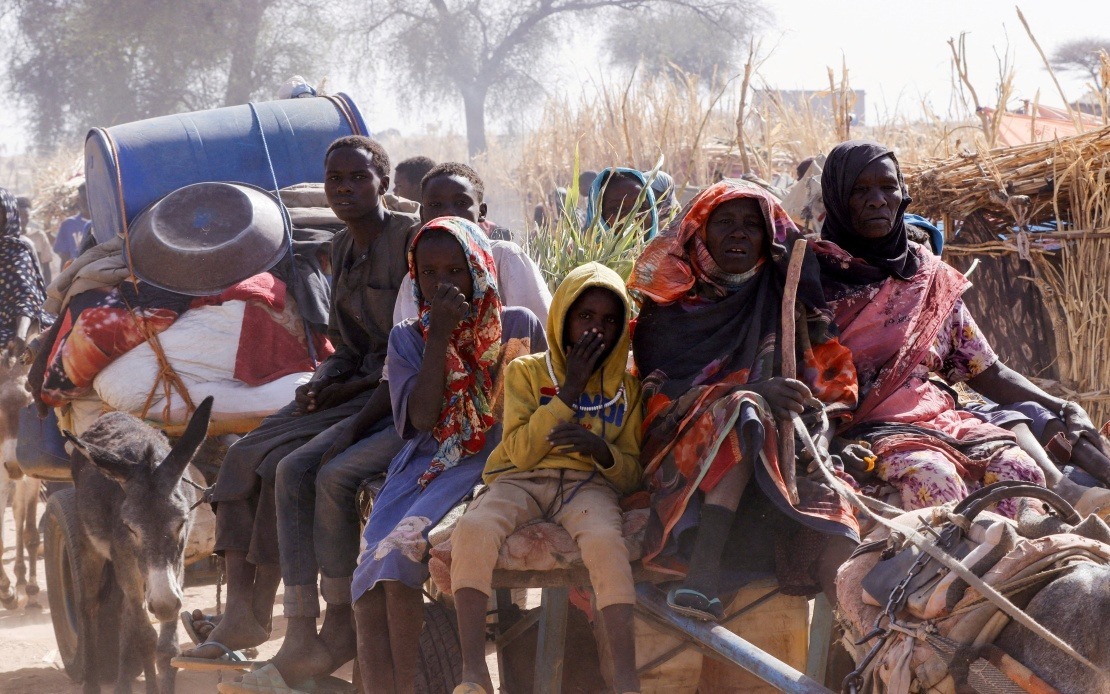
The conflict's genesis—rooted in disputes over integrating the paramilitary Rapid Support Forces into the regular armed forces—represents a fundamentally Sudanese problem that no external actor can resolve through pressure or incentives alone. However, the humanitarian toll has globalised the crisis. The UN estimates that the fighting has killed tens of thousands and displaced approximately 13 million people, creating a regional refugee crisis and humanitarian emergency of staggering proportions. For Malaysia and other Southeast Asian nations, Sudan's instability has implications for international humanitarian response capacity, competition for development partnerships in Africa, and broader questions about how the Global South manages internal conflicts without external domination.
The AU's invocation of constitutional governance and free elections as the ultimate destination for Sudan's transition acknowledges a broader continental commitment to democratic legitimacy, even as that commitment remains unevenly implemented across Africa. By calling for a transitional process that moves toward constitutional democracy rather than perpetual military or transitional rule, the AU articulates an idealised vision that contrasts sharply with Sudan's recent historical pattern of military interventions and interrupted democratic experiments. This rhetoric signals that while the AU may accommodate pragmatic compromises in the near term, it envisions Sudan eventually rejoining the continental mainstream of constitutional governance.
Khaled welcomed the government's return to functioning from Khartoum itself, characterising this geographic and institutional restoration as pivotal to rebuilding state capacity. The movement of administrative functions back to the capital symbolises a reassertion of centralised state authority and represents a modest but meaningful indicator that some degree of normalisation may be underway. However, this development must be contextualised within the broader reality that large swathes of Sudan remain outside government control, humanitarian infrastructure has collapsed, and the military continues prosecuting an intensive campaign against the RSF.
The AU's diplomatic intervention reflects the continental organisation's limited but growing effort to assert itself as a primary forum for African conflict resolution. By convening high-level engagement and articulating clear principles—rejection of foreign interference, opposition to state fragmentation, insistence on inclusive dialogue—the AU attempts to establish ownership over Sudan's political future. This positioning challenges the traditional dominance of Western powers and the UN Security Council in peace processes and asserts that African solutions to African problems should command primacy.
For Malaysia and other non-aligned states, the AU's approach resonates with principles enshrined in the Non-Aligned Movement and ASEAN's doctrine of non-interference. Malaysia's own diplomatic tradition emphasises respect for national sovereignty and resistance to external pressure on internal matters, making the AU's framing potentially attractive to Malaysian policymakers. However, Malaysia must also balance these principles against humanitarian imperatives and the practical reality that some level of international coordination may be necessary to address crises of Sudan's magnitude.
The fundamental challenge facing the AU and Sudanese leadership remains translating diplomatic statements into concrete political movement. The RSF shows little inclination to accept military subordination, substantial segments of Sudanese civil society remain sceptical of reconciliation without accountability, and regional powers continue pursuing their own interests. Without addressing these underlying resistance points, calls for dialogue, while diplomatically sound, risk remaining aspirational rather than transformative.

