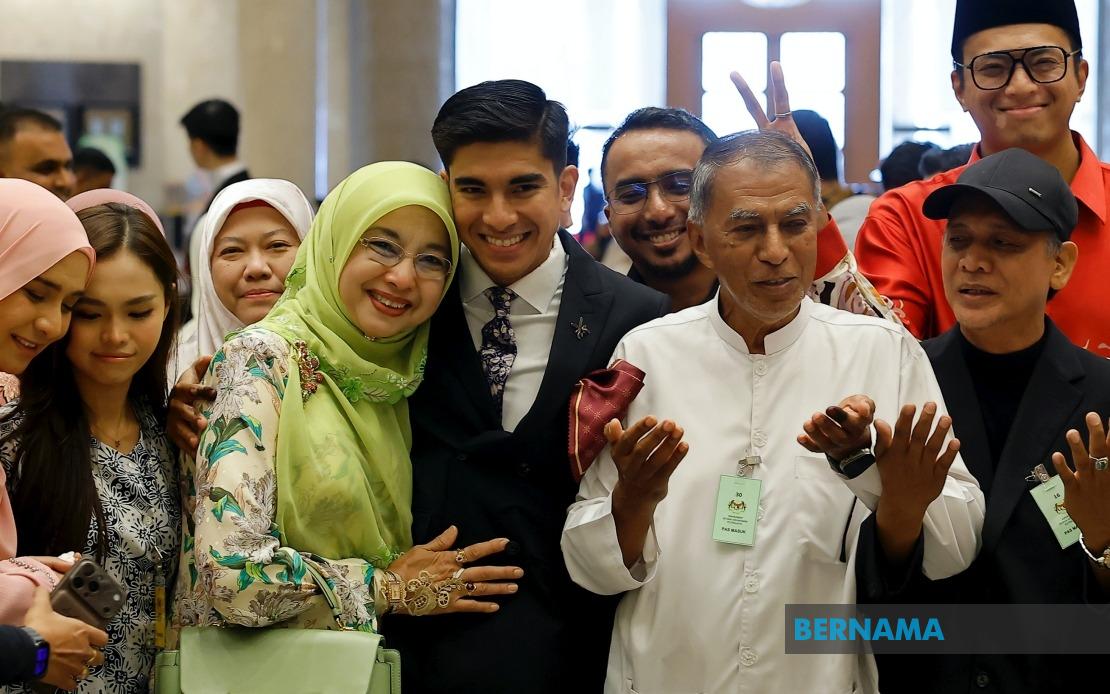
The Federal Court has brought closure to a protracted legal saga that has shadowed Malaysian politics for the past six years, upholding the complete acquittal of Muar Member of Parliament Syed Saddiq Syed Abdul Rahman on all charges. The 33-year-old politician, whose case became emblematic of broader questions about the independence of the judiciary and the politicisation of prosecutions, expressed profound relief and gratitude following the decision delivered at the Palace of Justice in Putrajaya. Having faced four counts involving allegations of abetting criminal breach of trust, misappropriation of property, and money laundering—all centring on funds belonging to the youth movement Angkatan Bersatu Anak Muda (Armada)—Syed Saddiq's vindication marks a significant moment in Malaysian judicial discourse.
The political significance of this acquittal extends beyond the individual case. Syed Saddiq's ordeal began during a period of considerable turbulence in Malaysia's political system, and his prosecution was viewed by many observers as emblematic of weaponised law enforcement. The case unfolded against a backdrop of shifting political alliances and power struggles that characterised Malaysian politics in the years following the 2018 general election and the subsequent Sheraton Move. For a politician associated with the reform-oriented MUDA party and known for advocating institutional transparency, the six-year process represented not merely a personal burden but a test of the nation's commitment to the rule of law and due process.
During his statement to reporters, Syed Saddiq emphasised that his unwavering conviction in his innocence had sustained him through the extended legal proceedings. He spoke of the profound personal cost, acknowledging that the ordeal had affected not only himself but his parents, broader family network, supporters, and the wider political landscape. His decision to perform a sujud syukur—a Islamic prostration of gratitude—with his family immediately following the court's decision reflected both spiritual relief and the intensity of emotional strain the case had imposed. The moment captured the deeply personal dimension of a legal battle that had consumed a significant portion of his adult life and early political career.
The implications of this acquittal resonate throughout Malaysia's institutional framework. Syed Saddiq has long positioned himself as a defender of judicial independence and the integrity of Malaysia's legal institutions, viewing these as foundational to the nation's broader strength and stability. His messaging on this acquittal reinforced this philosophical commitment, suggesting that despite the ordeal, his faith in the system's ultimate capacity to deliver justice remained intact. However, the six-year duration of the proceedings itself raises uncomfortable questions about the efficiency and resilience of Malaysia's judicial mechanisms, particularly in high-profile political cases where public attention and institutional pressures intersect.
Reflecting on the experience, Syed Saddiq articulated a philosophical perspective that speaks to broader Malaysian concerns about institutional integrity and personal resilience. He counselled against compromising principles, integrity, or dignity in pursuit of expedient resolution, even when circumstances appear overwhelming. This message carries particular weight in a Southeast Asian context where political actors sometimes face pressure to accept unfavourable settlements rather than endure prolonged legal proceedings. His emphasis on placing trust in God and in the institutions that constitute the nation's democratic apparatus suggests an attempt to rehabilitate public confidence in Malaysia's judiciary, even as the extended timeline of his case might suggest systemic vulnerabilities.
The prosecution's response to the acquittal, as conveyed by Deputy Public Prosecutor Datuk Wan Shaharuddin Wan Ladin, indicated that the Attorney General's office had not yet determined whether to pursue a review of the Federal Court's decision. This measured response contrasts with more aggressive stances seen in some high-profile prosecutions, and may reflect recognition of the political and institutional costs associated with prolonged litigation. The prosecution's stated acceptance of and respect for the court's decision—even without definitively foreclosing the possibility of further proceedings—suggests a degree of institutional discipline and recognition of judicial finality.
Syed Saddiq's personal plans moving forward reveal the human dimension often obscured by political and legal proceedings. He indicated a desire to withdraw temporarily from active political engagement, a decision framed around personal and family priorities. Having received parental blessing to proceed with wedding plans, the MP signalled that his immediate focus would centre on rebuilding personal life disrupted by six years of legal proceedings. This statement is significant in that it humanises political actors often portrayed as purely strategic agents, whilst also demonstrating the genuine toll that extended litigation exerts on families and personal relationships.
Regarding his future political trajectory, Syed Saddiq declined to provide definitive statements, instead emphasising the need for time and reflection. He clarified his continued association with MUDA whilst leaving his broader political future deliberately open. This circumspection may reflect both exhaustion from the legal process and strategic calculation about optimal timing for announcing future initiatives. His commitment to attending parliamentary sittings whilst carving out space for personal recuperation suggests an intent to fulfil legislative responsibilities whilst prioritising mental and emotional restoration.
The case also illuminates the broader Southeast Asian context regarding the use of criminal prosecution in political contestation. Malaysia's experience with the weaponisation of law enforcement, particularly during periods of institutional instability, parallels challenges seen in other regional democracies. The vindication of Syed Saddiq, therefore, contributes to a broader narrative about the possibility of institutional self-correction and the judiciary's capacity to resist politicisation over sufficiently extended timescales. However, the duration itself raises questions about whether six years represents an acceptable timeline for resolving politically motivated prosecutions.
The Federal Court's decision carries implications extending beyond Syed Saddiq's personal and political future. It suggests that despite institutional pressures and the political salience of his case, Malaysia's highest court maintained sufficient independence to reach a verdict centring on evidence and legal principle rather than political expediency. For Malaysian citizens concerned about judicial autonomy and the rule of law, this outcome provides some reassurance, even as the extended timeline warrants continued scrutiny and potential institutional reform.
Looking forward, the significance of this acquittal will likely depend on how Malaysian political actors, media commentators, and the broader public interpret its meaning. For supporters of Syed Saddiq and advocates of institutional reform, the verdict vindicates claims about his innocence and demonstrates the judiciary's ultimate capacity for delivering justice. For others, the case may represent a sobering reminder of the costs and complexities inherent in navigating Malaysia's political system, particularly for actors perceived as challenging established power structures. The coming months will reveal whether Syed Saddiq's decision to step back from active politics represents a temporary respite or a more fundamental reassessment of his political career trajectory.

