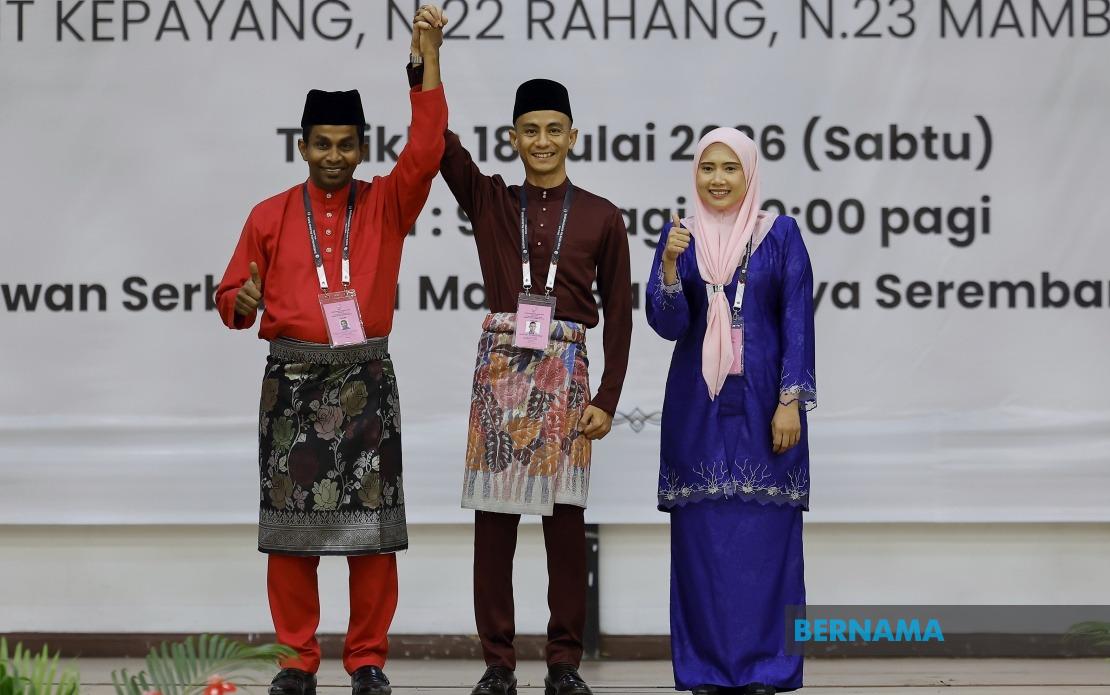
Datuk Ahmad Faez Abdul Razak, the Pakatan Harapan-PKR candidate for the Labu state assembly seat, stepped forward this week to articulate his vision for managing the constituency's transformation during the 16th Negeri Sembilan state election. The property developer is contesting for the first time in a seat that has become strategically important within Negeri Sembilan's political landscape, having spent nearly three years cultivating grassroots connections before formally entering the race.
Facing the magnitude of his first electoral contest, Ahmad Faez acknowledged the emotional complexity of the moment—a blend of enthusiasm and apprehension that accompanies political entry at the state level. Yet his tone reflected measured confidence, grounded in what he describes as tangible evidence of community receptiveness following his extended engagement across Labu's neighbourhoods and villages. The 2.8-year groundwork appears designed to distinguish his candidacy from that of typical newcomers, positioning him as someone already versed in local concerns and dynamics.
Central to Ahmad Faez's platform is a recognition that Labu stands among Negeri Sembilan's fastest-expanding constituencies, experiencing pressures that demand sophisticated governance. The constituency sits within the Malaysia Vision Valley development corridor, a sprawling initiative encompassing 11,000 to 12,000 hectares designated for industrial and residential expansion. This geographic positioning presents simultaneous opportunity and peril: the potential for employment creation and economic diversification clashes against the prospect of environmental degradation, community displacement, and loss of village character if development proceeds unchecked.
Acknowledging these tensions candidly, Ahmad Faez frames his professional background as essential to navigating them. His experience as a property developer, he argues, provides insight into market dynamics and construction realities that non-specialists may lack. Rather than presenting development and community interests as incompatible, he advocates for deliberate calibration—a recalibration of growth trajectories to accommodate both economic expansion and resident welfare. This framing seeks to differentiate him from candidates who might appear either reflexively pro-development or reflexively opposed to it, instead claiming middle ground as a pragmatist.
Among his manifesto priorities is the establishment of a youth-focused community centre and recreational facility, reflecting his assessment that Labu currently lacks such infrastructure despite its growing population. This pledge addresses a distinct demographic gap, targeting younger residents whose engagement with political processes and community institutions remains inconsistent. The specificity of the proposal—youth facilities rather than generic community development—suggests either direct feedback from door-knocking or consultation with local organizations.
The electoral arithmetic in Labu presents a three-way contest that will test PH's recovery prospects in Negeri Sembilan. The incumbent, Mohamad Hanifah Abu Baker of Bersatu-Barisan Nasional, retained the seat in 2023 with a comparatively narrow 1,640-vote margin over Ahmad Faez's predecessor, PKR's Datuk Ismail Ahmad, who polled 10,021 votes. That proximity between second and third place indicates the seat remains genuinely competitive and that a consolidated opposition campaign could challenge the incumbent. The addition of a third candidate—BN's Siti Nur Umaira Hasim—complicates vote-splitting dynamics further, potentially fragmenting the Barisan vote while PH concentrates support behind Ahmad Faez.
The constituency's electoral geography comprises 32,884 registered voters, concentrated among 32,869 ordinary voters with a small contingent of 15 police personnel and their families. In a constituency of this scale, groundwork intensity and local organization become determinative factors beyond messaging alone. Ahmad Faez's extended presence appears calibrated toward dominance in interpersonal mobilization networks, traditionally PH's strength in peninsula rural and semi-urban seats. Early voting is scheduled for July 28, with the main polling day on August 1, providing limited time for campaigns to shift voter preference or consolidate support.
Ahmad Faez's emphasis on balancing development with community protection reflects broader anxieties across Southeast Asia regarding rapid industrialization and its social costs. Malaysia Vision Valley, while economically promising, exemplifies a tension endemic to regional governance: how to attract manufacturing investment and create employment without hollowing out established communities or creating environmental hazards. His message—that experience in real estate positions him to manage this trade-off—attempts to domesticate a potentially destabilizing force by positioning it as manageable rather than inevitable.
PH's recovery in Negeri Sembilan hinges partly on whether voters perceive the coalition as having stabilized at state level and whether they credit the current administration with competent governance. Ahmad Faez's framing of state-federal alignment suggests a confidence that PH's broader positioning benefits individual candidates, even though his own electoral debut occurs amid national political fluidity. The extent to which the Malaysia Vision Valley project is visible on the ground, and whether residents perceive it as beneficial or threatening, will likely shape voter sentiment more decisively than manifestos or candidate professionalism.

