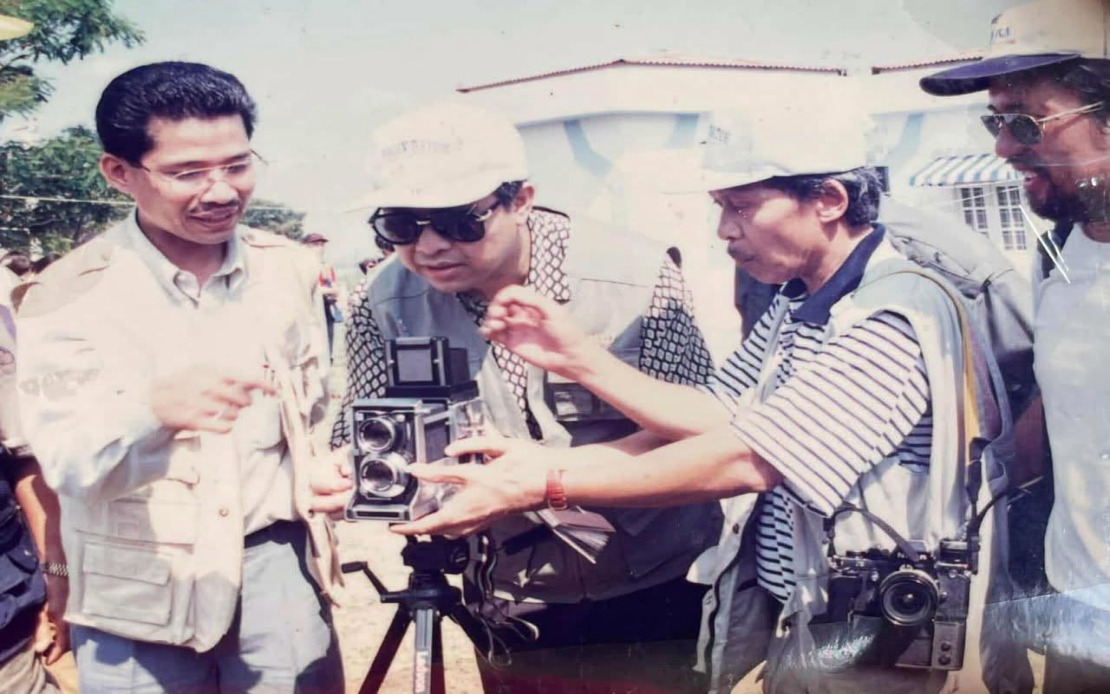
Deputy Prime Minister Datuk Seri Dr Ahmad Zahid Hamidi has extended his acknowledgement to photographers globally on the occasion of World Photography Day 2026, emphasising the profound significance of their craft in the lives of ordinary people and societies at large. The tribute, shared through social media, recognises the multifaceted contributions made by those who dedicate themselves to capturing visual narratives across all walks of life.
Ahmad Zahid's recognition extends beyond the professional realm, encompassing the full spectrum of photographers who document human experience. His acknowledgement includes seasoned professionals who work in the commercial and editorial sectors, journalists and event specialists whose images inform and chronicle public discourse, and the countless individuals who assume the informal role of family historian during celebrations and significant gatherings. Each group, he noted, approaches their work with distinct perspectives and methodologies, yet all share the common purpose of immortalising moments that might otherwise fade from collective consciousness.
The Deputy Prime Minister reflected on the universal appeal and emotional resonance of photography in contemporary society. He observed that photographs occupy a cherished place in human experience—some treasured in personal collections as intimate reminders of meaningful times, whilst others are displayed prominently in homes and public spaces as testaments to important occasions. Beyond their role in personal narratives, Ahmad Zahid highlighted how certain photographs transcend their original context to become invaluable historical documentation, serving future generations as windows into bygone eras and providing researchers and historians with authentic visual references.
Central to Ahmad Zahid's message is an appreciation for the technical and artistic skill required behind every photograph. He emphasised that whilst a successful image may appear to require merely a momentary action—the pressing of a shutter button—the process preceding that instant involves considerable discipline and sensitivity. Photographers must cultivate the ability to observe their surroundings with keen attention, exercise patience as they await the optimal convergence of light, composition, and subject matter, and develop the intuition necessary to recognise and seize the decisive moment when all elements align.
The temporal dimension of photography emerged as a significant theme in Ahmad Zahid's reflection. He underscored the remarkable capacity of photographs to function as bridges across time, connecting viewers in the present with experiences and moments that may have occurred decades earlier. What represents merely seconds in the act of creation can yield images that remain resonant and meaningful for generations, fundamentally altering how societies understand their past and, by extension, their identity and trajectory.
This acknowledgement from Malaysia's second-highest-ranking political figure carries particular relevance in an era where visual communication has assumed unprecedented importance. The proliferation of digital photography and smartphone imaging technology has democratised picture-taking, enabling virtually anyone to function as a photographer. Yet Ahmad Zahid's message carefully acknowledges both the specialist practitioners whose work appears in galleries and publications, as well as the amateur enthusiasts whose images shape family archives and community records.
World Photography Day, observed annually on August 19th, commemorates the invention and development of photography as a medium. The date derives from the 1839 announcement of the daguerreotype process, a pioneering photographic technology developed in France. The occasion provides an opportunity for nations and leaders to reflect on photography's role in culture, journalism, historical documentation, and personal expression.
For Malaysia specifically, Ahmad Zahid's message carries implications regarding the value placed on visual documentation and cultural preservation. In a region where rapid modernisation and social change characterise daily life, photographs serve as anchors connecting present generations to their heritage and traditions. Professional photographers, particularly photojournalists and documentary practitioners, play an essential role in shaping public understanding of events and issues affecting the country and broader Southeast Asian region.
The Deputy Prime Minister's emphasis on photography's historical function also resonates with contemporary discussions about archiving, heritage preservation, and digital memory management. As Malaysia continues to develop its cultural infrastructure and institutional frameworks for preserving national heritage, the role of visual documentation becomes increasingly significant. Photographs created today, whether by professionals or casual observers, may eventually contribute to the historical record that future Malaysians rely upon to understand this era.
Ahmad Zahid's concluding sentiment—that today's photographs will become tomorrow's memories—encapsulates a fundamental truth about human experience and historical consciousness. It positions photographers, in all their diversity and across all proficiency levels, as custodians of memory. Their work, whether motivated by artistic ambition, professional obligation, or simple familial affection, collectively constructs the visual heritage that anchors human understanding and emotional connection across generations and communities.

