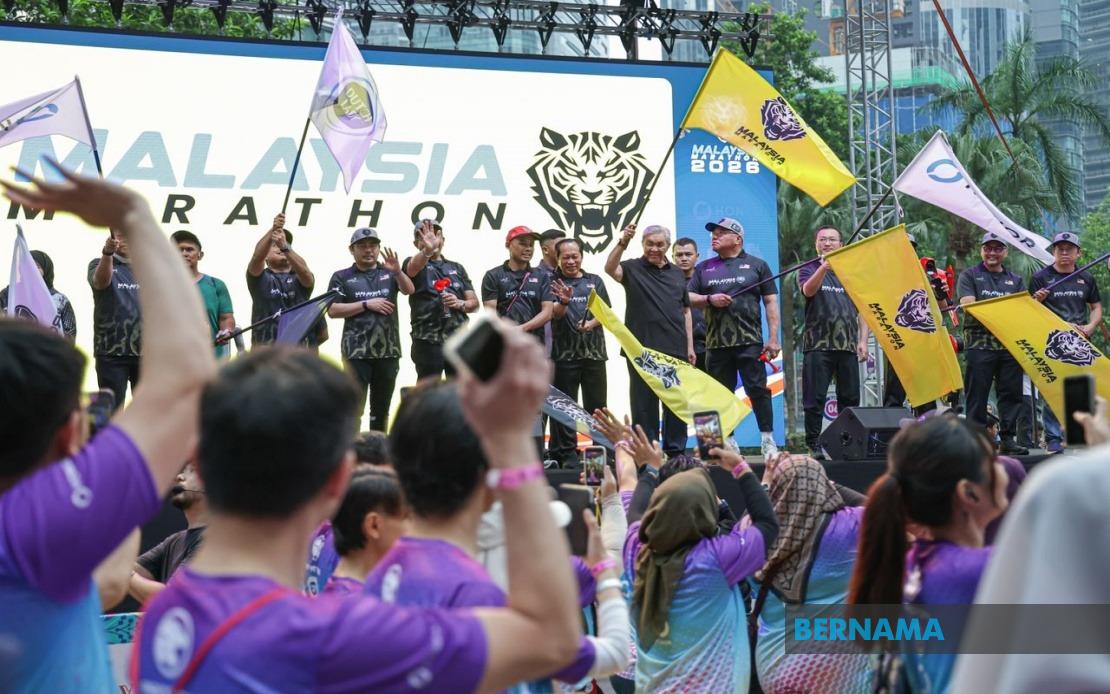
Deputy Prime Minister Datuk Seri Dr Ahmad Zahid Hamidi presided over the launch of Malaysia Marathon 2026 on Friday, setting into motion one of the nation's most significant athletic endeavours by flagging off 10,000 participants in the 5-kilometre fun run category. The event, staged at the Kuala Lumpur City Centre grounds, marked the culmination of a four-race series that ultimately drew together 25,000 local and international runners competing across varying distances, demonstrating Malaysia's growing prominence in the international athletics calendar.
The Malaysia Marathon 2026 represents a strategic integration of sporting excellence and national celebration, deliberately timed to coincide with the country's National Day festivities. By channelling the energy of tens of thousands of runners into a celebration of Malaysian identity, the organisers created a multifaceted platform that extends beyond conventional sports programming. The selection of KLCC grounds as the epicentre of the fun run signalled the organisers' commitment to utilising iconic urban landmarks to amplify public engagement and visibility, transforming one of Kuala Lumpur's most recognisable destinations into a venue for grassroots athletic participation.
Tourism, Arts and Culture Minister Datuk Seri Tiong King Sing and Deputy Works Minister Datuk Seri Ahmad Maslan joined Ahmad Zahid in overseeing the proceedings, underscoring the cross-ministerial coordination required to execute an event of this magnitude. The ceremonial component of the launch was purposefully structured to instil a sense of national pride and solemnity. Proceedings commenced with the singing of the national anthem Negaraku, followed by a performance from the Malaysian Armed Forces band, establishing an appropriately patriotic tone for the festivities that would unfold across the morning.
Among the most visually striking elements of the launch was a one-kilometre Malaysian flag parade orchestrated by 1,000 students from Kolej Poly-tech MARA (KPTM) Bangi. This participation of young students served a dual purpose: it provided meaningful involvement for the nation's youth in a landmark national sporting event whilst simultaneously creating an inspiring visual spectacle that reinforced themes of national unity and generational continuity. The flag parade functioned as a symbolic bridge between the ceremonial aspects of the launch and the athletic endeavour about to commence.
The Malaysia Marathon 2026 was structured across four distinct competitive categories, each representing different levels of athletic commitment and capability. Minister Tiong initiated the main marathon competition by flagging off 2,000 full marathon competitors at Pavilion Kuala Lumpur, tasking them with the demanding 42-kilometre course. Earlier in the morning, the half-marathon category involving 8,000 runners and the 10-kilometre category comprising 5,000 participants had already commenced their respective races. The staggered start times for different distance categories allowed for efficient crowd management whilst ensuring that all participants experienced a coordinated and celebratory atmosphere.
The acquisition of recognition from World Athletics, the international governing body for track and field, bestowed significant credibility upon Malaysia Marathon 2026. This accreditation positions the event within the global athletics calendar and signals to international competitors that the competition meets rigorous international standards for course measurement, organisation, and safety protocols. For Malaysian athletes, this recognition provides an opportunity to compete in a world-class event on home soil, potentially attracting elite regional and international runners who might otherwise travel abroad to seek comparable competitive opportunities.
A notable logistical innovation for this edition involved the relocation of the finish line from its traditional venue at Dataran Merdeka to the KLCC grounds. This strategic decision consolidated all race categories at a single, high-profile urban location, streamlining spectator access and creating a more unified celebratory environment for race completion. The finish line consolidation also reduced the complexity of course management and allowed organisers to concentrate finishing facilities, medical support, and participant services at one optimal location.
For Malaysian readers and the broader Southeast Asian athletic community, the Malaysia Marathon 2026 represents an important statement about the nation's capacity to host large-scale international sporting events that integrate patriotic celebration with athletic competition. The successful coordination of 25,000 participants across multiple distance categories and differing start times demonstrates logistical sophistication and commitment to inclusive sports participation. Such events contribute to the diversification of Malaysia's sports tourism offerings and provide a template for future integration of national celebrations with community engagement through athletic endeavour.
The participation of government officials at the ministerial level underscores the strategic importance of the marathon to the current administration's sporting and social agenda. By visibly championing the event, these officials signal to the public and international observers that Malaysia regards athletic development and mass participation in sports as key components of national development and social cohesion. The event's alignment with National Day celebrations transforms it from a mere athletic competition into an expression of national identity and collective achievement.
Looking forward, the successful execution of Malaysia Marathon 2026 establishes a potentially recurring platform for combining sporting excellence with patriotic observance. The enthusiastic turnout of 25,000 runners and the visible support from political leadership suggest that this inaugural edition may catalyse future iterations, potentially expanding in scale and international recognition. For Southeast Asia's athletic development trajectory, Malaysia's investment in world-class marathon infrastructure and international recognition creates a competitive benchmark that other regional nations may seek to emulate or surpass in their own sports development initiatives.

