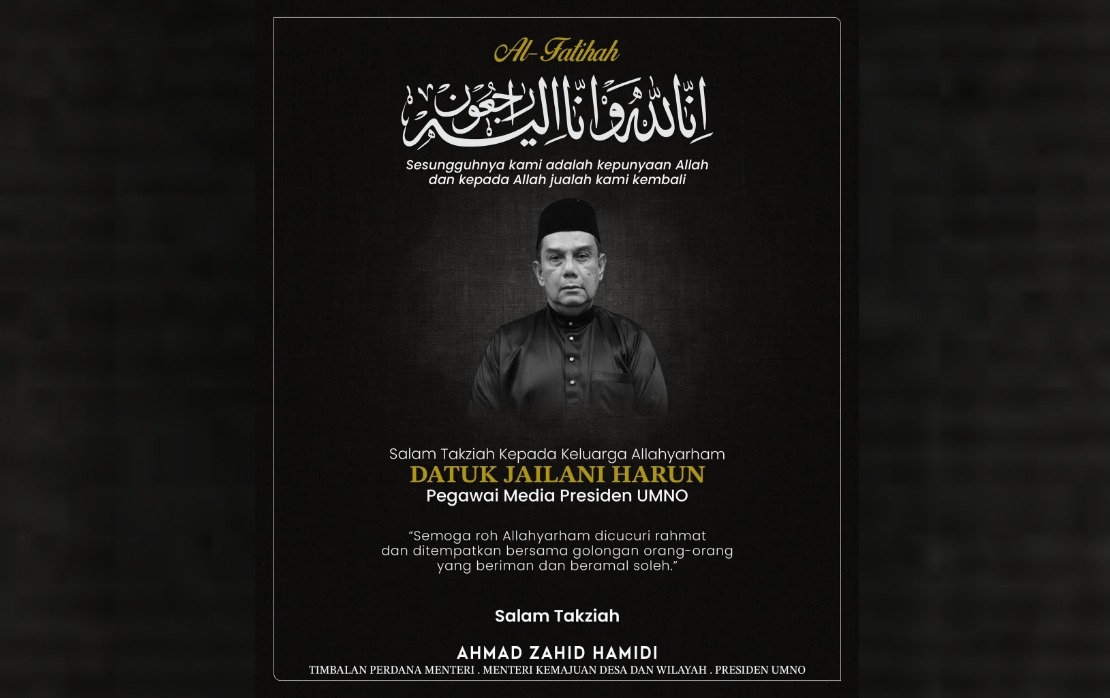
Deputy Prime Minister Datuk Seri Dr Ahmad Zahid Hamidi has expressed profound sorrow following the death of Datuk Jailani Harun, a respected figure in Malaysian journalism and communications who served as a media officer at the UMNO President's Office. The senior government official conveyed his sympathies to Jailani's family through a heartfelt statement shared on Facebook, reflecting on his encounter with the late veteran earlier that morning.
Jailani passed away at 11.34 am on July 7 at Serdang Hospital in Kuala Lumpur, aged 66. His death marks the conclusion of a career spanning decades in journalism and political communications—fields where he earned considerable esteem among his peers and colleagues. The timing of Ahmad Zahid's hospital visit, undertaken in the hours before Jailani's death, underscores the significance placed on the relationship between senior UMNO leadership and longstanding party officials.
In his statement, Ahmad Zahid characterised Jailani as an individual distinguished by kindness, humility and broad respect within professional circles. The Deputy Prime Minister's recollection of visiting him that morning carries particular poignancy, as he described witnessing Jailani's deteriorated condition and his own private hope for an unexpected recovery. This personal dimension to the public expression of grief reflects the closer working relationships that develop between high-ranking politicians and their trusted media and communications advisors over many years of institutional service.
The Deputy Prime Minister invoked religious sentiment in his condolences, calling upon divine mercy for the departed soul. His prayer that Allah would forgive Jailani's transgressions, extend His compassion and grant him a place among the righteous reflects the Islamic faith that underpins expressions of grief within Malaysia's Muslim-majority political establishment. Such sentiments are conventional among senior figures when addressing the deaths of respected colleagues, particularly those with long service records in party and government structures.
Jailani's background as a former journalist provided him with a distinctive perspective within UMNO's communications apparatus. Professionals transitioning from mainstream media into political office roles often bring valuable understanding of news cycles, media relations and public messaging strategies. His decades of experience bridging journalism and political communications would have shaped his approach to managing the party president's public relations and information dissemination—positions that require both credibility and strategic acumen.
The funeral arrangements reflect customary Islamic practice among Malaysia's Muslim community. Jailani will be interred at the Alam Damai Muslim cemetery in Cheras following asar prayers, one of the five daily Islamic prayer times. This timing and location reflect established protocols within the Klang Valley's Muslim burial infrastructure, which handles countless such ceremonies annually. The cemetery selection typically indicates family preference or long-standing community connections.
For the broader UMNO establishment and the Malaysian political communications sector, Jailani's passing represents the loss of institutional memory and professional expertise developed across multiple decades. Individuals who have served in media and communications roles spanning various administrations accumulate knowledge about how party structures function, how relationships with journalists operate, and how messaging strategies have evolved. The departure of such figures inevitably creates gaps in organisational continuity.
The circumstances of Jailani's final illness and hospitalisation at Serdang Hospital—one of Kuala Lumpur's major medical facilities—underscore the healthcare challenges faced by individuals in their mid-sixties. While specific details regarding his medical condition were not disclosed in official statements, his week-long hospitalisation suggests a serious ailment requiring intensive care. The hospital's prominence in treating complex cases means Jailani received treatment at a well-resourced institution.
Ahmad Zahid's public grieving, conducted through social media platforms, exemplifies how contemporary Malaysian politicians manage expressions of loss and condolence. The Facebook post serves simultaneously as a genuine tribute to a departed colleague, a signal of UMNO's institutional values regarding loyalty and respect for longtime members, and a subtle reinforcement of hierarchical relationships within the party structure. Such gestures, while authentic in sentiment, also function as performative acts within the political sphere.
The death of experienced communications professionals like Jailani occurs within a broader context of generational transition within Malaysian political institutions. Individuals who built careers during earlier eras of Malaysian political development—when media relations operated differently and party structures evolved through distinct phases—gradually exit public life, their expertise and institutional knowledge dispersing. Their successors inherit different technological landscapes, media environments and political dynamics.
For media professionals and communications specialists working within Malaysian political structures, Jailani's career trajectory—from journalism into party communications roles—represents a particular career path that has proven viable for those with strong relationships and proven competence. His journey reflects how expertise in media relations can create opportunities for advancement into positions of greater influence and access within political institutions.
The broader Malaysian community, particularly those who encountered Jailani's journalism or benefited from his media relations work, may reflect on his contributions to public discourse and party communications. While detailed assessments of his journalistic output and professional impact extend beyond typical condolence statements, his evident standing within UMNO and recognition from senior party leadership suggest meaningful influence throughout his working life.
Ahmad Zahid's expression of grief, while necessarily brief given the formal constraints of political mourning statements, captures the personal dimension alongside the institutional significance of Jailani's passing. The loss of such figures—those who bridge journalism, communications and politics while maintaining professional integrity—reminds Malaysian society of the human dimensions underlying institutional structures and political processes.

