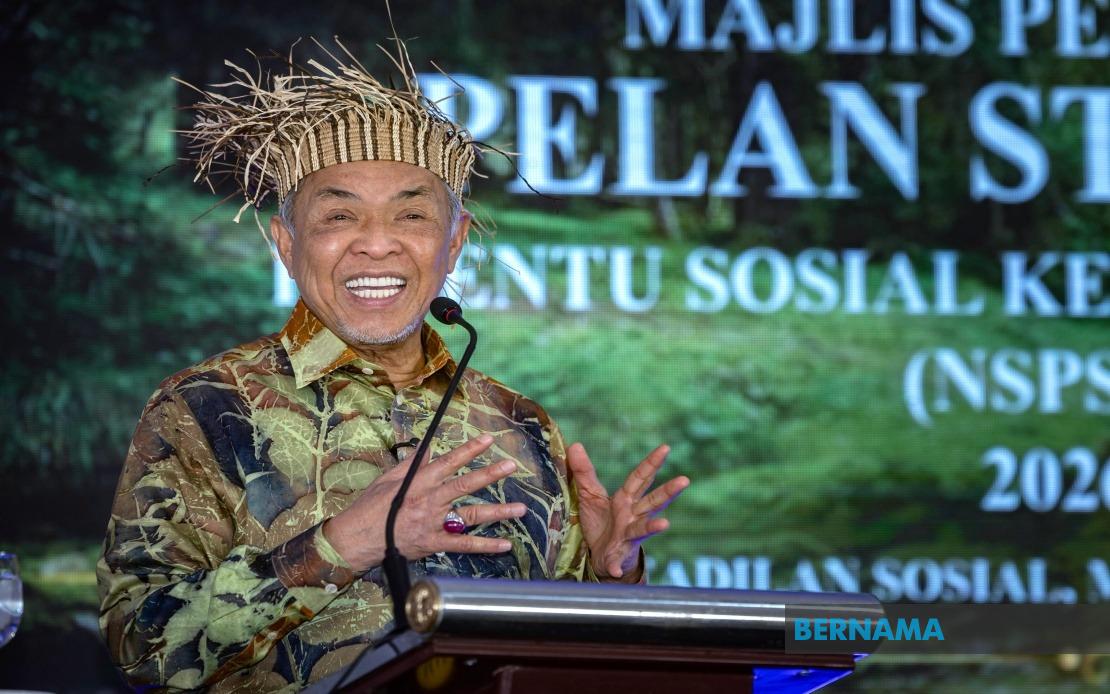
Deputy Prime Minister Datuk Seri Dr Ahmad Zahid Hamidi has called upon the nation to offer prayers for Prime Minister Datuk Seri Anwar Ibrahim's speedy recovery following a medical procedure conducted on Friday. Speaking at an event in Gerik, Ahmad Zahid expressed confidence that the Prime Minister would require only a brief period away from his duties before resuming his full responsibilities at the helm of government. The senior minister's appeal underscores the importance placed by Malaysia's leadership on public solidarity during moments affecting the nation's top executive.
Anwar underwent an elective laparoscopic surgical procedure to address a para-umbilical hernia, according to an official statement from his medical team. Datuk Dr Asri Ranga Abdullah Ramaiah, head of the Prime Minister's Medical Team, confirmed that the intervention proceeded without complications under the supervision of specialist physicians. The procedure represents a routine surgical intervention commonly performed in Malaysia's advanced healthcare system, designed to address a localised abdominal wall condition that had required medical attention. The laparoscopic approach, which utilises minimally invasive techniques, typically permits faster recovery compared to conventional open surgery.
Ahmad Zahid disclosed that Anwar had notified him of the planned medical intervention as early as Tuesday, August 4, enabling the administration to make appropriate contingency arrangements. The Deputy Prime Minister stated that while the procedure itself was relatively straightforward, the medical team had prescribed a minimum of two days for physical rest and recuperation. He emphasised that such downtime, even following minor surgical interventions, remains essential for ensuring optimal healing and allowing the body to stabilise following the operation. This measured approach reflects contemporary best practices in post-operative care.
In a demonstration of institutional continuity, Anwar had specifically requested that Ahmad Zahid assume the chair at Cabinet meetings during his absence from active duty. This arrangement ensures that Malaysia's executive machinery continues functioning without disruption, a critical consideration given the importance of regular Cabinet proceedings in national governance. The delegation of this responsibility to the Deputy Prime Minister represents standard administrative protocol designed to maintain governmental momentum during the recovery period of the head of government.
Anwar is currently undergoing physiotherapy as part of his supervised recovery regimen, with medical specialists maintaining close observation of his progress. The physiotherapy component of his post-operative care aims to restore optimal abdominal muscle function and mobility, essential factors in returning to full operational capacity. The medical team's commitment to ongoing supervision indicates a cautious, evidence-based approach to ensuring complications do not arise during the critical early recovery window.
Ahmad Zahid's public appeal for national prayers carries significance beyond mere formality, reflecting Malaysia's culturally grounded approach to collective wellbeing. The invocation of prayer across Malaysia's diverse religious communities underscores the unifying role of spiritual expression during moments affecting national leadership. Such appeals resonate particularly in the Malaysian context, where religious observance forms a fundamental aspect of social cohesion. The Deputy Prime Minister's call thus mobilises both spiritual and psychological dimensions of public support for the nation's leader.
The timing of this procedure and the transparency surrounding it demonstrate Malaysia's established practice of providing measured information about the health status of senior government figures. Rather than operating in secrecy, the medical team released timely clinical details, balancing the public's legitimate interest in the Prime Minister's wellbeing against privacy considerations. This openness contrasts with historical practices in some regional nations and reflects contemporary democratic norms regarding transparency about executive health matters.
The incident illustrates the institutional resilience embedded within Malaysia's governmental framework. The smooth transition of Cabinet responsibilities to the Deputy Prime Minister, combined with the Prime Minister's informed pre-planning and the medical team's professional management of the procedure, demonstrates that the nation's administrative apparatus functions effectively even when the top executive requires temporary absence. This institutional depth provides reassurance to both international observers and Malaysian citizens regarding the continuity of governance.
From a regional perspective, Malaysia's handling of this situation reflects the professional standards expected of advanced Southeast Asian democracies. The prompt communication, clinical transparency, and orderly delegation of authority contrast favourably with situations elsewhere where leadership transitions, whether temporary or permanent, generate uncertainty. For Malaysian investors and regional observers, such institutional stability signals a predictable environment for business and governance.
Looking forward, Anwar's recovery trajectory will likely attract attention from multiple quarters, given Malaysia's ongoing development priorities and regional standing. The success of this routine procedure and the Prime Minister's prompt return to full duties would reinforce confidence in the nation's institutional capacity and leadership continuity. Conversely, should complications emerge—unlikely though that may be given the routine nature of the surgery—the response would test Malaysia's crisis management capabilities during a period of leadership transition.

