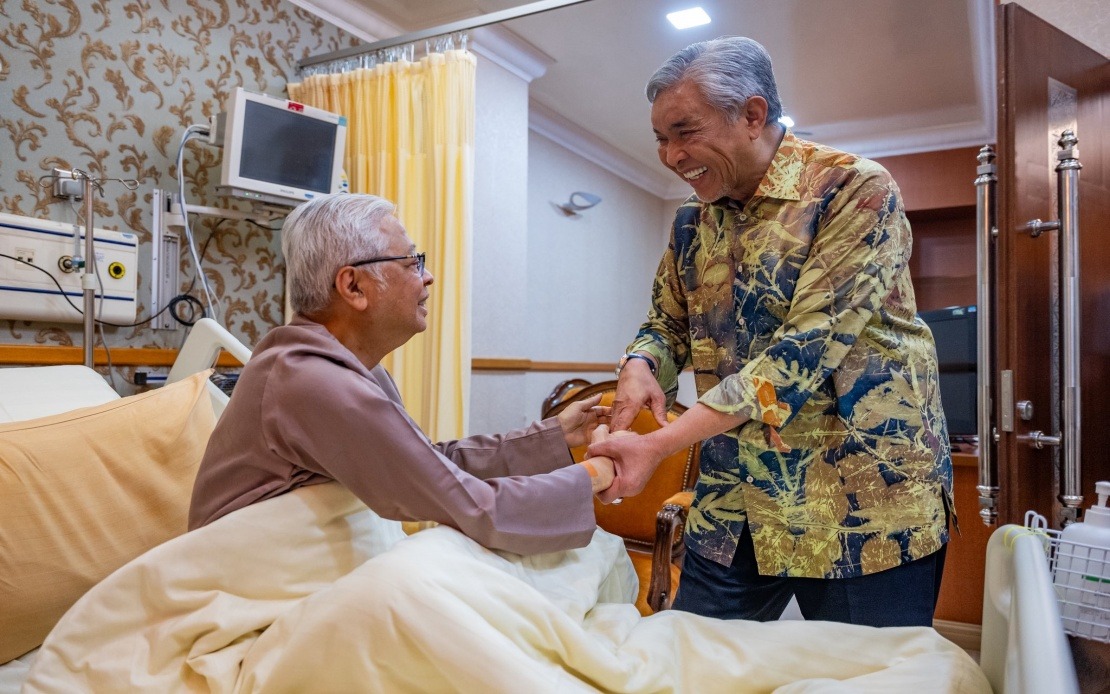
Deputy Prime Minister Datuk Seri Dr Ahmad Zahid Hamidi made a hospital visit to former Prime Minister Datuk Seri Ismail Sabri Yaakob at the National Heart Institute in Kuala Lumpur, offering his wishes for the ex-leader's swift recovery from a recent cardiac condition. The courtesy call underscored the continued personal ties within the country's political establishment, even as the nation navigates its complex coalition dynamics following the 2022 government transition.
Ahmad Zahid's gesture carried particular significance given the circumstances surrounding Ismail Sabri's hospitalisation. The former premier experienced sudden health complications while attending the Malaysian Anti-Corruption Commission headquarters on 6 August to record a statement, prompting an emergency transfer to the specialist cardiac facility. The incident raised awareness about the mounting pressures faced by high-ranking political figures in Malaysia, who often juggle demanding public responsibilities alongside personal commitments while contending with intense public scrutiny.
The Bera MP subsequently required intervention to address an abnormal heart rhythm condition, necessitating the implantation of a wireless pacemaker to regulate his cardiac function. This procedure represents a significant medical milestone, as wireless pacemaker technology offers patients greater mobility and comfort compared to traditional models, reducing the physical burden of managing chronic heart conditions. The choice of treatment reflects both advances in Malaysian healthcare capabilities and the quality of care available at the National Heart Institute, one of Southeast Asia's leading cardiac centres.
In his social media statement, Ahmad Zahid expressed hopes that Ismail Sabri would regain full strength and be able to resume his parliamentary duties and regular activities without impediment. The deputy premier's prayers for the former PM's continued wellbeing demonstrated the collegial respect that often transcends political differences in Malaysian governance, where senior statesmen maintain bonds forged through years of serving in Cabinet and national institutions together. Such expressions of solidarity carry weight in Malaysia's political culture, where the treatment of former leaders reflects broader values of respect and continuity.
Ismail Sabri's three-month tenure as Prime Minister from August 2021 to October 2022 positioned him at the apex of national decision-making during a critical juncture for Malaysian politics. His abbreviated premiership came during a period of significant economic and social challenges, including the lingering effects of the COVID-19 pandemic and its associated economic disruptions. The health incident now serves as a reminder of the toll that high office exacts on those who hold Malaysia's top positions.
The hospitalisation also highlights healthcare considerations increasingly relevant for Malaysia's ageing political leadership. As the nation's political landscape features several senior figures who have already passed conventional retirement ages, questions about succession planning and institutional resilience become more pressing. The medical event, while personal in nature, carries broader implications for continuity of governance and the management of parliamentary responsibilities during unexpected absences of senior lawmakers.
Ismail Sabri's background as a military officer before transitioning to politics has long shaped his public persona and approach to governance. His health challenge resonates particularly within veteran and military circles, where stories of resilience and recovery carry cultural significance. The wireless pacemaker technology he has received represents the kind of personalised medicine increasingly available to Malaysian patients through the country's healthcare infrastructure, positioning the National Heart Institute as a centre of medical excellence comparable to international standards.
The visit from the incumbent Deputy Prime Minister carries procedural and symbolic importance within Malaysia's political protocol. Such courtesies between senior government officials and their predecessors maintain institutional memory and reinforce the continuity of the state beyond any individual administration. Ahmad Zahid's presence at the bedside acknowledges Ismail Sabri's contributions to national governance while demonstrating the human dimension often obscured by political rivalries and policy disagreements.
Looking forward, Ismail Sabri's recovery trajectory will likely influence his capacity to engage in parliamentary debates and political activities. As the Member of Parliament for Bera, he represents approximately 170,000 constituents whose interests depend on active representation. His hospitalisation underscores the physical demands of the legislative schedule and the importance of adequate medical support systems for elected officials managing serious health conditions while maintaining their constitutional obligations. The case also exemplifies how Malaysian politicians often balance intensive careers with age-related health management.
The incident has prompted broader discussions within political circles about workplace health and safety standards for senior government officials, particularly regarding the intensity of MACC engagement processes that may place unexpected stress on individuals undergoing questioning. The episode where Ismail Sabri collapsed at the MACC headquarters has raised questions about procedural protocols and the duty of care owed to individuals participating in government investigations, regardless of their status or political standing.
For Malaysians observing this situation, the story illustrates the shared human vulnerabilities that affect even the nation's most powerful figures. The former Prime Minister's medical journey, from acute cardiac emergency to receiving cutting-edge treatment, reflects both the capabilities of Malaysia's healthcare system and the universal experience of confronting health challenges. His recovery will likely inspire confidence in the country's medical institutions while humanising political leadership for the general public.
As Ismail Sabri proceeds through his recovery and rehabilitation, his ability to return to full parliamentary function within a reasonable timeframe will be closely monitored by political observers and constituents alike. The support extended by Ahmad Zahid and presumably other senior officials demonstrates the institutional grace that characterises Malaysia's established political networks, where respect for predecessors and concern for their wellbeing remain important values despite the competitive nature of electoral politics.

