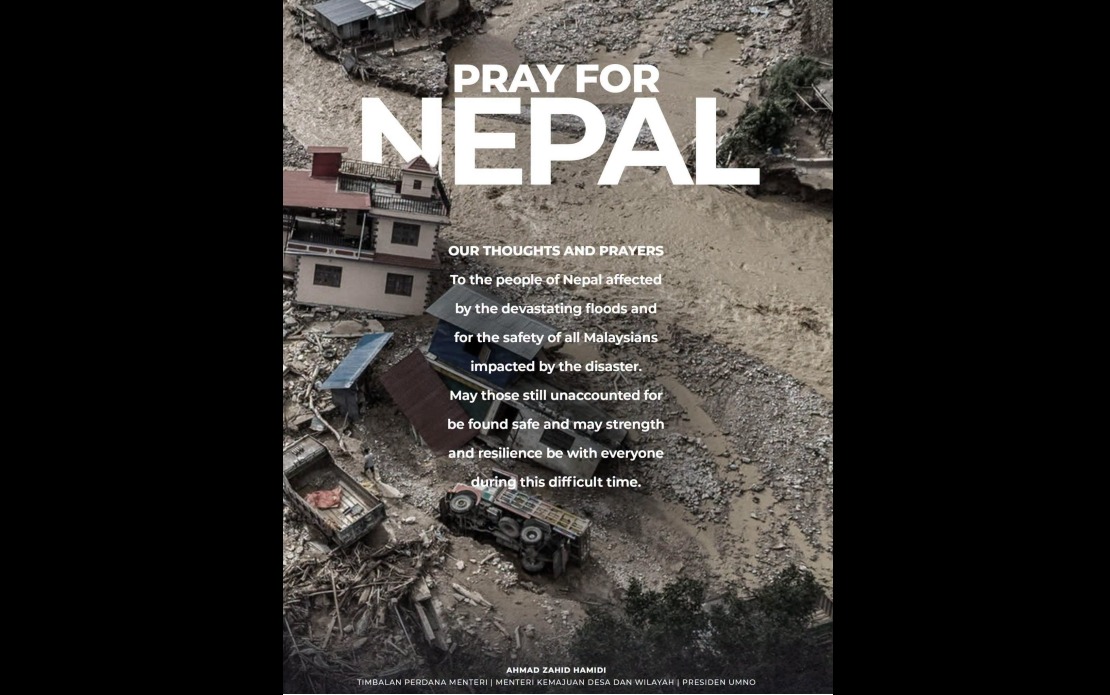
Deputy Prime Minister Datuk Seri Dr Ahmad Zahid Hamidi has publicly expressed alarm regarding the safety and welfare of Malaysian nationals caught up in Nepal's catastrophic flooding, which has emerged as one of the most destructive natural disasters to strike the Himalayan nation in recent years. His statement underscores the Malaysian government's attentiveness to citizens abroad during international crises, even as Nepal grapples with an unprecedented humanitarian emergency.
The flooding, triggered by sudden and violent water surges across multiple regions, has created a mounting humanitarian crisis with search and rescue teams struggling to locate survivors amid challenging terrain and unstable weather conditions. The scale of the disaster has sent ripples across South Asia, with neighbouring countries monitoring the situation closely and coordinating assistance efforts. For Malaysia, the incident highlights both the risks faced by its travelling citizens and the importance of maintaining robust consular support networks in the region.
Ahmad Zahid's expression of sympathy extended beyond mere diplomatic courtesy, encompassing both spiritual and practical dimensions of crisis response. He articulated hope that Malaysians reported missing would be discovered alive and returned to their families, recognising the acute distress such situations cause. Simultaneously, he conveyed formal condolences to bereaved families, acknowledging the profound losses that have reverberated across Nepal's communities.
The death toll from the flooding has climbed to 359 according to figures released by Nepal's tourism board as of Thursday evening local time, with authorities warning that the final count may rise as rescue teams penetrate remote and difficult-to-access areas. The scale of casualties reflects both the ferocity of the water surge and the vulnerability of populations in affected districts, many of which lack sophisticated early warning systems or robust disaster infrastructure. For regional observers, Nepal's crisis serves as a sobering reminder of climate-related risks intensifying across the Himalayan belt and downstream plains.
The Deputy Prime Minister invoked a broader spirit of regional solidarity, positioning Malaysia's concern not as isolated sympathy but as part of a wider community response to Nepal's catastrophe. This diplomatic framing carries weight in Southeast Asian relations, emphasising that humanitarian concerns transcend national borders and that stability in neighbouring regions affects broader regional security and prosperity. Nepal's tourism sector, which includes Malaysian visitors and investors, has become particularly vulnerable to such events, with economic repercussions extending beyond immediate disaster zones.
Search and rescue operations have become the focal point of international attention, with Malaysian officials presumably liaising with Nepali authorities to obtain information about missing nationals and coordinate any necessary evacuation or support measures. Ahmad Zahid's prayer for the success of these operations reflects the critical nature of ongoing efforts, as every passing hour reduces the likelihood of locating survivors in harsh environmental conditions. The coordination between Malaysia's foreign ministry and Nepali counterparts will prove essential in accounting for all nationals and providing appropriate consular assistance.
For Malaysian families with relatives in Nepal, the uncertainty has created an anxious period of waiting and hoping for positive news. The Deputy Prime Minister's public acknowledgment of their plight serves both a humanitarian and political function, demonstrating governmental responsiveness to citizen welfare while maintaining diplomatic grace toward Nepal during its darkest hours. This balance reflects the delicate choreography required of senior officials when national interests intersect with international crises.
The flooding represents a broader challenge for disaster management across South and Southeast Asia, where climate variability and infrastructure limitations continue to pose acute risks. Malaysia, having experienced its own devastating floods in recent years, shares common vulnerabilities with Nepal and has developed emergency protocols to assist citizens abroad. The incident reinforces the need for enhanced regional cooperation on disaster preparedness, early warning systems, and cross-border humanitarian assistance mechanisms.
As rescue operations continue and the full extent of Nepal's losses becomes clearer, Malaysian officials will maintain close monitoring of the situation and provide support to affected nationals. Ahmad Zahid's statement signals that the government has mobilised appropriate diplomatic channels and consular resources to address the crisis comprehensively. The coming days will prove critical in determining how many of those still unaccounted for can be rescued and returned safely, offering at least some measure of consolation to grieving families across the region.

