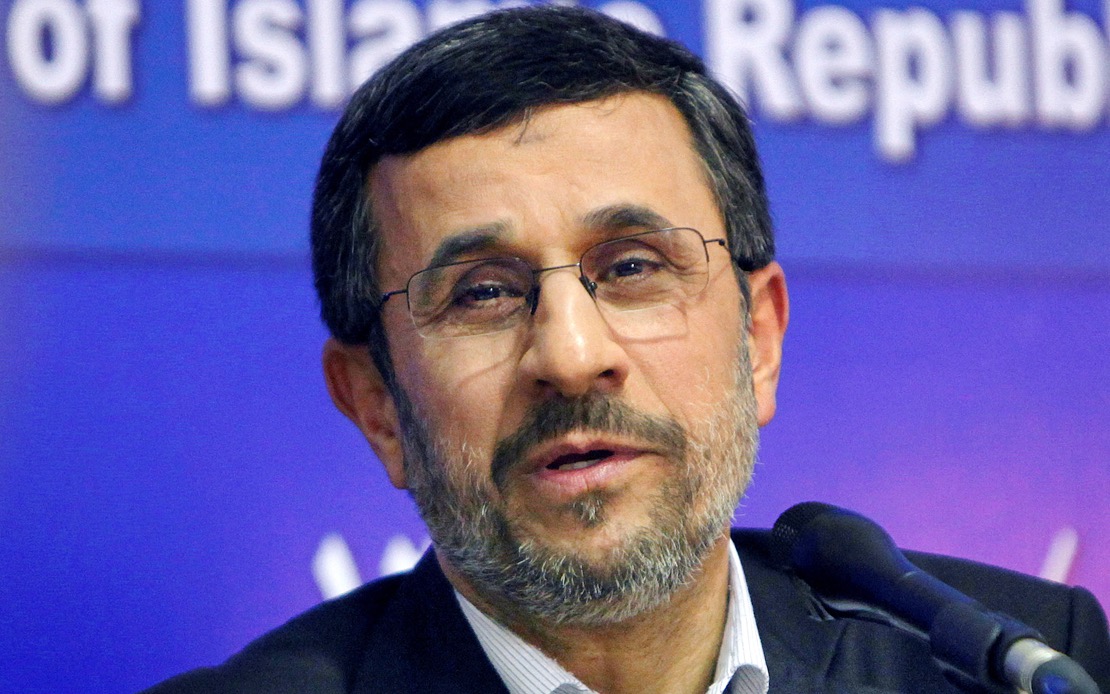
Former Iranian President Mahmoud Ahmadinejad has moved swiftly to discredit allegations published by The New York Times that Israel's intelligence service attempted to turn him into an asset and positioned him as a potential successor to lead Iran. In a formal statement released on Tuesday, Ahmadinejad's office branded the newspaper's reporting as entirely without foundation, accusing the publication of pursuing a deliberate strategy to distort public understanding of events within Iran and sow discord among its political establishment.
The substance of the Times report, released Monday, painted a dramatic picture of covert Israeli operations spanning recent years. According to the publication, which cited American officials as sources, Mossad operatives met repeatedly with Ahmadinejad at various locations outside Iran, including Budapest, and allegedly provided him with financial support for housing and travel expenses. This alleged effort formed part of a larger Israeli strategy aimed at engineering a change of government in Tehran, particularly following military strikes against senior Iranian military and political figures.
The Times narrative crescendoed with claims that an Israeli airstrike on February 28 specifically targeted Ahmadinejad's residential compound, destroying structures used by his security personnel and damaging an armoured vehicle. The report went further, asserting that immediately following the strike, a black Peugeot vehicle arrived at the scene, whereupon unnamed senior Iranian officials claimed Ahmadinejad was transported to a concealed location within Iran. These operatives, according to the American and Iranian sources quoted by the newspaper, were believed to be Mossad agents orchestrating the former president's extraction.
Ahmadinejad's office has rejected each component of this narrative with equal firmness. The statement specifically denied that the former leader is subject to house arrest, characterizing this dimension of the report as fabricated specifically to lend credibility to what it termed the newspaper's "absurd" allegations. By framing the house arrest claim as entirely invented, his representatives sought to undermine the broader edifice of the Times reporting, suggesting that if one major element lacks foundation, the entire account should be treated with profound scepticism.
The timing of these denials and allegations carries particular significance within Iran's current political context. Ahmadinejad, who served as president from 2005 to 2013, has remained a polarizing figure in post-revolutionary Iran, simultaneously commanding loyalty among certain constituencies while facing considerable opposition from establishment figures and reformist camps. The former president's public profile has intensified recently following his appearance at the funeral of Supreme Leader Ali Khamenei last week, marking his first significant public engagement since escalating tensions between the United States and Israel.
From a regional perspective, the allegations and denials illuminate the broader struggle for geopolitical influence in the Middle East. Israeli efforts to cultivate assets within Iran's political leadership, if substantiated, would represent a continuation of longstanding security service activities aimed at monitoring and potentially influencing developments in Tehran. Such operations, whether directed at former officials or sitting leaders, constitute core elements of Israeli intelligence doctrine in its competition with Iran for regional dominance.
The New York Times' sourcing from "American officials" suggests potential coordination or at minimum significant sharing of intelligence between Washington and Tel Aviv regarding Iranian political dynamics. This transatlantic dimension reflects the depth of security partnership between the United States and Israel, particularly during periods of heightened tension. For Southeast Asian observers, this pattern underscores how traditional Middle Eastern conflicts increasingly draw in global powers and shape international alignments affecting trade, security, and diplomatic relations far beyond the immediate region.
Ahmadinejad's vehement rejection of the allegations must be understood within the context of Iranian political competition and pride. Any suggestion that a senior Iranian official might cooperate with a foreign intelligence service, particularly Israel, would carry devastating political implications. Such collaboration would expose the individual to charges of treason and fundamentally compromise their political standing. Ahmadinejad's emphatic denials therefore serve not only to refute specific factual claims but to protect his political capital and standing within Iran's complex factional landscape.
The February 28 airstrike referenced in the Times reporting forms a crucial anchor point for evaluating these claims. Public records and reporting from international media outlets have confirmed that Israeli military operations did occur on that date, targeting various locations within Iran. However, the specific targeting of Ahmadinejad's compound and the alleged extraction operation remain contested, with Ahmadinejad's office providing no alternative explanation for the events that day.
The credibility question surrounding these allegations extends beyond the immediate dispute between Ahmadinejad and The New York Times. International observers must grapple with the reliability of the unnamed American and Iranian officials quoted by the newspaper, the motivations underlying their disclosure of sensitive intelligence matters, and the likelihood that such a high-profile recruitment operation would remain substantially secret while Mossad simultaneously conducted broader military operations.
For Malaysian and Southeast Asian policymakers monitoring these developments, the episode underscores how Middle Eastern intelligence operations, geopolitical competition, and political instability continue to generate narratives and allegations that reverberate through global information ecosystems. The capacity of major publications to amplify unverified claims about covert operations, even when attributed to official sources, carries implications for how regional actors evaluate information reliability and international reporting standards.
Ahmadinejad's recent public reemergence following the Supreme Leader's funeral suggests that whatever his current political circumstances, he remains an actor commanding sufficient public attention to warrant denial and clarification. His statement categorically rejecting the New York Times allegations represents a clear demarcation line in a dispute likely to continue generating international attention and regional speculation about the true extent and success of foreign intelligence operations targeting Iran's political establishment.

