The technology startup world is undergoing a profound transformation in how it builds software and structures its workforce. Rather than assembling large engineering teams, founders are discovering that experienced developers armed with artificial intelligence coding assistants can accomplish what once required dozens of people. This shift represents both opportunity and risk—enabling faster innovation while potentially closing doors for the next generation of programmers seeking to break into the industry.
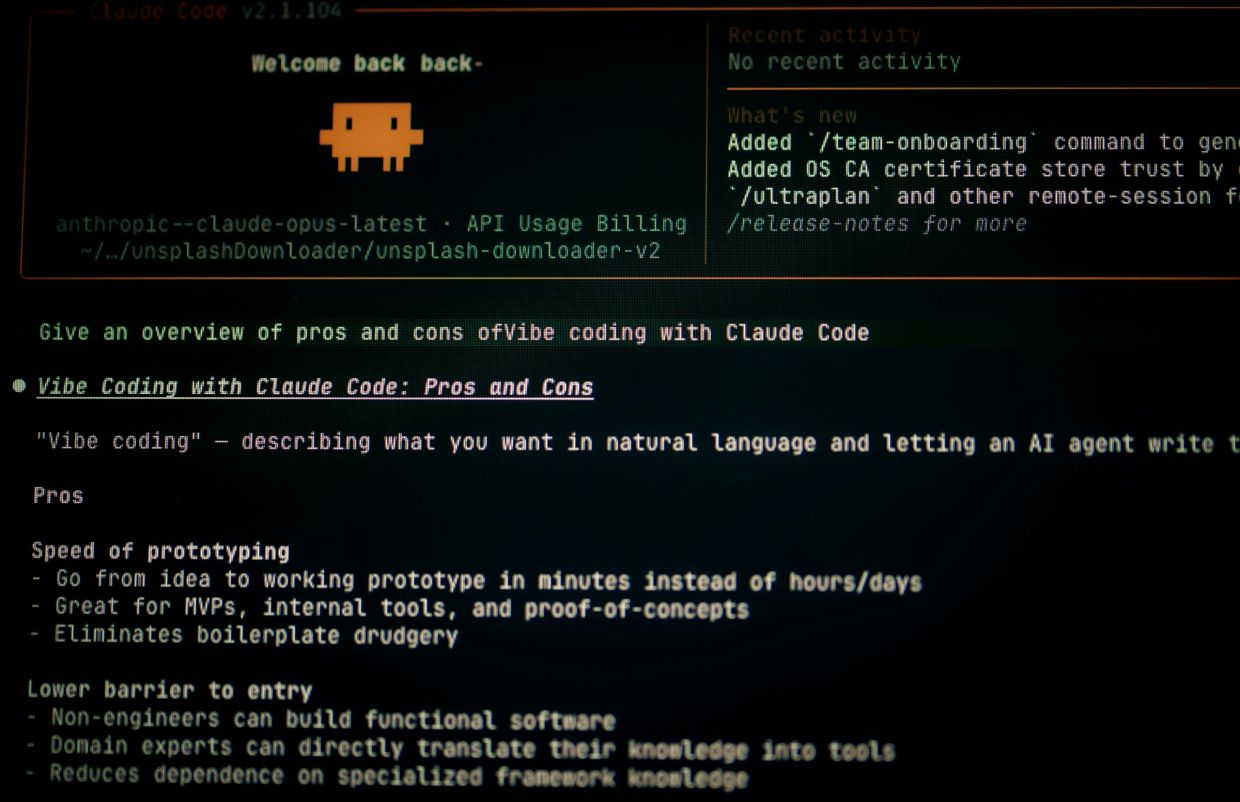
The preference for this new model is explicitly stated by startup leaders. Those running lean teams are seeking what some call "architects"—mid-career engineers with deep workflow knowledge who excel at leveraging AI tools like Anthropic's Claude Code to amplify their productivity rather than writing code line by line. These experienced professionals understand software architecture, system design, and business requirements, allowing them to direct AI systems toward meaningful outputs. Candidates without foundational knowledge of how software projects actually function are viewed as less valuable to organizations operating this way, according to startup founders interviewed about their hiring strategies.
The statistical evidence of this trend is striking. Y Combinator's Winter 2025 batch of startups reveals that a quarter of companies were built on codebases that were 95% AI-generated, according to Managing Partner Jared Friedman. This concentration among newly funded startups signals how quickly the model has been adopted in the most competitive and resource-aware segment of the technology sector. Companies like Giftory, which employs roughly 30 people, have calculated that spending US$200 a month on premium AI subscriptions is economical compared to developer salaries averaging US$100,000 annually—and represents such a cost advantage that it makes offshore hiring arrangements uncompetitive by comparison.
For companies operating with this leaner model, the financial benefits are substantial and extend beyond direct salary savings. Espresa's customer success leadership estimates their approach is generating millions of dollars in annual savings. Other founders describe deliberately choosing to expand capabilities through AI rather than hiring additional headcount, even when their existing teams are already composed of talented engineers. The logic appears irresistible from a startup perspective: deliver comparable or superior output with fewer people on the payroll, maintaining lower burn rates and extending runway during uncertain economic conditions.
But this efficiency calculation comes with a troubling corollary for career development. Research institutions have begun documenting the employment impact on younger workers. A Stanford Digital Economy Lab study examining payroll data from millions of American workers found that employment among 22- to 25-year-old workers in AI-exposed occupations, including software development, declined nearly 20% from a late 2022 peak. Harvard researchers analysing resume and job posting data across 62 million workers and 285,000 firms discovered that junior employment at companies adopting generative AI dropped approximately nine per cent relative to non-adopting competitors within six quarters, even as senior developer hiring continued rising.
This divergence reflects a deliberate strategy rather than coincidental displacement. Younger programmers have traditionally entered the field through junior positions where they learned existing codebases, absorbed organizational knowledge, and developed problem-solving skills under mentorship. That pathway is rapidly narrowing. Cybersecurity startup leaders report widespread hiring hesitation across the industry, with many companies conducting extensive interview processes but failing to convert candidate pipelines into actual job offers. The uncertainty about whether junior positions are still economically justified has created a bottleneck.
The consequences extend beyond immediate employment figures. Computer science enrollment has begun declining—dropping six per cent across the University of California system and falling at two-thirds of computing programs nationwide according to the Computing Research Association. Prospective students observing that entry-level positions are disappearing may reasonably conclude that computer science training offers diminished returns compared to other fields. This creates a potential long-term talent shortage precisely when the industry might most need it.
Not all technology leaders embrace this trajectory. Amazon Web Services CEO Matt Garman has publicly criticized the strategy of replacing junior developers with AI systems, characterizing it as "one of the dumbest things I've ever heard." His concern focuses on the systemic risk: by eliminating the roles through which junior developers gain experience and eventually mature into senior positions, the industry risks depleting its future leadership pipeline. An engineering organization cannot sustain itself indefinitely on experienced architects alone; someone must be trained to eventually replace retiring engineers and take on increasingly complex responsibilities.
Yet the economic incentives driving startups toward this model appear unlikely to reverse in the near term. The technology sector remains in what founders describe as a hypergrowth phase, where the pressure to accomplish more with limited capital remains intense. When faced with the choice between allocating additional resources toward hiring or toward AI tools, the mathematics increasingly favors the latter. AI coding assistants continue improving, costs are declining, and organizational familiarity with these systems is deepening. Startups that maintain larger junior developer cohorts may find themselves at a competitive disadvantage relative to those optimizing around AI multipliers.
This dynamic carries particular significance for the Southeast Asian technology ecosystem. Malaysian and regional startup communities often look to Silicon Valley models for guidance on scaling strategies and team structure. As the AI-centric, lean-team approach becomes dominant among successful startups globally, there is risk that local technology companies will adopt similar patterns—potentially importing the employment challenges alongside the efficiency gains. Yet Southeast Asia's relatively younger demographic and developing technology workforce might warrant different considerations about preserving career pathways.
The resolution of this tension remains uncertain. Some technology leaders argue that new job categories will emerge—perhaps in AI training, system prompt engineering, or AI-assisted development roles—that could absorb workers displaced from traditional programming positions. Others suggest that as AI capabilities plateau or face regulatory constraints, demand for human developers will stabilize at new equilibrium levels. What appears clear is that the technology industry is experiencing a structural shift in labor demand that will reshape how young people enter the field and how experienced developers remain relevant in coming years.

