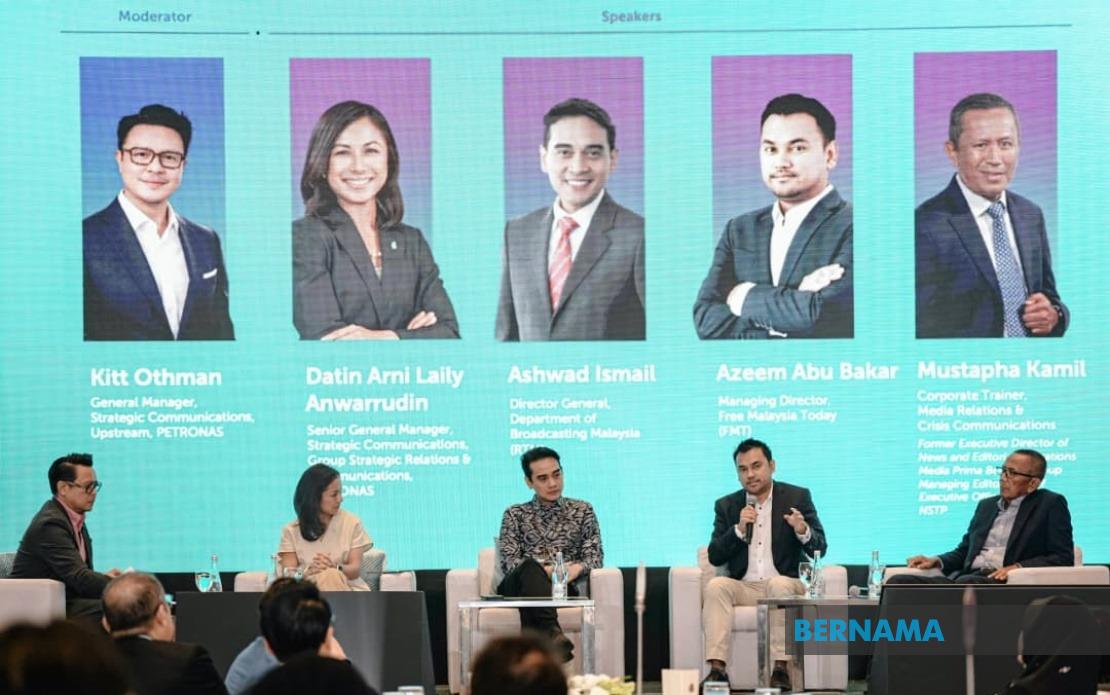
The explosive growth of artificial intelligence and real-time digital information spread is fundamentally reshaping how Malaysian corporations and news organisations approach crisis management and brand protection. Speaking at a PETRONAS-sponsored forum on media credibility and AI in Kuala Lumpur, senior executives from the nation's largest companies and newsrooms warned that organisations clinging to outdated communication protocols risk losing control of their public narratives to unverified information spreading at digital speeds.
Datin Arni Laily Anwarrudin, Senior General Manager of Strategic Communications at PETRONAS, highlighted the acute vulnerability corporations face when artificial intelligence accelerates the distribution of unconfirmed reports across multiple platforms simultaneously. The traditional corporate response—carefully crafting statements while monitoring initial media coverage—has become dangerously inadequate. "The speed at which AI spreads unverified information presents a major challenge for corporations in protecting their brand reputation," she explained. For Malaysian multinational enterprises operating across Southeast Asia and globally, this reality demands an immediate strategic pivot.
The fundamental shift centres on proactive narrative ownership rather than reactive damage control. Arni Laily stressed that organisations must seize the initiative by transparently communicating their position before external actors, competitors, or misinformed sources dominate the conversation. "The age of AI kind of forces us as an organisation to be a lot more transparent, because otherwise someone else will fill that space," she noted. This insight carries particular relevance for Malaysian-listed companies and government-linked corporations facing intense scrutiny from multiple stakeholder groups simultaneously.
Perhaps most consequential for crisis management is the complete obsolescence of traditional response timeframes. The conventional 16-hour window—roughly the period between a crisis erupting and newspapers hitting print—that governed corporate communications for decades has simply vanished. Mustapha Kamil Mohd Janor, who previously directed news operations at Media Prima Berhad and NSTP Group, explained the profound implications: "You have completely lost the 16-hour window before the newspaper is being published. Anything happens now, the news will be immediate." This compression of response time from hours to minutes forces organisations to establish permanent crisis teams rather than assembling them reactively.
The elimination of reaction time fundamentally alters decision-making architecture within corporations. Arni Laily cautioned against the temptation to rush responses simply because information has already circulated online. Instead, organisations must develop sophisticated protocols that simultaneously investigate facts and communicate transparently. "How do we still ensure that not just because it's out there you're forced to react very quickly? How do we search for that truth and confirm the status?" she asked. This tension between speed and accuracy represents perhaps the central dilemma facing Malaysian firms navigating AI-accelerated information environments.
Mustapha Kamil emphasised that Malaysian organisations lacking structured crisis communication infrastructure face existential reputational risks. "If you do not have a structured media crisis communication team in your organisation, this is as good a time as any to have one," he stated bluntly. For mid-sized Malaysian companies and smaller enterprises, this represents a significant operational and financial commitment, yet the alternative—fumbling through crisis communications without preparation—carries far greater costs.
Yet amidst technological disruption, the fundamental mission of journalism and corporate communications remains constant. Mustapha Kamil articulated this conviction: media practitioners function as guides helping society navigate complex information landscapes toward sound decision-making. "Because we journalists, we are like a searchlight; we're pointing in a direction on a course that society chose. We have to point out and help them how to make the correct decision," he explained. This principle applies equally to corporate communicators tasked with helping stakeholders understand organisational positions during uncertainty.
The role of artificial intelligence itself requires sophisticated interpretation. Azeem Abu Bakar, Managing Director of Free Malaysia Today, argued that while AI excels at automating routine operational tasks, human journalists and communicators must specialise in capabilities machines cannot replicate. He proposed the concept of "SUPER journalists"—professionals distinguished by deep source networks, nuanced understanding of complex issues, pattern recognition across disparate information, operational efficiency, and established reputation for reliability. "This is something which AI cannot do," Azeem stressed, highlighting the enduring premium placed on human judgment and credibility.
The panel discussion, convened by PETRONAS's Group Strategic Relations & Communications division in partnership with the Malaysian Press Institute, assembled perspectives from across Malaysia's media and corporate landscape. Radio Televisyen Malaysia director-general Ashwad Ismail, Bernama leadership, and other senior communicators reinforced a consensus that the AI era demands fundamental restructuring of established protocols. This gathering of senior figures signalled recognition that crisis communications transformation affects not merely individual organisations but the broader Malaysian corporate ecosystem.
For Malaysian enterprises—whether multinational corporations, government-linked companies, or ambitious domestic firms—the message is unambiguous: incremental adjustment to communication strategies will prove insufficient. The combination of artificial intelligence acceleration and always-on digital media creates an environment where traditional crisis management becomes counterproductive. Instead, organisations must invest in permanent crisis infrastructure, cultivate transparent communication cultures, and develop decision-making frameworks that balance speed with accuracy. The firms that navigate this transformation successfully will likely establish competitive advantages in reputation management, stakeholder trust, and operational resilience that prove durable across market cycles.

