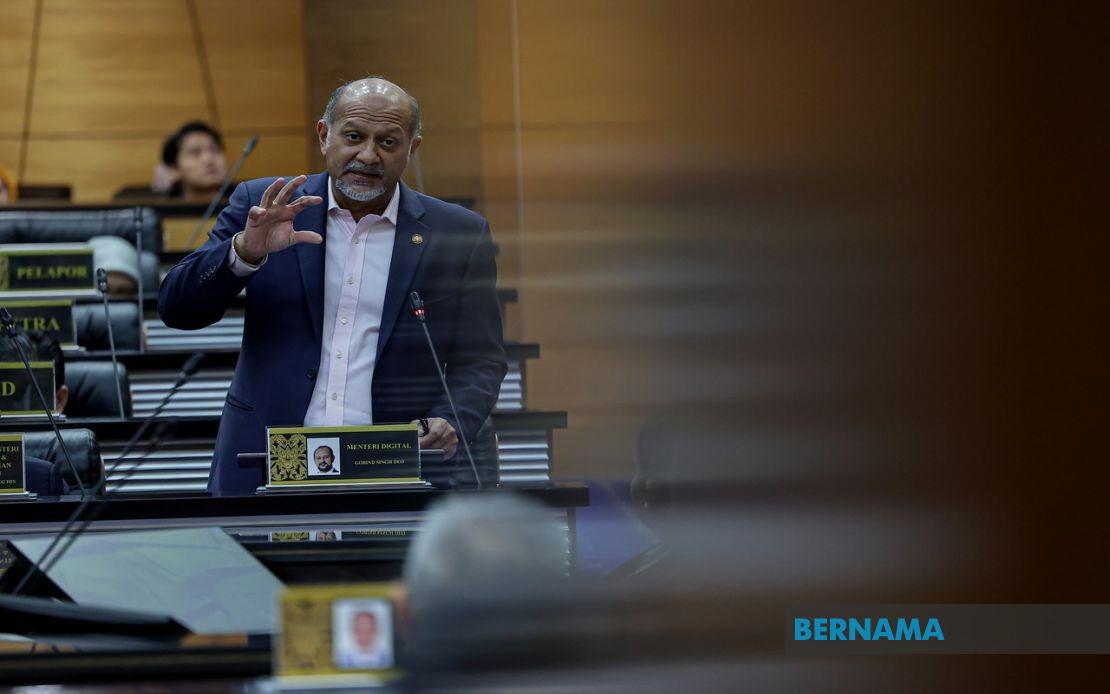
Malaysia is moving towards a comprehensive legal framework to govern artificial intelligence, with Digital Minister Gobind Singh Deo emphasising that responsibility for AI-related harms must rest squarely with the humans and organisations deploying the technology rather than the systems themselves. Speaking during a Special Chamber session in the Dewan Rakyat on June 24, Gobind outlined how the proposed AI Governance Bill addresses a critical gap in accountability as the nation grapples with increasingly complex questions about liability and responsibility in an AI-driven economy.
The fundamental challenge the bill seeks to resolve stems from a basic legal reality: artificial intelligence systems cannot be held accountable in any meaningful way because they lack legal personality or moral responsibility. Unlike humans or incorporated entities, AI cannot be sued, fined, or imprisoned. This creates a dangerous void where alleged victims of AI-generated harm have no obvious party to hold legally responsible. The bill responds to this vacuum by establishing clear chains of accountability, tracing responsibility back through the entire ecosystem of stakeholders involved in bringing an AI system into use. Whether it is the developers who created the algorithm, the organisations that deployed it, or the entities operating it day-to-day, someone must shoulder the legal burden.
Gobind's articulation of this principle reflects a maturation in Malaysia's approach to technology governance. As AI becomes embedded in everything from banking systems to healthcare diagnostics to government services, the stakes of getting accountability wrong have multiplied. The minister acknowledged that this framework becomes more urgent as everyday Malaysians encounter AI in both public and private sector operations, often without full transparency about how decisions affecting them are being made by machines rather than humans. This shift requires a corresponding shift in legal philosophy.
Crucially, the government is not proposing to regulate what AI systems produce or the content they generate. Instead, the focus is on governance mechanisms designed to identify and mitigate risks before they cascade into widespread harm. This distinction is important for Malaysia's innovation ecosystem, as it avoids the trap of stifling technological development while still protecting public interests. Rather than second-guessing every output an AI system produces, authorities will establish processes to ensure systems are properly tested, monitored, and maintained throughout their operational lives.
One mechanism under exploration is mandatory AI incident reporting, which would create visibility into problems as they emerge in the real world. This approach allows regulators to identify patterns across multiple incidents, spot systemic weaknesses in AI deployment practices, and issue guidance or enforcement actions before similar failures recur. It transforms government from a static rule-maker into a dynamic learner, constantly adapting to the unpredictable ways AI systems fail or behave unexpectedly when confronted with real-world complexity.
The bill also contemplates an AI regulatory sandbox, a controlled environment where developers and industry players can test emerging AI applications alongside relevant government agencies. This mechanism serves multiple purposes simultaneously. It gives companies space to innovate and refine their systems before full-scale deployment, it educates regulators about emerging risks, and it builds trust between the technology sector and government. For Malaysia, which seeks to position itself as a regional hub for digital innovation, such sandboxes represent a pragmatic middle path between naive permissiveness and stifling regulation.
Gobind stressed that the government recognises AI does not malfunction at a single point in its lifecycle. A system that operates safely when first deployed might become risky when modified, repositioned into a different context, connected to other systems, or used on populations it was not originally designed for. This acknowledgment reflects genuine sophistication in thinking about technology governance. It means accountability frameworks must span the entire arc from initial development through eventual decommissioning. It also suggests that responsibility may shift hands as an AI system changes hands, requiring mechanisms to track ownership and accountability as systems move through their operational lives.
The proposed framework explicitly positions itself as horizontal governance complementing rather than replacing existing laws. This approach recognises that Malaysia already has regulatory infrastructure addressing criminal offences, consumer protection, intellectual property, and sector-specific concerns. The AI bill is not designed to overturn this existing architecture but to fill gaps where traditional law proves inadequate for governing algorithmic systems. Where an AI system's malfunction triggers a criminal offence, consumer protection authorities will continue operating under existing mandates. This layered approach avoids the pitfall of creating conflicting regulations while ensuring comprehensive coverage.
For Malaysian readers and the broader Southeast Asian context, this development signals that the region is moving beyond naive enthusiasm for AI adoption toward more mature regulatory thinking. Rather than simply racing to deploy AI systems as quickly as possible, governments are asking harder questions about how to ensure the benefits reach the public while limiting risks. This is particularly significant for developing economies where regulatory capacity is sometimes limited and where the consequences of AI system failures might fall disproportionately on vulnerable populations with limited recourse.
The bill also implicitly acknowledges that Malaysia wants to maintain its attractiveness to technology companies and researchers. By refusing to regulate AI output directly and instead focusing on risk governance and incident reporting, the government signals it will not become arbitrarily censorious. This approach could help Malaysia avoid the fate of some jurisdictions where overly restrictive AI policies drive talent and investment elsewhere. The emphasis on supporting innovation, research, and technological development reflects genuine concern about Malaysia's position in the global digital economy.
Looking ahead, the refinement of this bill will reveal much about Malaysia's appetite for balancing innovation against protection. The success of the framework will depend on how transparently government agencies apply accountability principles, whether companies are genuinely incentivised to report incidents rather than hide them, and whether regulators can develop sufficient technical expertise to meaningfully assess AI risks. These implementation challenges loom larger than the legislative language itself. The bill provides a framework, but its ultimate value depends on how seriously both industry and government treat their respective obligations under it.