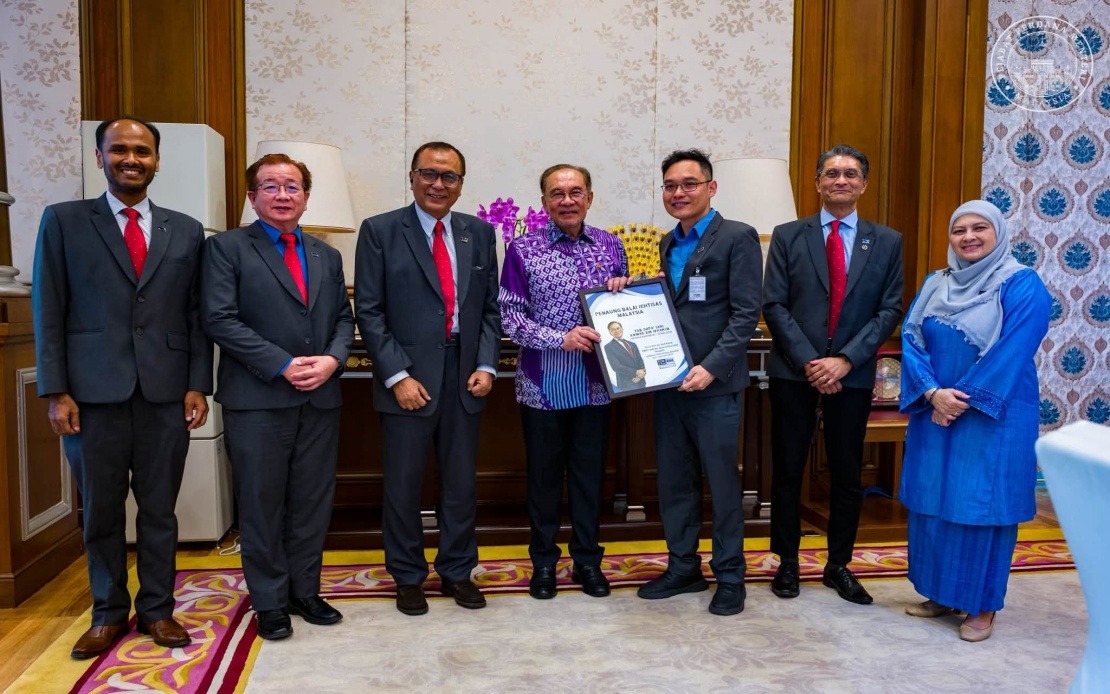
Prime Minister Datuk Seri Anwar Ibrahim has highlighted artificial intelligence readiness and professional talent development as central pillars of Malaysia's competitive strategy, following discussions with Balai Ikhtisas Malaysia (BIM), the Malaysian Professional Centre. The government views these twin initiatives as essential for maintaining the country's edge in an increasingly knowledge-driven regional economy where technological adoption and human capital quality determine long-term prosperity.
During a courtesy visit from a BIM delegation led by president Prof ChM Dr Juan Joon Ching, Anwar underscored the strategic importance of equipping Malaysia's professional workforce with contemporary AI capabilities. The emphasis reflects growing recognition across Southeast Asia that nations failing to upskill their professionals in artificial intelligence risk falling behind competitors who are rapidly integrating these technologies into business operations, governance, and innovation ecosystems. Malaysia's push to position itself as a regional hub for professional excellence depends critically on demonstrating that its workforce can operate fluently with emerging technologies while maintaining ethical standards.
The Prime Minister characterised professionals as strategic partners rather than passive beneficiaries of government policy, signalling a collaborative approach to national competitiveness. This framing acknowledges that sustained economic progress and innovation cannot be driven by government action alone—it requires genuine partnership with knowledge workers, industry practitioners, and professional associations who understand sectoral needs and emerging skill gaps. By positioning the professional community as co-architects of Malaysia's development trajectory, the government creates incentive structures for deeper engagement and knowledge-sharing between public institutions and private expertise.
Anwar's comments also situated professional development within the broader context of the MADANI agenda, the government's framework prioritising people-centric development and improved quality of life. This connection emphasises that investing in professional talent serves purposes beyond narrow economic metrics; enhanced professional capabilities contribute to better service delivery in healthcare, education, infrastructure, and public administration—sectors where professional expertise directly impacts citizen wellbeing. The integration of professional development with MADANI suggests the government recognises that sustainable development requires both technological advancement and human-centred policy outcomes.
The invitation to Hari Ikhtisas Malaysia, the professional community's annual commemoration event, signals political commitment to recognising the contributions professionals make to national development. Such high-level engagement demonstrates that the government prioritises dialogue with knowledge-based sectors and values their input on policy formulation. For BIM and its member organisations, prime ministerial attendance at flagship events provides visibility and legitimacy, potentially encouraging broader professional participation in government-initiated development programmes and policy consultations.
Malaysia's emphasis on professional excellence reflects broader regional trends. Other Southeast Asian economies—Singapore, Thailand, and Vietnam—are investing substantially in skills development and positioning themselves as hubs for specialised professional services. Malaysia's challenge lies in not merely matching these investments but differentiating its professional ecosystem through distinctive advantages: geographic proximity to ASEAN markets, multilingual workforce capabilities, Islamic finance expertise, and growing technology sector maturity. Professional development initiatives must be tailored to leverage these comparative strengths rather than simply replicating generic skills-training models.
The focus on artificial intelligence readiness carries particular significance for Malaysia's professional services sector, encompassing law, accounting, engineering, architecture, and management consulting. These professions face disruption from AI-powered tools that automate routine work while creating demand for higher-value advisory services. Professionals who understand AI capabilities and limitations—who can manage human-AI collaboration—will command premium market value. Conversely, those unable to adapt risk marginalisation as clients increasingly expect their advisors to harness technological advantages.
The government's emphasis on nurturing talent with integrity alongside competitiveness and vision addresses growing international concerns about responsible AI deployment. Malaysia can differentiate itself in the regional professional services market by developing practitioners who combine technical AI proficiency with robust ethical frameworks and cultural awareness. This positioning appeals particularly to multinational corporations establishing regional centres of excellence and seeking workforce stability grounded in professional codes of conduct and institutional integrity.
For Malaysia's economy, strengthening professional talent pipelines generates multiple benefits. Professionals command higher earning capacity and contribute disproportionately to tax revenues and domestic consumption. Their productivity improvements ripple through entire value chains as clients across sectors benefit from enhanced advisory quality. Professional associations themselves serve as knowledge-circulation networks, disseminating best practices and fostering innovation ecosystems that attract foreign direct investment in knowledge-intensive industries.
The dialogue between government and BIM also reflects recognition that professional development cannot rely solely on formal education institutions. Working professionals require continuous upskilling opportunities, mentorship access, and platforms for peer learning. Professional associations uniquely position to deliver these services through conferences, certifications, and member networks. Government partnership with BIM leverages these institutional capabilities rather than attempting to replicate them through standalone bureaucratic structures.
Moving forward, the concrete mechanisms translating these commitments into measurable outcomes remain unclear. Effective implementation requires identifying specific AI competencies critical across professional disciplines, designing accessible training pathways for practitioners already in the workforce, and establishing quality standards ensuring Malaysian AI-trained professionals meet international benchmarks. Regional competition for professional talent intensifies as Singapore, Hong Kong, and Australia expand immigration programmes targeting skilled workers, making Malaysia's value proposition clear and compelling.
The government's stated commitment to stronger ties between public institutions and the professional community opens space for systematic dialogue on regulatory frameworks, immigration policies for specialist talent, research funding mechanisms, and workplace standards. Such partnerships, when genuine and sustained, can address structural barriers limiting professional sector expansion and enable Malaysia to retain talent that might otherwise seek opportunities abroad. The coming engagement with BIM and the broader professional community will test whether rhetorical commitments translate into institutional reforms and resource allocation supporting these ambitious goals.

