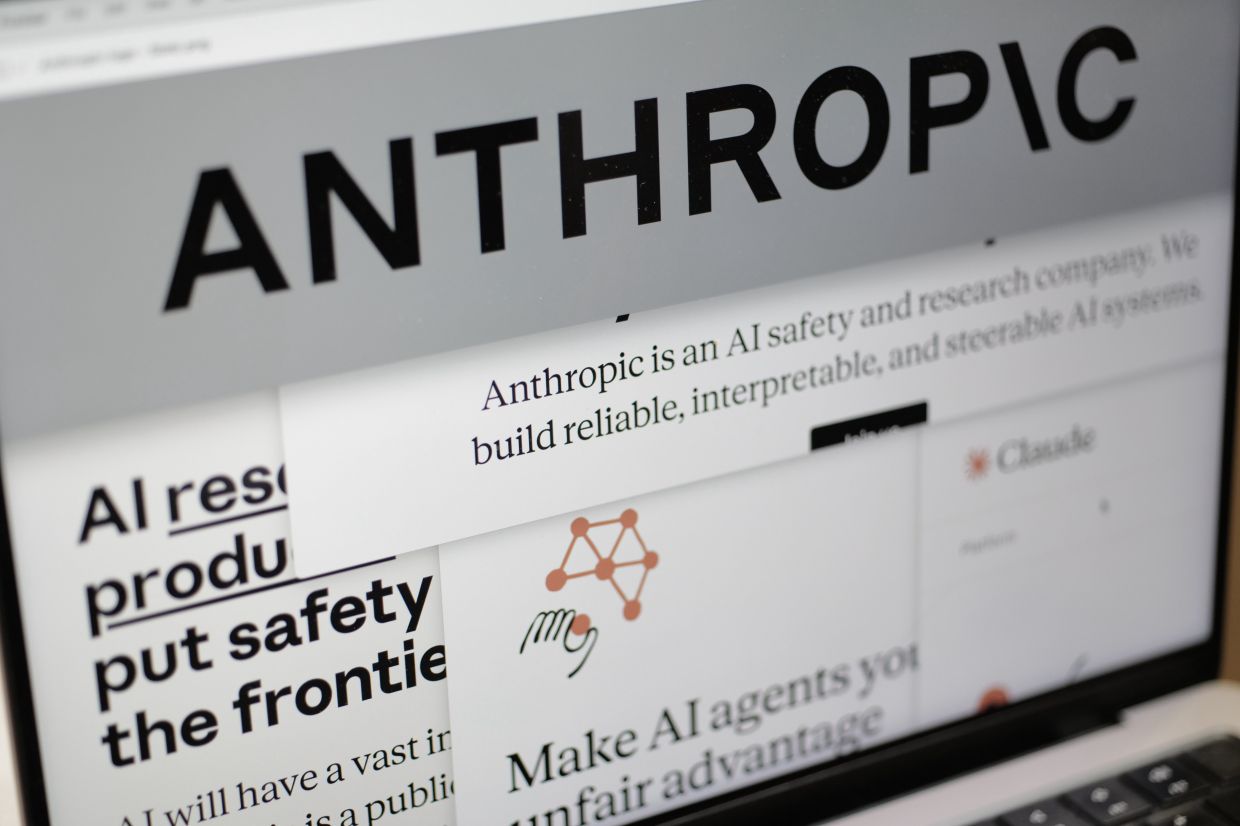
Legion, a San Francisco-based technology firm specialising in legal software, has launched a legal challenge against the US government's restrictions on access to Anthropic's cutting-edge artificial intelligence models. The federal court filing, submitted on June 23 in Washington, targets what Legion characterises as an overly broad export control that effectively locks foreign nationals out of advanced AI capabilities—a move that threatens the company's core operations and competitive viability in an industry defined by rapid technological advancement.
The controversy centres on the Trump administration's order requiring Anthropic, the developer of Claude and the flagship Fable 5 model, to prevent access by foreign nationals to its most powerful AI systems. Anthropic responded by disabling access to both Fable 5 and Mythos 5 across the board within days of receiving the directive from Commerce Secretary Howard Lutnick. Legion's predicament stems from an uncomfortable reality: the company employs software developers who hold Canadian citizenship and work remotely from Canada, placing them squarely within the scope of restrictions that treat foreign nationals as security risks.
The timing and breadth of Anthropic's compliance has created an immediate crisis for Legion. The company argues that losing access to Fable 5 represents not merely an inconvenience but an existential threat to its business model. In the rapidly evolving artificial intelligence sector, where capabilities compound and new breakthroughs emerge weekly, a sudden inability to access the latest generation of models creates a competitive chasm that cannot easily be closed. Legion contends that the damage is not merely financial but operational—the company's development pipeline has stalled, engineers lack their primary tools, and the company's market position erodes with each passing day the restriction remains in force.
What makes Legion's complaint particularly significant for Southeast Asian technology companies is the precedent it challenges. The US government's approach to AI export controls reflects a broader strategy to maintain American technological dominance by restricting foreign access to advanced systems. This philosophy extends beyond simple national security concerns to encompass economic competitiveness, effectively weaponising AI capability as a tool of strategic advantage. For regional tech firms that collaborate with international talent or integrate foreign expertise, similar restrictions could soon apply to other advanced technologies, from semiconductor tools to quantum computing systems.
The legal arguments Legion advances strike at fundamental tensions in the export control framework. The company does not dispute that national security represents a legitimate government interest, nor does it argue that advanced AI systems lack security implications. Rather, Legion contests the mechanism of enforcement and the definition of what constitutes an unacceptable security risk. A Canadian software developer working remotely from Toronto presents a different profile from a developer employed by a foreign government or military contractor, yet the blanket restriction treats all foreign nationals identically. This categorical approach, Legion suggests, exceeds what is necessary to achieve the government's stated security objectives.
Anthropically has positioned itself carefully in this dispute. Rather than resisting the government order, the company adopted rapid compliance, even framing its actions as aligned with the administration's objectives. In a statement, Anthropic expressed gratitude for the government's efforts and pledged continued cooperation on shared goals of protecting critical infrastructure and maintaining American leadership in artificial intelligence development. This diplomatic posture reflects Anthropic's vulnerability—as the company holding the licences to these valuable models, it faces direct regulatory pressure and cannot risk a confrontation with the Commerce Department.
The case exposes deeper questions about how artificial intelligence regulation will function in an era of distributed teams and global talent. Many technology companies, particularly those working at the frontier of AI capabilities, deliberately employ the world's best researchers regardless of nationality. Restricting access based on citizenship creates practical problems for companies structured around collaborative development. Legion's engineers in Canada, separated from American colleagues by geography but connected through digital infrastructure, now find themselves unable to use tools essential to their work. The restriction creates incentives for such companies to reconsider their hiring practices or relocate operations entirely—outcomes that could reshape the geography of AI development.
For Malaysian and Southeast Asian technology firms, the Legion case serves as a cautionary indicator of how American export controls may evolve. As AI systems become increasingly central to competitive advantage across industries, access restrictions could extend beyond pure defence applications into commercial sectors. Companies in the region that partner with international development teams or that depend on access to cutting-edge American AI tools now face uncertainty about the continuity and scope of that access. The precedent suggests that foreign nationality alone may be sufficient grounds for restricted access, regardless of the specific work being performed or the security classification of projects involved.
The suit also highlights the growing friction between the tech industry's globalised workforce model and nationalist policies increasingly favoured by major governments. Silicon Valley and other technology hubs have long relied on international talent to drive innovation. Restrictions that penalise companies for employing foreign nationals represent a reversal of decades-long policy that treated talent acquisition as a competitive advantage. As other nations consider reciprocal measures, the result could be a fragmentation of global technology development into competing regional ecosystems, each operating under different rules.
Commerce Secretary Howard Lutnick, in his warning letter to Anthropic CEO Dario Amodei, drew a clear line: no advanced AI models beyond American borders, and no access for foreign nationals regardless of location. This formulation effectively subordinates commercial interests to security considerations as defined by the executive branch, with limited opportunity for case-by-case evaluation or appeals based on circumstances. Legion's legal challenge will test whether courts can impose limits on executive power in this domain or whether national security invocations prove sufficient to overcome all commercial objections.
The lawsuit remains in preliminary stages, with outcomes uncertain. However, its significance extends beyond Legion's immediate circumstances. The case will likely establish important precedents for how American courts balance national security against commercial rights, and how strictly citizenship restrictions can be applied in technology contexts. For regional competitors and potential customers of Anthropic's models, the outcome will shape expectations about the reliability of access to American artificial intelligence capabilities going forward.

