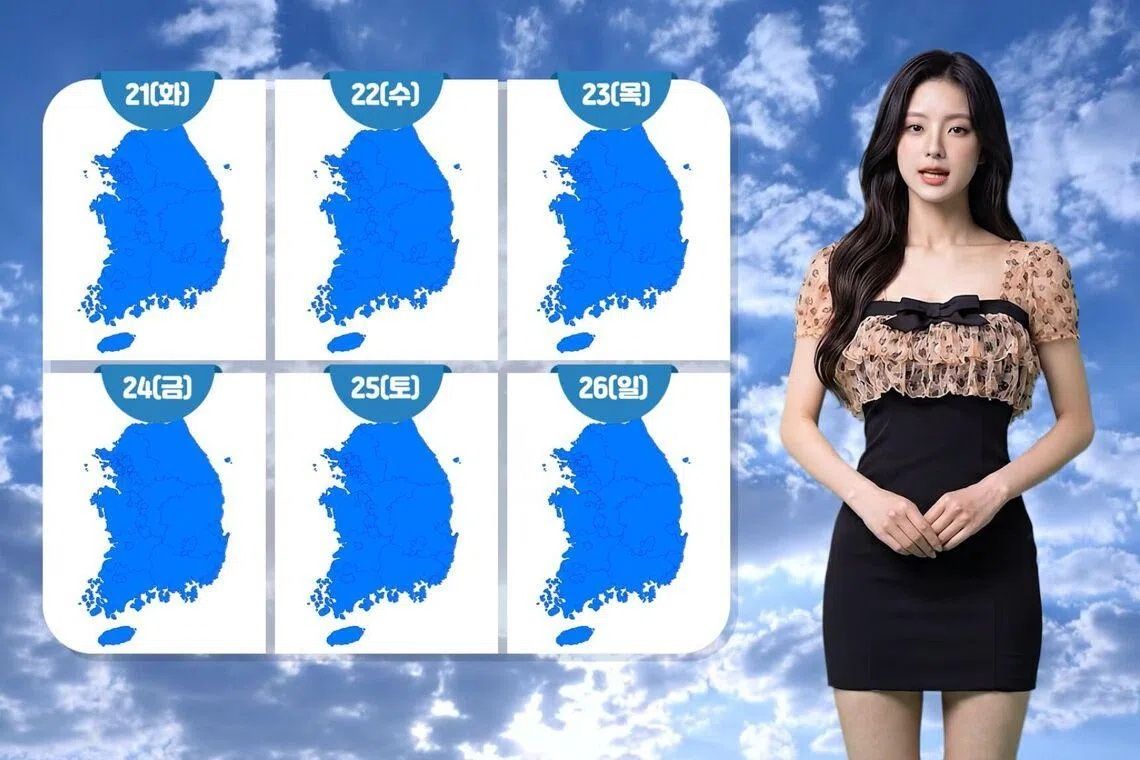
South Korean broadcasters are confronting uncomfortable questions about gender representation and algorithmic bias after an AI-generated female weathercaster ignited a firestorm of public criticism. The incident, centring on the virtual presenter Kim Si-a who appeared in a weather forecast video released by Kweather in July, has expanded into a broader reckoning over how artificial intelligence systems can perpetuate and amplify existing prejudices against women in media. The controversy underscores a critical tension at the heart of the technology industry: as organisations rush to adopt AI tools to cut costs and improve efficiency, they risk encoding discriminatory practices into systems that will shape media representation for years to come.
The flashpoint came when Kweather, a South Korean meteorological and air-quality service provider, uploaded a weather forecast video to its YouTube channel featuring Kim Si-a, an animated character designed to deliver weather information alongside standard on-air gestures and meteorological references. Although the broadcaster included a disclaimer identifying the segment as AI-generated content, viewers quickly seized on the character's costume, criticising its tight and revealing nature as fundamentally objectifying to women in the broadcasting profession. What might have remained a isolated complaint instead metastasised into a nationwide conversation about the deeper structural issues embedded within how companies design and deploy artificial intelligence systems.
The Kim Si-a episode represents merely the visible tip of a much larger transformation occurring across South Korean broadcasting. Kweather partnered with MBN, a general programming channel, to hold auditions for AI-generated weathercasters designed for next-generation weather content, signalling an industry-wide commitment to algorithmic presenters. The ambitions extend well beyond weather forecasting. MBC, one of South Korea's major terrestrial broadcasters, has begun deploying AI-generated voices trained on its existing announcers to deliver radio news bulletins since late July, eliminating the need for human journalists to physically record news segments. The system accepts scripts inputted by reporters, synthesises audio that mimics the original announcers' vocal characteristics, and distributes the finished product without further human intervention.
TV Chosun, another prominent South Korean network, has ventured even further into editorial automation by introducing Aion, an AI reporter that operates across the entire news production pipeline. Rather than simply reading scripts or delivering pre-written content, Aion independently selects which stories merit coverage, generates the accompanying scripts, and produces video packages. A human editorial team retains approval authority over the final product, yet the core journalistic decisions about what constitutes newsworthy material increasingly flow from algorithmic determinations rather than experienced journalists' judgment. This represents a fundamental shift in how editorial power functions within broadcasting organisations.
The widespread adoption of AI-generated anchors and reporters responds to straightforward economic imperatives. Once developed and trained, virtual presenters and reporters require no ongoing salary, benefits, or studio facilities. They cannot request time off, negotiate contracts, or demand better working conditions. A single AI system can theoretically generate hundreds of news bulletins or weather forecasts daily, each tailored to specific formats or regional variations, at a marginal cost approaching zero. Weather forecasting and standardised news bulletins represent ideal use cases because their formulaic structures lend themselves to algorithmic production and their frequent scheduling demands align perfectly with AI's capacity for tireless repetition.
However, the economic efficiency of AI systems masks deeper concerns about how these technologies crystallise and amplify existing biases present in the datasets and design choices that created them. As researchers studying algorithmic bias have repeatedly documented, artificial intelligence systems trained on historical data inevitably absorb the prejudices embedded within that history. When Kweather's designers created Kim Si-a, they made choices about her appearance, clothing, and presentation style that, intentionally or otherwise, reflected longstanding patterns within the entertainment and broadcasting industries of sexualising female on-air talent. The revelation that an AI system could reproduce these patterns without explicit instruction suggests something troubling about the underlying training data and the aesthetic standards these systems have internalised.
This dimension proves particularly important for Southeast Asian markets watching South Korea's broadcasting innovations closely. Malaysia's own media landscape includes numerous female anchors, reporters, and presenters whose professional representation remains contested terrain. The introduction of AI-generated female characters designed according to narrow beauty and sexiness standards could establish aesthetic baselines that affect how Malaysian women performers are evaluated and hired. If international AI systems become available for licensing or adaptation, they may import South Korean gender stereotypes into Malaysian newsrooms, potentially narrowing rather than expanding professional opportunities for Malaysian women in broadcasting.
Beyond gender representation concerns, the rapid automation of broadcasting roles raises existential questions about journalism's future and the preservation of human judgment within news organisations. Weather forecasting, while important, involves limited editorial discretion. News selection and presentation, by contrast, represents one of democracy's essential functions. When algorithmic systems determine which stories receive coverage and which remain invisible, the decisions about what counts as public interest shift from professional journalists' wisdom to mathematical models trained on historical patterns. Those patterns invariably underrepresent marginalised communities and favour sensationalism over substantive analysis. An AI reporter trained on decades of South Korean news coverage would absorb whatever biases characterised that coverage, then reproduce and amplify them at scale.
The South Korean broadcasting debate also reflects broader anxieties about employment displacement in creative industries. Thousands of journalists, anchors, reporters, and technical production staff depend on broadcasting jobs for their livelihoods. While initial implementations suggest AI serves primarily supplementary functions, the trajectory toward fuller automation appears clear. The speed of technological deployment, outpacing any serious regulatory framework or industry discussion about ethical standards, suggests that South Korean broadcasters are prioritising innovation and cost reduction over the welfare of workers whose roles technology will displace.
Malaysian stakeholders, including broadcast unions, media advocacy organisations, and policymakers, should closely monitor developments in South Korea and prepare anticipatory frameworks. Unlike many emerging technologies that develop gradually, AI integration into broadcasting is advancing with remarkable speed. Without proactive governance, Malaysia risks importing not only useful technologies but also the gender stereotypes, editorial biases, and labour market disruptions that accompany poorly regulated AI deployment. The question facing South Korean society—and increasingly Malaysian decision-makers—is whether the efficiency gains from AI systems justify the social costs they impose on media representation, professional employment, and editorial integrity.

