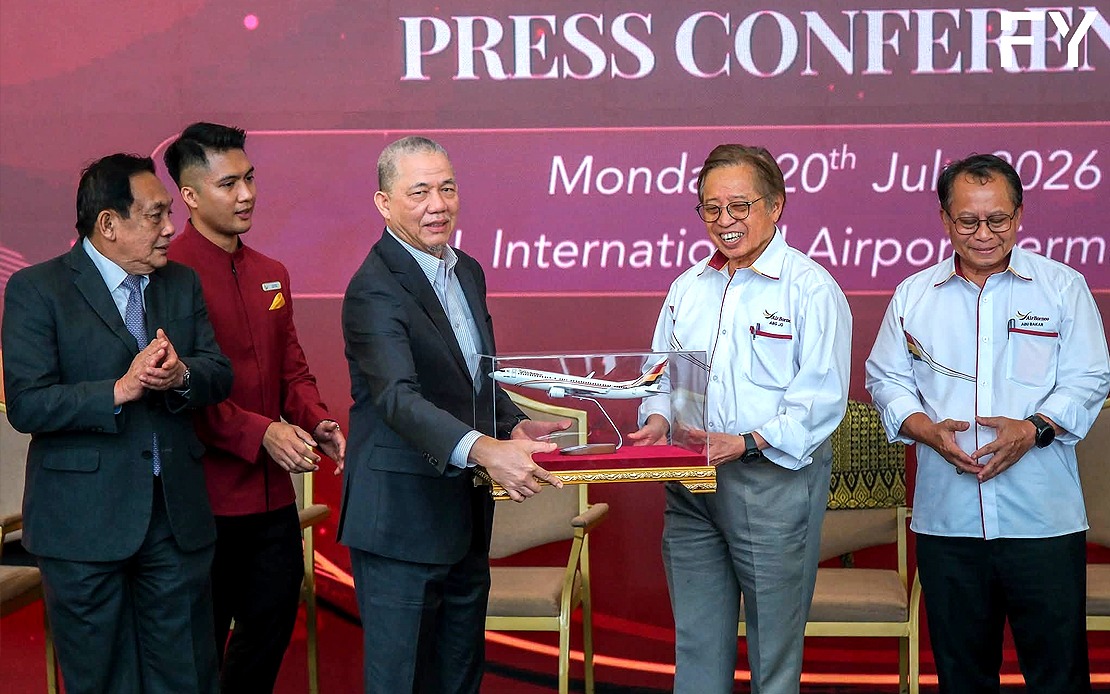
The inaugural flight of AirBorneo Airways from Kuching to Kuala Lumpur International Airport marks a strategic turning point for Sarawak's transport landscape. Deputy Prime Minister Datuk Seri Fadillah Yusof says the airline addresses persistent grievances about inflated ticket prices that have constrained travel and commerce within the state, while Sarawak Premier Tan Sri Abang Johari Tun Openg championed the venture as a cornerstone investment in the state's long-term prosperity. The timing of the launch, arriving just two days before Sarawak Day on July 22, underscores the political significance attached to aviation expansion as part of the state's development narrative.
Airfare costs have functioned as a significant economic bottleneck for Sarawak. Residents and businesses operating across the sprawling East Malaysian state have repeatedly protested against what they perceive as disproportionately high ticket prices, partly a consequence of the region's geography and limited competitive routes. By establishing its own carrier, the Sarawak government aims to inject genuine competition into the market while simultaneously ensuring service affordability does not come at the expense of operational standards or passenger experience. Fadillah's commitment to maintaining quality whilst lowering costs reflects an understanding that low-cost aviation must still meet international safety and service benchmarks to succeed commercially.
The strategic rationale extends far beyond simple price reduction. AirBorneo functions as a vehicle for Sarawak to exercise greater autonomy over its air transport infrastructure, particularly in ensuring that regional and rural areas maintain consistent flight access. Many smaller communities in Sarawak have historically experienced unreliable or expensive air service, forcing reliance on lengthy surface transport. A state-operated airline can prioritise connectivity to economically disadvantaged areas that private carriers might otherwise neglect, thereby supporting social equity and economic inclusion across dispersed populations.
Tourism represents a major beneficiary of enhanced air connectivity. Sarawak has positioned itself as an increasingly attractive destination for cultural and ecotourism, but high airfares have deterred both domestic and international visitor growth. Reduced ticket prices through AirBorneo could expand the addressable market significantly, channelling tourist spending through accommodation, attractions, and local services. This multiplier effect creates employment and stimulates business activity far beyond the aviation sector itself, making airfare reduction a lever for broader economic development.
Trade and investment competitiveness also hinges upon transport costs. Businesses shipping goods from Sarawak or relocating operations to the state factor in airfare expenses when calculating operational budgets and executive travel costs. Lower flight fares enhance Sarawak's attractiveness as a commercial hub, potentially drawing investment in manufacturing, technology, and professional services that currently gravitate towards more accessible regions. This competitive advantage becomes particularly relevant as Southeast Asian economies race to capture cross-border trade flows and regional investment clusters.
The launch reflects deeper questions about state capacity and ownership models in the Malaysian federal context. Sarawak, which retains considerable autonomy over resource management and development strategy under Malaysia's federal arrangement, has chosen to leverage that independence by building its own infrastructure assets rather than relying exclusively on federal carriers or international operators. This approach mirrors broader regional trends in Southeast Asia, where provincial and state governments increasingly establish their own airlines as tools for economic sovereignty and regional positioning.
AirBorneo's success will likely influence broader Malaysian policy discussions about aviation privatisation and the role of government-owned carriers. If the airline achieves its cost-reduction targets whilst maintaining profitability and service quality, it could vindicate state-level intervention in aviation markets and challenge assumptions that only private carriers can operate efficiently. Conversely, operational difficulties or mounting losses would strengthen arguments for fleet consolidation and market-driven pricing. The airline thus operates as a test case for transport governance models across Malaysia and Southeast Asia more broadly.
Rural connectivity represents an often-overlooked dimension of AirBorneo's mission. Many interior regions of Sarawak depend on air services for essential supplies, medical evacuations, and access to education and employment opportunities. Private carriers typically prioritise high-density routes with strong passenger volumes and revenue potential, leaving remote communities underserved. A state airline can cross-subsidise rural routes using profits from competitive urban corridors, ensuring that geographic isolation does not translate into service abandonment or exorbitant pricing that prices out low-income residents.
The airline's positioning within Sarawak's economic strategy reflects Premier Abang Johari's vision of state-driven development. Rather than positioning Sarawak as a passive participant in Malaysia's federal transport system, the state has chosen to build institutional capacity and assert control over sectors deemed strategically important. This approach resonates with other Sarawak initiatives emphasising state autonomy in economic planning, resource management, and infrastructure development, signalling a consistent philosophy of developmental self-determination.
Regional implications merit attention as well. AirBorneo's operations may reshape competitive dynamics along the Kuching-Kuala Lumpur corridor and secondary routes connecting Sarawak to other Malaysian and Southeast Asian destinations. Existing carriers will face pressure to match pricing and service enhancements, potentially delivering consumer benefits across the broader market even among non-AirBorneo passengers. Additionally, the airline's success could encourage similar state-level initiatives in other Malaysian states or neighbouring Southeast Asian jurisdictions, gradually fragmenting what has traditionally been a commercially concentrated aviation market.
Fadillah's framing of AirBorneo as reflecting Sarawak's aspiration for greater control over its future carries symbolic weight beyond aviation economics. The airline represents tangible infrastructure demonstrating that states can build modern economic institutions independently, contributing to narratives about federalism, state capacity, and Malaysia's evolving internal dynamics. For readers in Peninsular Malaysia, the Sarawak initiative illustrates how regional diversity and devolved governance create distinct policy approaches and institutional experiments that may eventually influence national-level thinking about transport, investment, and economic development.

