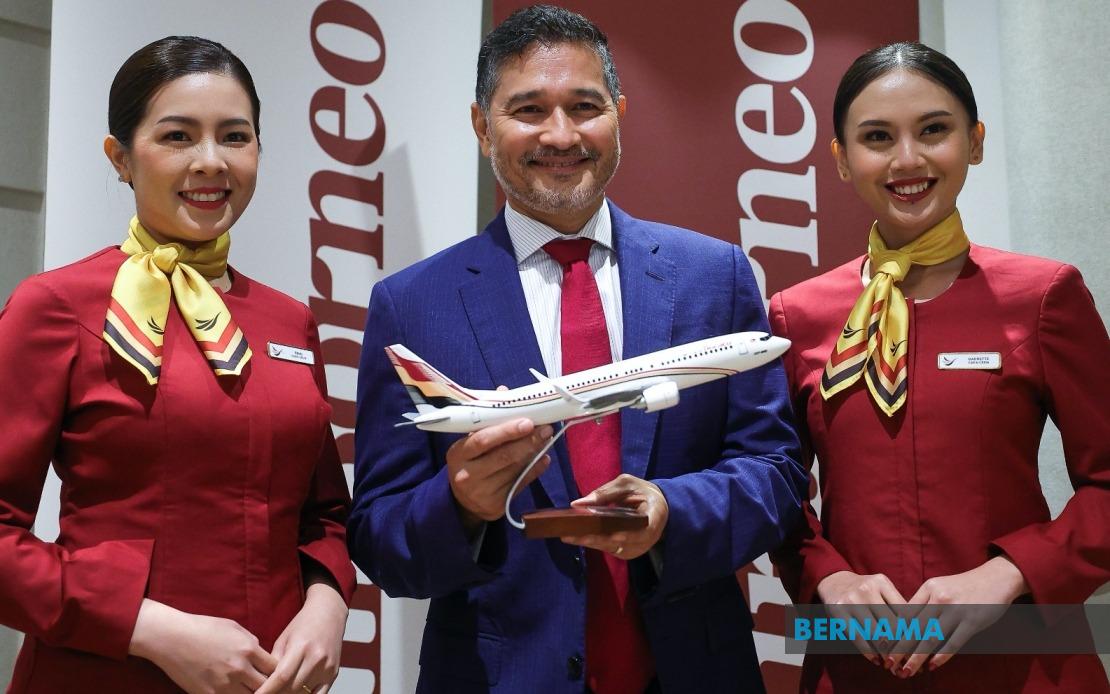
Sarawak's state-owned airline AirBorneo has pledged to hold its one-way Economy Class fare at RM375 (all-inclusive) for the Kuala Lumpur-Kuching route across all seasons, marking a significant move to address longstanding complaints about high airfares between Peninsular Malaysia and the Sarawak region. The airline's chief executive officer, Megat Ardian Wira Mohd Aminuddin, announced the commitment at a media roundtable in Kuching, positioning the fixed-fare strategy as part of a broader effort to create price stability for travellers and enhance connectivity between the peninsula and East Malaysia.
The decision to lock in the RM375 rate emerged from rigorous pricing analysis conducted by AirBorneo over the preceding six months. Megat Ardian Wira explained that the airline examined historical fare data, tracked fuel price movements, and conducted competitive benchmarking against other carriers operating the same route. This methodical approach ensured that the chosen price point remained competitive whilst accounting for operational realities such as fluctuating energy costs—a critical factor for airlines operating extended routes through Southeast Asia, where fuel expenses constitute a substantial portion of total operating costs.
When comparing its pricing against competitors, AirBorneo positioned the RM375 fare within the lower-to-mid range offered by other airlines on this busy domestic corridor. The CEO emphasised that many competing carriers advertise seemingly lower headline fares that do not incorporate essential charges such as airport taxes and fuel surcharges, creating a misleading impression of value. By contrast, AirBorneo's RM375 figure represents a fully inclusive all-in rate, eliminating hidden costs and providing travellers with price certainty at the point of purchase—a consumer-friendly approach that should resonate particularly with price-sensitive leisure and business travellers who regularly transit between Kuala Lumpur and Kuching.
The airline's launch of scheduled services on the Kuala Lumpur route represents a milestone for regional air connectivity, with twice-daily flights now operating between Kuching International Airport and Kuala Lumpur International Airport Terminal 1. To celebrate this expansion, AirBorneo introduced promotional "Sarawakku Sayang" fares: the RM375 rate for Economy Class and RM736 for Business Class, both fully inclusive. These introductory prices underscore the airline's commitment to making air travel between the peninsula and Sarawak more accessible during the critical early phase of service establishment.
The broader strategic context for AirBorneo's pricing discipline reflects growing pressure from regional stakeholders to bring down what many perceive as excessive airfares on routes connecting East and West Malaysia. Sarawak's business community, tourism industry, and residents have consistently flagged the high cost of air travel as a constraint on economic integration and personal mobility. By implementing a seasonal-neutral fare structure, AirBorneo addresses a fundamental grievance and signals that managing affordability is central to the airline's mission, not merely a temporary promotional tactic.
Megat Ardian Wira articulated the stabilisation objective with particular emphasis on removing the volatility that has historically characterised this route. Rather than implementing dynamic pricing that climbs during peak seasons or in response to demand surges, AirBorneo is betting that a consistent, predictable fare will build customer loyalty and encourage greater travel frequency. For Malaysian business professionals, Sarawakian workers returning home to the peninsula, and families maintaining ties across the two regions, this consistency delivers tangible peace of mind when planning trips and budgeting for travel expenses.
Looking beyond the immediate commercial calculus, AirBorneo has articulated ambitious goals that position the airline as a catalyst for regional development tied to major sporting infrastructure. The airline is pursuing official designation as the carrier for the 2027 SEA Games, which Sarawak will co-host alongside neighbouring Labuan. Achieving this status would require AirBorneo to expand its regional network significantly, establishing scheduled services to two or three ASEAN destinations by early 2025 and operating dedicated charter flights to move athletes, officials, and supporters during the Games period.
This sporting ambition carries profound implications for aviation in Southeast Asia. Successfully operating expanded ASEAN routes from a Sarawak base would position the state as a genuine regional aviation hub rather than a peripheral destination served primarily by established carriers. The charter flight operations required for the Games would showcase AirBorneo's operational capacity to handle complex logistics, potentially opening doors to additional regional work and establishing the airline as a credible carrier for international movements within Southeast Asia.
For Malaysian travellers more broadly, AirBorneo's entrance into scheduled services and its commitment to affordable, transparent pricing introduces competitive pressure that benefits consumers. The carrier's focus on eliminating surprise charges and anchoring fares at customer-friendly levels establishes a benchmark that other operators serving East Malaysia may feel compelled to match. In an era when low-cost carriers have transformed pricing expectations elsewhere in Southeast Asia, AirBorneo's disciplined approach demonstrates that new entrants can reshape market dynamics and consumer value propositions even on routes served by established competitors.
The timing of AirBorneo's expansion and fare commitment also coincides with broader policy discussions about aviation subsidies, regional equity, and the role of state-backed carriers in bridging geographic divides within Malaysia. By demonstrating commercial viability whilst maintaining affordability, AirBorneo offers a model for how publicly-owned airlines can serve public interest objectives without requiring perpetual subsidy. The airline's willingness to maintain consistent fares despite fuel price volatility and competitive pressure suggests management confidence in operational efficiency and revenue generation through increased volume rather than reliance on premium pricing.
The decision to maintain RM375 fares year-round also reflects understanding that consistency itself has economic value. When travellers know they will pay the same price in July as in December, they plan more confidently and may increase their total annual flying. This contrasts sharply with dynamic pricing systems where peak-season costs can double or triple, effectively pricing out leisure travellers and reducing overall market demand. By favouring volume and consistency over yield maximisation during peak periods, AirBorneo is pursuing a long-term market development strategy that prioritises sustainable growth and regional integration.
As Southeast Asia navigates post-pandemic aviation recovery and increasingly sophisticated regional connectivity, AirBorneo's commitment to stable, transparent, affordable pricing on the KL-Kuching route stands out as a principled choice. The airline is signalling that competitive advantage lies not simply in extracting maximum revenue from every seat but in building a loyal customer base through predictability, fairness, and genuine value. If the airline successfully leverages this positioning to capture market share, achieve operational efficiency, and prepare for 2027 SEA Games responsibilities, it could redefine expectations for regional carriers throughout Southeast Asia and demonstrate that newer entrants can challenge incumbents by competing on values as much as on price alone.

