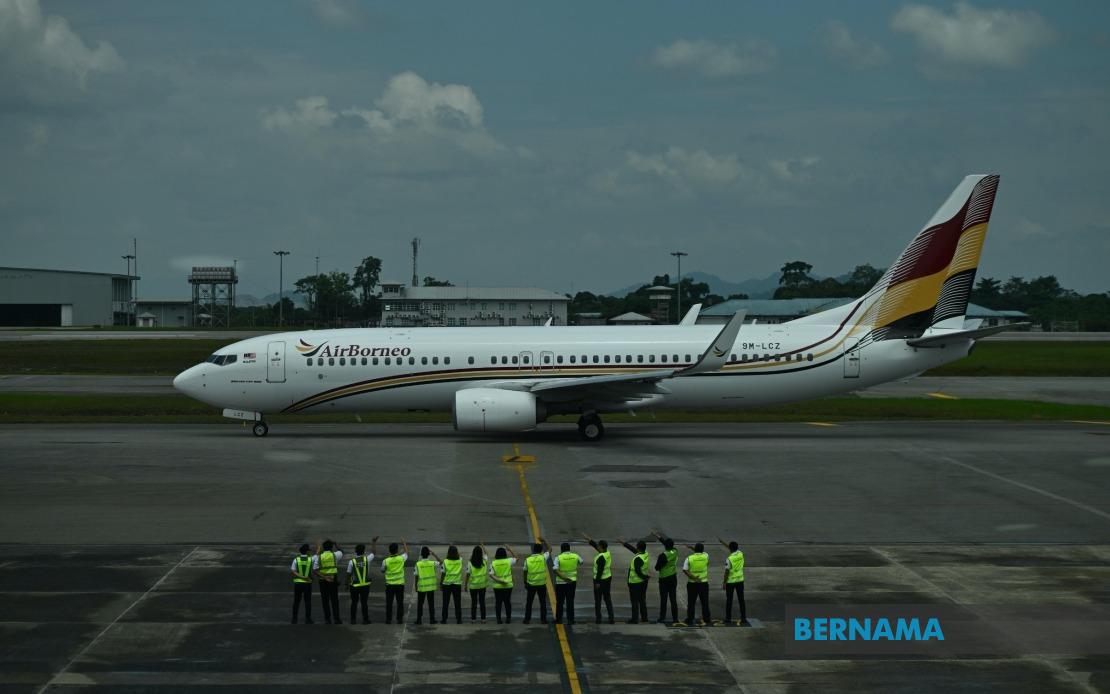
AirBorneo has entered a new operational chapter by launching its inaugural jet flight between Kuching and Kuala Lumpur, a milestone that underscores Sarawak's ambitions to strengthen its position within Malaysia's aviation landscape. Flight MY5005 departed Kuching International Airport at 1.20 pm, carrying Sarawak Premier Tan Sri Abang Johari Tun Openg among its passengers, signalling government backing for the venture. The service represents a strategic shift for the Sarawak government-owned airline, which has transitioned from regional turboprop operations to jet-powered intercity routes following its integration of MASwings Sdn Bhd's services on January 1 this year.
The deployment of a Boeing 737-800 aircraft marks a significant operational upgrade from the smaller aircraft historically used by regional carriers in East Malaysia. This step reflects growing confidence in demand for direct air links between Borneo's economic centres and the Malaysian peninsula's financial and commercial hubs. The route itself is not new to Malaysian aviation, but AirBorneo's entry introduces fresh competitive dynamics to a corridor previously dominated by established carriers. The timing of this expansion coincides with Malaysia's broader efforts to integrate regional economies through improved transportation infrastructure.
Premier Abang Johari articulated a strategic vision for the airline's role that extends beyond commercial operations. Drawing parallels with Japan's post-war reconstruction, he highlighted how aviation infrastructure serves as a foundation for economic development and global connectivity. His remarks underscored a belief that aviation represents more than transport—it functions as a critical enabler for trade, investment, and international positioning. Sarawak's geographical location on Borneo, separated from Peninsular Malaysia by the South China Sea, makes air connectivity particularly consequential for economic integration and competitiveness within the broader Malaysian federation.
The strategic rationale for AirBorneo's expansion reflects broader recognition of aviation's role in regional development. As Abang Johari noted, establishing a national carrier provides a foundation upon which economies can build industrial capacity and export capabilities. For Sarawak, with its significant natural resources and potential in sectors ranging from agriculture to energy, reliable air connections with the peninsula facilitate market access and attract business partnerships. The airline effectively becomes a tool for promoting state economic interests rather than merely providing transportation services.
Ticket pricing for the new route demonstrates AirBorneo's competitive positioning within the Malaysian aviation market. Economy Class fares of RM375 and Business Class prices of RM736—both inclusive of airport taxes and fuel surcharges—place the carrier competitively against existing operators on this corridor. The transparent pricing structure, which incorporates all standard charges, reflects modern aviation industry practice and removes uncertainty for consumers. This approach may appeal particularly to cost-conscious business travellers and leisure passengers accustomed to Malaysia's competitive airline environment.
The twice-daily service frequency between Kuching International Airport and Kuala Lumpur International Airport Terminal 1 addresses practical scheduling needs for business and leisure travel. Morning and evening departures accommodate both day-trip business visitors and those requiring overnight stays, maximising aircraft utilisation while serving diverse customer segments. This frequency level positions AirBorneo as a credible option for regular commuters between Sarawak and the peninsula, potentially capturing market share from both competing airlines and alternative transport modes including land-sea combinations.
AirBorneo's expansion must be understood within the context of Malaysian aviation sector dynamics and regional economic integration. The acquisition of MASwings operations provided the airline with established route networks, operational expertise, and customer bases that would have taken years to develop independently. Rather than representing a simple airline consolidation, this transition reflects deliberate state policy to concentrate East Malaysian aviation services under a single government-controlled entity. This centralised approach may facilitate coordinated regional development strategy, though it also raises considerations regarding competition and operational efficiency.
The broader implications for Southeast Asian aviation include Sarawak's growing participation in regional connectivity initiatives. As individual Malaysian states develop their own air services strategies, the region benefits from increased capacity and routing options. However, the concentration of services within a state-owned operator warrants monitoring regarding cost efficiency, service quality, and financial sustainability. Private-sector competitors continue operating within Malaysia, and AirBorneo's success will depend on delivering reliable, affordable service that meets customer expectations consistently.
For Malaysian readers and businesses, AirBorneo's jet service introduction carries practical significance. Enhanced connectivity between Sarawak and the peninsula facilitates business expansion, tourism development, and personal travel. The service improvement potentially makes Sarawak-based enterprises more accessible to peninsular business partners and investors while simultaneously improving residents' access to Malaysia's economic centres. These transportation improvements support gradual economic integration across regions that geography has historically separated.
The financial viability of this expansion remains an important consideration. Government-backed aviation ventures require sustained operational efficiency to avoid becoming long-term fiscal burdens. AirBorneo must balance social obligations—ensuring regional connectivity for less profitable routes—with commercial discipline on routes where competition is intense. The success of this Kuching-Kuala Lumpur service will likely influence decisions regarding further expansion and route development across the airline's network.
Looking ahead, AirBorneo's progression from regional turboprop operator to jet-service provider positions Sarawak aviation within modernised Southeast Asian networks. The airline's ability to maintain service quality, manage costs, and adapt to market conditions will determine its long-term competitiveness. Beyond commercial metrics, however, AirBorneo's evolution reflects Sarawak's commitment to positioning itself as an integral participant in Malaysia's modern economy rather than a peripheral region dependent on external aviation services.

