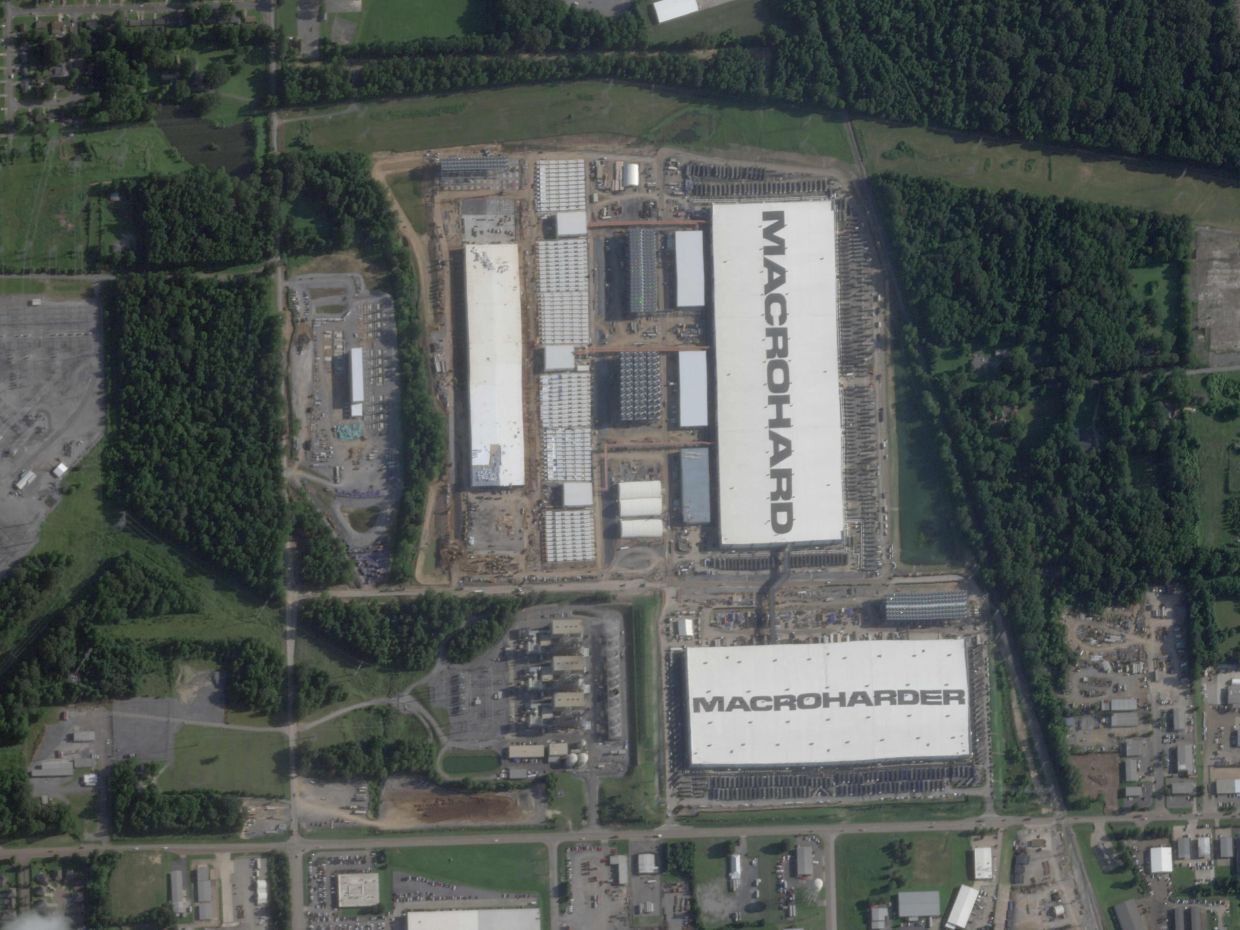
The explosive growth of artificial intelligence infrastructure is creating a new battleground in environmental justice across America, with Memphis's Boxtown neighbourhood becoming a focal point in the struggle between technological progress and community welfare. SpaceXAI's sprawling data centres, hastily constructed to feed the global computing appetite driving the AI race, have triggered organised resistance from residents, civil rights groups, and environmental advocates who see the facilities as a continuation of systemic environmental racism.
At the heart of the controversy stands Colossus I, a mega supercomputer complex that exemplifies how development decisions can perpetuate inequality. The facility now operates under lease to Anthropic, the major AI company paying more than US$1 billion monthly, yet the surrounding community bears the environmental burden. The site's numerous gas turbines continuously discharge emissions into neighbourhoods already bearing the weight of generations of industrial pollution. Teenager Jasmine Bernard, who has organised resistance for two years, articulates the deeper historical dimension: Boxtown was established by freed slaves after the Emancipation Proclamation of 1863, only to become a dumping ground for polluting industries. The cancer risk in South Memphis runs four times the national average, a statistic that underscores how environmental neglect correlates with racial geography.
The permitting process reveals troubling procedural shortcuts that activists argue violate established environmental law. According to Laura Thoms from Earthjustice, which represents the NAACP in litigation against SpaceXAI, the company deliberately circumvented regulatory requirements by deploying turbines without securing necessary permits beforehand. Under the Clean Air Act, authorities must approve facility designs and confirm health protections before construction begins. SpaceXAI instead classified its turbines as temporary installations, a designation that sidestepped environmental review while the company simultaneously pursued formal permitting. This legal manoeuvre allowed the firm to maintain continuous operations without experiencing a power gap, effectively prioritising business continuity over community safeguards. The strategy worked until July, when the company agreed to replace turbines with code-compliant alternatives—but crucially, not until July 2027, a delay critics say was negotiated in opacity with local officials.
Water consumption presents a parallel crisis threatening Memphis's long-term resource security. Colossus I extracts 1.2 million gallons of groundwater daily to cool its supercomputers, drawing from the aquifer that supplies the entire city's drinking water. SpaceXAI had pledged to construct a water recycling facility to mitigate this drain, yet the project remains suspended indefinitely. Given that Memphis faces increasing climate variability and water stress affects much of the American South, this unabated extraction represents a fundamental depletion of shared natural capital. The decision to prioritise data centre cooling over community water security reveals how capital concentration can override collective interests, even when those interests concern basic human needs.
In neighbouring Mississippi, the pattern repeats with even greater intensity. At Colossus II near Southaven, 69 turbines operate continuously to power the servers training Grok, SpaceXAI's AI assistant. The acoustic impact devastates residents: Krystal Polk, whose family has inhabited her home for generations and whose property once sheltered beneath protective pine trees, describes relentless noise resembling an aeroplane perpetually taking off. The vibrations and sound waves cause physical nausea, transforming her home from sanctuary to endurance test. This 24/7 auditory assault represents an invisible form of pollution that official air quality metrics fail to capture, yet profoundly degrades daily existence.
The financial arrangements reveal how economic benefits concentrate while costs disperse. Colossus I generated US$12 million in tax revenue in 2026, yet Memphis Mayor Paul Young's recent announcement to redirect US$3.35 million to affected communities represents less than 28 percent of revenue. This disparity between wealth extraction and community reinvestment typifies development patterns that enrich corporations and distant shareholders while leaving residents to absorb environmental externalities. The calculus treats pollution as an acceptable price for modest tax payments, effectively valuing community health at discount rates.
KeShaun Pearson, co-founder of Memphis Community Against Pollution, has become a national voice challenging this model. Travelling across the country to educate communities about data centre risks, Pearson identifies the core governance failure: elected officials make promises about economic opportunity but neither consult affected populations nor remain accountable for environmental consequences. He characterises SpaceXAI's approach as emblematic of how corporate interests override democratic process, leaving communities to shoulder burdens they never invited or approved.
The Justice Department's June intervention requesting dismissal of the NAACP's complaint on national security grounds introduces a troubling dimension. Framing data centre development as a security imperative potentially insulates infrastructure expansion from normal environmental scrutiny, suggesting that AI advancement supersedes established civil rights protections. This argument risks establishing a precedent where technological competition overrides community welfare across multiple sites.
Expanding infrastructure compounds the anxiety. A third data centre already operates near Colossus II, with a fourth under construction. Residents and advocacy groups report receiving no information about how these additional facilities will be powered, suggesting that opacity has become standard practice. This information asymmetry—where companies withhold operational details while communities absorb impacts—reproduces historical patterns where Black neighbourhoods serve as sacrifice zones for industrial expansion.
Boxtown residents demonstrated political capacity in 2021 when they successfully blocked a pipeline project through collective organising. Activists now mobilise similar strategies against future data centre expansion, representing a growing recognition across America that AI infrastructure cannot be developed at the expense of environmental justice. For Malaysian observers, these struggles illuminate how global technological supply chains often concentrate manufacturing and infrastructure costs in communities with least political power to resist. As Southeast Asia attracts similar data centre investment, these Memphis and Mississippi disputes offer cautionary examples of how rapid infrastructure deployment, without meaningful community engagement and transparent environmental review, perpetuates inequality even in the name of economic progress.

