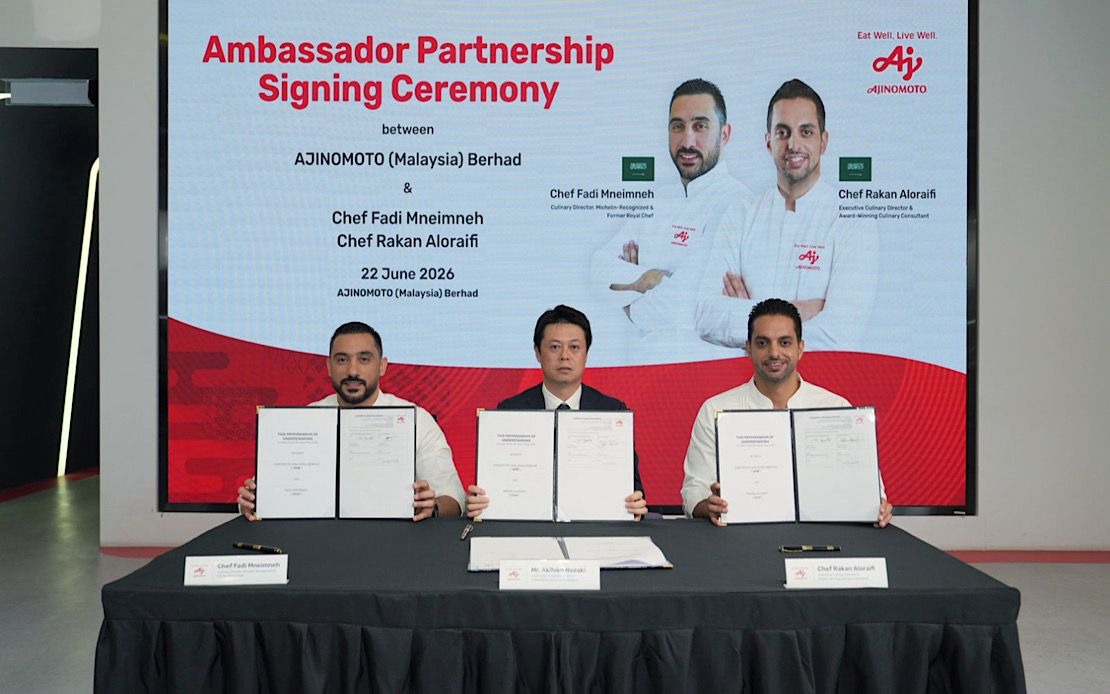
Ajinomoto (Malaysia) Berhad (AMB) is making a calculated push into the lucrative Middle Eastern food market by enlisting two of Saudi Arabia's most respected culinary voices as brand ambassadors. The Malaysian flavour and food ingredients manufacturer has forged a strategic alliance with Chef Fadi Mneimneh and Chef Rakan Aloraifi, capitalising on their standing within the region's hospitality and fine dining sectors to build market credibility and consumer acceptance for its halal-certified product range.
The partnership represents a deliberate shift in AMB's market entry strategy, moving beyond traditional distribution channels to engage directly with decision-makers and opinion leaders in the Saudi food service industry. Rather than rely solely on retail and wholesale arrangements, the company is leveraging the cultural authority and professional networks of these chefs to reshape how Middle Eastern culinary professionals perceive Japanese umami principles and their compatibility with regional cuisine traditions.
Chef Fadi brings distinctive credentials to the arrangement as a Michelin-starred culinary director with experience in royal food preparation, lending both prestige and practical expertise in high-end kitchen operations. Chef Rakan's portfolio as an award-winning executive director and culinary consultant complements this positioning, particularly for institutional and large-scale food service operations. Together, they command respect across hotels, restaurants, and catering establishments—precisely the market segments AMB seeks to penetrate.
The collaboration took tangible form when both chefs visited AMB's manufacturing facility in Bandar Enstek, Negeri Sembilan, for an intensive familiarisation programme. This factory tour served multiple strategic purposes: demonstrating production quality and halal certification standards, showcasing product range diversity, and—critically—educating the chefs about umami as a culinary concept that transcends cultural boundaries. By ensuring these influential figures understand both the technical and sensory aspects of umami, AMB equips them to communicate authentically about the ingredients to their professional networks and media contacts.
The live culinary demonstrations conducted during the visit proved particularly significant from a marketing perspective. By preparing authentic Middle Eastern dishes using Ajinomoto products, the chefs created a compelling narrative that umami enhancement need not dilute traditional flavours or cooking methods. Instead, the demonstrations illustrated how Japanese seasonings can deepen and enrich existing taste profiles while maintaining the integrity of heritage recipes. This messaging addresses a potential cultural resistance to foreign food additives by positioning umami as a complementary technique rather than a replacement for traditional ingredients.
For AMB, the timing of this initiative reflects broader industry trends across Southeast Asia and the Middle East. The halal food market continues expanding at double-digit growth rates, driven by rising Muslim populations, increasing dietary consciousness, and growing premium consumer segments seeking quality certifications. Saudi Arabia specifically represents a strategic gateway—as both a major economy and a cultural and religious centre of influence, success there validates products and builds momentum for expansion across the Gulf Cooperation Council states and beyond.
The inclusion of AMB's Brunei distributor representative in the factory programme hints at a regional ecosystem development strategy. By bringing existing distribution partners into direct contact with the celebrity chefs and AMB's technical teams, the company is building a more cohesive value chain and creating opportunities for cross-country knowledge sharing. This approach transforms the partnership from a Saudi-focused initiative into a broader regional network expansion.
Looking forward, AMB has committed to continued collaboration with both chefs at HORECA events tentatively scheduled for October 2026 in Riyadh and Jeddah. HORECA—Hotel, Restaurant and Café—expo attendance positions the brand directly before procurement decision-makers and operational chefs across multiple establishments simultaneously. The planned live demonstrations will replicate the factory visit experience at scale, allowing dozens of potential institutional buyers to witness umami integration in real time and interact directly with trusted culinary authorities who endorse the products.
This partnership strategy aligns with shifting global marketing approaches in the food industry, where traditional advertising struggles against consumer scepticism. By recruiting respected practitioners to champion products through their own professional credibility, AMB navigates the challenge of gaining acceptance in culturally distinct markets. The chefs' involvement signals that these are not foreign products being pushed into Saudi kitchens, but rather tools that respected local culinary leaders have examined, validated, and chosen to incorporate into their own work.
For Malaysian stakeholders, the initiative demonstrates how homegrown food manufacturers can effectively compete in sophisticated international markets through strategic positioning rather than price competition alone. AMB's approach of investing in relationship-building and cultural education reflects a maturity in understanding that Asian food companies must earn credibility in Middle Eastern markets through demonstrated knowledge and professional endorsement, not simply volume and distribution reach.
The halal certification advantage that AMB inherently possesses as a Malaysian manufacturer becomes substantially more valuable when amplified through influential chefs who can explain to their peers and subordinates why these products meet exacting standards and professional expectations. This builds trust at multiple levels—among procurement teams evaluating suppliers, kitchen staff implementing new ingredients, and ultimately consumers dining at establishments using the products.
As regional competition intensifies and other Asian food manufacturers pursue similar expansion strategies, the deliberate investment in chef partnerships and knowledge exchange may become a distinguishing factor. AMB's factory visits and HORECA commitments suggest the company recognises that sustainable Middle Eastern market share requires ongoing relationship investment and demonstrated commitment to understanding regional culinary culture, not merely seasonal promotional campaigns.

