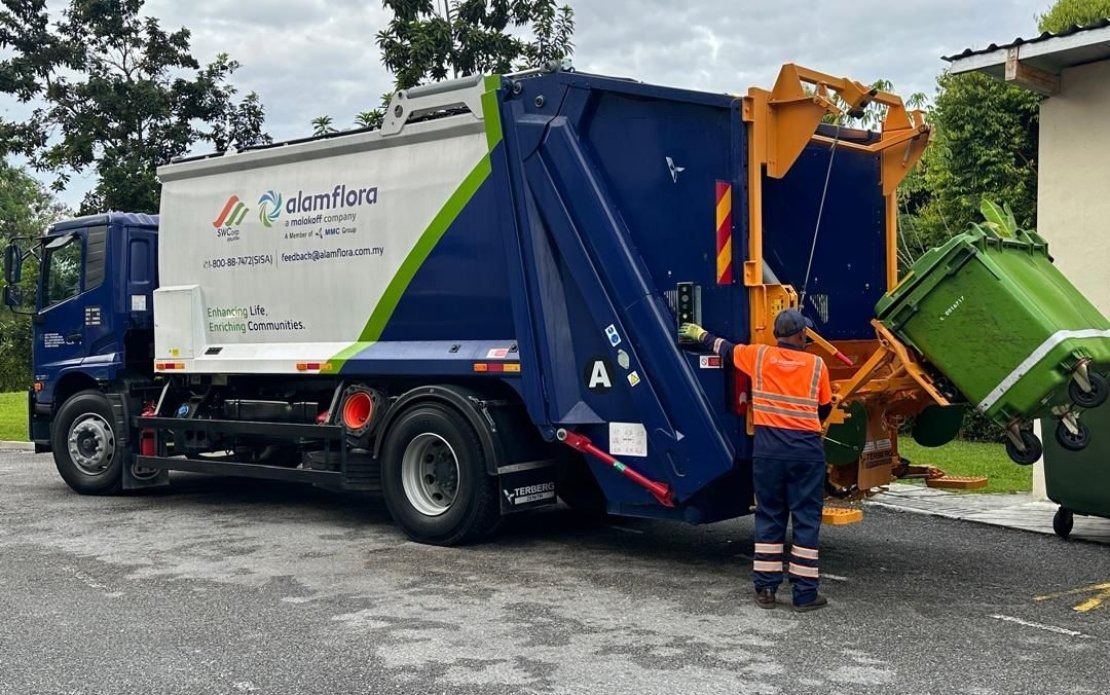
Alam Flora, Malaysia's largest waste management firm, has pledged its complete cooperation with authorities investigating a compactor garbage lorry accident that occurred along Jalan Pantai Murni 1 in Pantai Hillpark yesterday morning. The company released a formal statement today reaffirming its commitment to assist in the comprehensive probe, signalling the seriousness with which it regards the incident and the operational risks that led to the collision.
According to preliminary accounts of the early-morning crash, the garbage lorry experienced a sudden brake failure before veering out of control and colliding forcefully with the perimeter wall of a nearby residential condominium. The impact of the incident has raised fresh concerns about vehicle maintenance standards and safety protocols within Malaysia's waste collection sector, an industry that operates extensively throughout urban and suburban areas across the country.
The driver of the compactor lorry has already filed an official report with the Kuala Lumpur Traffic Police Station detailing the circumstances surrounding the accident. Police conducted an immediate breathalyser test on the driver to rule out alcohol consumption as a contributing factor, and the results came back negative, eliminating impaired driving as a potential cause. This preliminary finding has redirected investigative focus squarely onto the mechanical condition and maintenance history of the vehicle itself.
Alan Flora's statement emphasised that the damaged compactor lorry will undergo detailed technical examination at the Computerised Vehicle Inspection Centre, commonly known as Puspakom, to establish the precise mechanical factors that precipitated the crash. The vehicle inspection process represents a critical investigative step that may reveal whether inadequate maintenance, defective brake components, or manufacturing defects played a role in the brake failure. The company has indicated it will follow all directives issued by the lead investigating officer throughout this examination process.
The incident has been formally registered as a case under Section 43(1) of the Road Transport Act 1987, the statutory provision governing vehicular accidents and traffic-related offences in Malaysia. This classification carries significant legal implications for both the company and potentially the driver, depending on what the technical investigation ultimately reveals about responsibility and negligence. The legal framework allows authorities to pursue civil and criminal remedies if evidence of systematic maintenance failures or gross negligence emerges.
In its public response, Alam Flora stressed that worker safety, contractor welfare, and public protection constitute its paramount operational concerns. The statement acknowledged the real distress and inconvenience the accident has caused to the affected residents of Pantai Hillpark, recognising that such incidents inevitably generate anxiety within residential communities about the safety of heavy vehicles operating in their neighbourhoods. This acknowledgment represents an attempt to rebuild public confidence in the company's commitment to responsible service delivery.
The company committed to implementing any necessary corrective measures that the investigation findings may recommend. This pledge suggests that senior management is prepared to institute enhanced maintenance protocols, driver training programmes, or fleet-wide mechanical audits if the probe identifies systemic vulnerabilities. Such proactive measures could encompass more frequent brake system inspections, updated vehicle servicing schedules, or additional safety certifications for compactor lorry operators.
The incident underscores broader questions about vehicle safety oversight in Malaysia's waste management industry, which handles millions of tonnes of municipal and commercial refuse annually. Compactor lorries are heavy, complex vehicles that navigate congested urban streets multiple times daily, making brake system reliability absolutely critical to public safety. Recent years have witnessed increased scrutiny of heavy vehicle maintenance standards following a series of high-profile accidents involving commercial vehicles across Southeast Asia.
For Malaysian residents, this incident serves as a reminder of the potential hazards posed by ageing or poorly maintained commercial vehicles operating in residential areas. Many garbage collection routes pass through densely populated neighbourhoods during early morning hours when residents are beginning their daily routines, heightening the consequences of mechanical failures. The investigation's findings may influence future regulatory requirements governing commercial vehicle inspections and maintenance certification.
Alan Flora's cooperative stance with investigators demonstrates recognition that transparent engagement with authorities ultimately serves the company's reputational and operational interests better than defensive posturing. A thorough, credible investigation can restore public and regulatory confidence, provided the company demonstrates genuine commitment to addressing any deficiencies the probe identifies. The outcome of this case may establish precedents for how other waste management firms are expected to respond to similar incidents.

