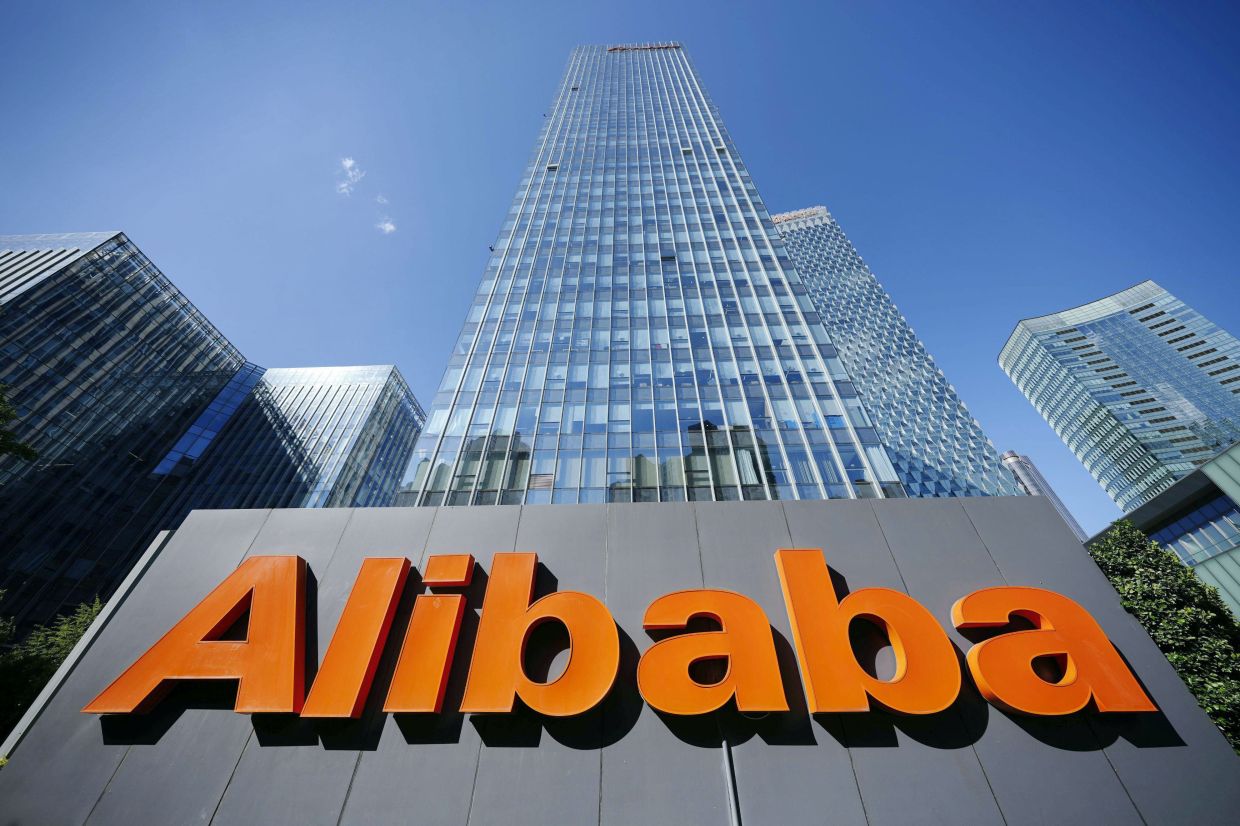
Alibaba Group Holding, one of China's most influential technology and e-commerce companies, has taken the unprecedented step of suing the US Department of Defence in a federal court in San Jose, California, seeking removal from a Pentagon blacklist that designates the Hangzhou-based firm as supporting China's military ambitions. The lawsuit, filed on Tuesday, represents a direct confrontation between a major Chinese corporation and American defence authorities, highlighting the legal dimensions of an increasingly fraught technological rivalry between Washington and Beijing.
The Pentagon's classification of Alibaba occurred on June 9, when the Defence Department formally added the e-commerce platform alongside electric vehicle manufacturers BYD and Nio, search engine Baidu, robotics firm Unitree Robotics, and networking equipment maker TP-Link to its list of "Chinese military companies". This designation was made under Section 1260H of the National Defence Authorisation Act, a provision that gives the Pentagon authority to identify organisations deemed to have connections with China's military infrastructure or support its defence capabilities. The list encompasses companies concentrated in sectors of profound strategic importance to both superpowers: artificial intelligence, biotechnology, renewable energy, and advanced manufacturing.
Alibaba's legal challenge rests on constitutional grounds, asserting that the Pentagon's designation violates due process protections and the company's right to free speech under the First Amendment. In its court filing, the company contends that the blacklist classification was neither justified nor properly procedure-bound, characterising it as arbitrary and capricious governmental action. An Alibaba spokesperson stated categorically that the firm "is not a Chinese military company nor part of any military-civil fusion strategy", denying the core premise of the Pentagon's decision and indicating that the company intends to pursue full vindication through the courts.
While the Pentagon's blacklist designation does not automatically impose sanctions, the practical consequences for affected companies are substantial. Placement on the list can significantly complicate access to American capital markets, impeding efforts to raise funds through US exchanges or American investors. Additionally, it forecloses opportunities to secure contracts with United States government agencies or defence contractors, effectively removing Chinese firms from an enormous segment of the American economy. For a company of Alibaba's scale and international ambitions, these restrictions represent considerable strategic obstacles that threaten long-term growth and diversification plans.
Alibaba's specific objections to the Pentagon's reasoning reveal the legal and factual vulnerabilities in the Defence Department's case. The company rejected claims that it was indirectly affiliated with China's State-owned Assets Supervision and Administration Commission, a massive holding company that oversees much of China's state-owned enterprise sector. Alibaba also disputed Pentagon assertions that it contributed to military-civil fusion initiatives through alleged connections to the Ministry of Industry and Information Technology, the government body responsible for technology policy. The company characterised its interactions with MIIT as routine regulatory compliance necessary for any technology enterprise operating within China's regulatory framework, positioning these contacts as normal business practice rather than evidence of military alignment.
Alibaba had attempted to address Pentagon concerns through formal channels before the blacklist designation. In January, company officials met with Defence Department representatives to discuss the potential listing. The firm subsequently submitted a detailed written response in March to challenge the anticipated designation. Nonetheless, the Pentagon proceeded with adding Alibaba to the military companies list in June, apparently disregarding the company's submissions and suggestions. This sequence demonstrates that Alibaba believes administrative processes proved insufficient and that judicial intervention became necessary to secure fair treatment.
The company's legal action arrives amid a broader escalation of US-China technological competition and regulatory warfare. Several other Chinese firms affected by the June designation, including Baidu and BYD, have similarly expressed strong opposition to the Pentagon's decisions. China's embassy in the United States issued a formal diplomatic protest, accusing Washington of an overly expansive interpretation of national security interests and criticising the Pentagon's reliance on "discriminatory lists" that lack transparency and due process. These statements signal that Beijing views the blacklist as part of a coordinated campaign to restrict Chinese technological advancement and maintain American technological dominance.
China's government has responded with retaliatory measures that parallel the American approach. On Monday, China's Ministry of Commerce announced fresh export controls targeting ten American companies, including defence contractors and technology firms such as Aveox, Red Cat Holdings, Teal Drones, Ball Aerospace & Technologies, and USA Rare Earth. The same day, China's Ministry of Finance issued restrictions on government procurement from 46 American firms, an extensive list that includes major defence companies such as Lockheed Martin, Raytheon Missiles & Defence, General Dynamics Land Systems, and Boeing Defence, Space & Security. These actions demonstrate that China is calibrating responses to mirror American restrictions, using similar administrative and regulatory mechanisms to pressure American companies.
The Alibaba lawsuit carries implications that extend far beyond a single company's commercial interests. For Malaysian and Southeast Asian readers, the case illustrates how the US-China technological competition is reshaping global business environments, investment flows, and supply chain structures. Both Chinese and American companies operating throughout the region will face increasing pressure to navigate conflicting regulatory demands, and governments will confront difficult choices about which technology partners to embrace. The judicial outcome may also establish precedents affecting how both nations employ blacklists and export controls, potentially influencing the legal frameworks that regulate technology trade across Southeast Asia.
The Pentagon declined to comment on the ongoing litigation, a standard practice when facing legal challenges. However, the Defence Department will likely argue that Section 1260H gives it broad authority to identify military-linked enterprises based on classified intelligence and assessment methodologies that cannot be fully disclosed in public court filings. The fundamental dispute thus turns on whether American courts will defer to Pentagon national security determinations or whether they will require more explicit evidence and procedural safeguards before permitting restrictions that harm foreign companies' commercial interests. The resolution of Alibaba's case could reshape how US government agencies balance security objectives against constitutional protections and principles of fairness to foreign economic actors.
Alibaba's ownership of the South China Morning Post, Hong Kong's influential English-language newspaper, adds another dimension to the dispute, as it raises questions about press freedom and editorial independence in relation to companies facing government pressure. The intersection of commerce, national security, litigation, and media ownership makes this case particularly significant for understanding how geopolitical tensions affect corporate governance and journalistic operations throughout Asia and beyond.

