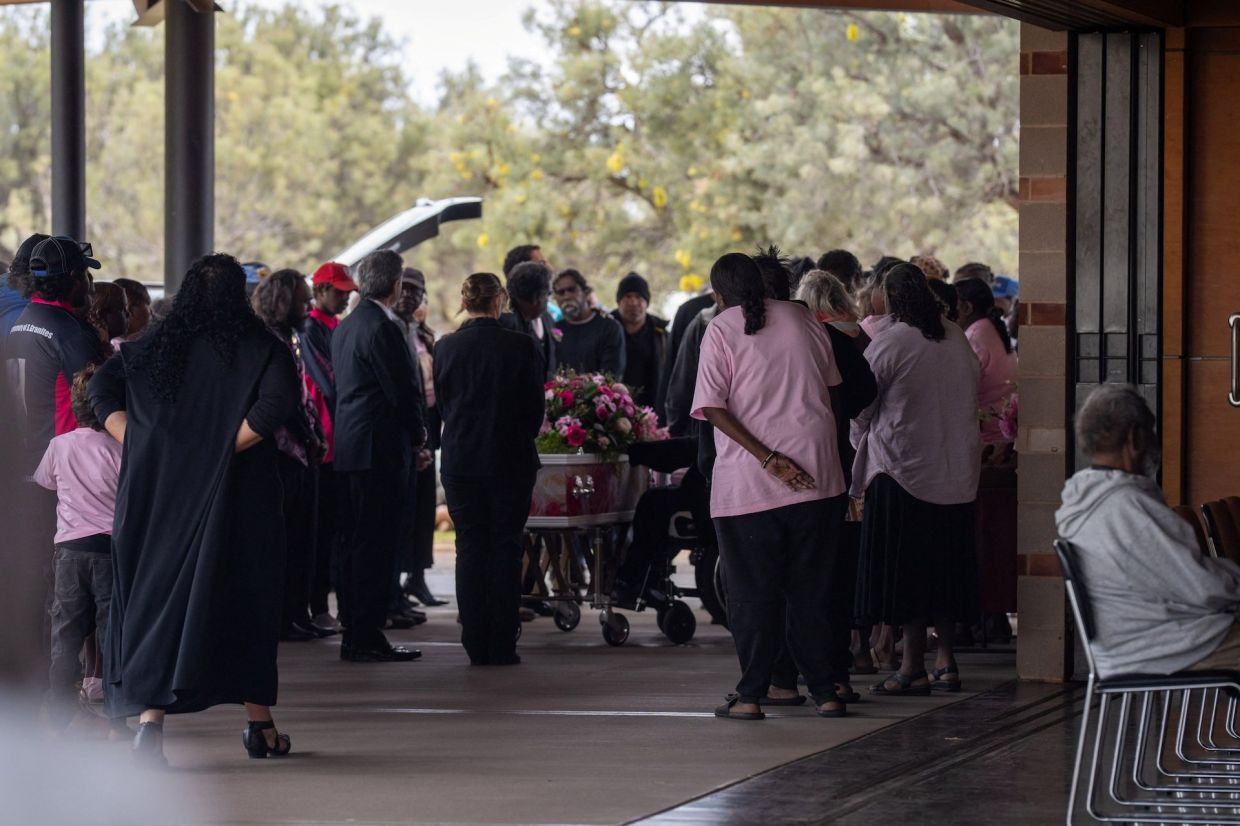
Hundreds of people gathered at the Garden Cemetery in Alice Springs on Saturday to attend the funeral of Kumanjayi Little Baby, a five-year-old Indigenous girl whose death in April sent shockwaves through Australia and prompted violent disorder in the remote Northern Territory community. The funeral service marked a solemn turning point in a tragedy that has exposed deep fractures in how Indigenous communities are supported in Australia's vast interior, drawing national attention to longstanding grievances about housing, services, and systemic inequality.
The death of Kumanjayi Little Baby, whose name reflects Indigenous naming customs honouring family and kinship relationships, occurred in a town of approximately 25,000 people situated some 1,250 kilometres south of Darwin. The killing set off a chain of events that culminated in civil unrest when a suspect was apprehended by residents who reportedly beat him before police intervention. This sequence of events — the tragedy itself, the violent community response, and the subsequent arrest — painted a stark picture of a town under severe social strain.
Mourners attending Saturday's service wore pink, the young girl's favourite colour, creating a sea of symbolic remembrance across the cemetery grounds. Images captured by the Australian Broadcasting Corporation documented the emotional gathering as the flower-draped coffin was transported in a black hearse. The size and composition of the crowd underscored how deeply the loss resonated across Alice Springs, transcending the immediate family circle to encompass broader community sentiment.
In the weeks since her death, the local Indigenous population has engaged in what is known as "sorry business" — a traditional mourning period encompassing cultural practices and rituals that follow the passing of a community member. This ceremonial process, integral to Indigenous Australian customs, serves both spiritual and communal functions, allowing families and clan groups to process loss according to their own cultural frameworks rather than imposed external structures.
The socioeconomic context surrounding Alice Springs has become impossible to ignore in the aftermath of these events. Approximately one-fifth of the town's population identifies as Indigenous, yet many live in what are euphemistically called "camp communities" on the town's periphery. These settlements, home to thousands of Indigenous people including Kumanjayi Little Baby's relatives, are characterised by chronic inadequacies in housing quality, infrastructure, and access to essential services including healthcare, education, and employment opportunities.
Prime Minister Anthony Albanese responded to the tragedy by publicly calling on Northern Territory authorities to prioritise improvement of living conditions in these camp communities. His intervention reflected growing recognition at the federal level that the circumstances in which many Indigenous Australians live — marked by poverty, overcrowding, and limited service delivery — represent a governance failure that demands urgent remedial action. The political pressure brought to bear by the tragedy has created a window for policy discussion about systemic reform.
The arrest of Jefferson Lewis, a 47-year-old man charged with the girl's murder along with two additional offences, commenced the criminal justice process. Australian legal protocols prevent public disclosure of the other charges at this stage, maintaining principles of procedural fairness. The legal proceedings will unfold over coming months, though many in the community view the case as emblematic of broader social pathologies rather than a singular criminal incident.
The unrest that followed the arrest reflected accumulated frustrations within Alice Springs that extend well beyond any single incident. For Malaysian readers familiar with tensions between development and Indigenous welfare in Southeast Asia, the Australian case offers instructive parallels about how marginalised populations respond when systematic neglect intersects with tragedy. The riots in Alice Springs represented a boiling over of tensions that have simmered for decades.
What distinguishes this moment is the potential for sustained attention to Indigenous disadvantage in Australia's remote regions. Media coverage of Kumanjayi Little Baby's death has illuminated the connection between inadequate housing, poverty, social dislocation, and the emergence of conditions that permit violence. Advocacy groups and Indigenous leaders have framed the tragedy not as an aberration but as a predictable outcome of systemic deprivation.
The Northern Territory government faces mounting pressure to demonstrate concrete progress on camp improvements, housing construction, and service expansion. These commitments require sustained funding and political will that extends beyond the immediate aftermath of tragedy. Historical patterns suggest that media attention and political interest often fade once funeral services conclude and news cycles move forward.
For Indigenous communities across Australia, particularly those in remote regions, Kumanjayi Little Baby's story has become a focal point for broader conversations about sovereignty, self-determination, and the adequacy of government support. The funeral itself becomes not merely a farewell but a statement about community resilience and the demand that systemic failures be addressed.
The implications for Alice Springs are substantial. The town faces decisions about whether this moment catalyses meaningful change in how Indigenous residents are housed, supported, and integrated into community life, or whether the crisis recedes into the background as attention shifts elsewhere. For now, mourners gathered in pink to bid farewell to a child whose brief life has forced uncomfortable national reckoning with questions of equity and justice.

