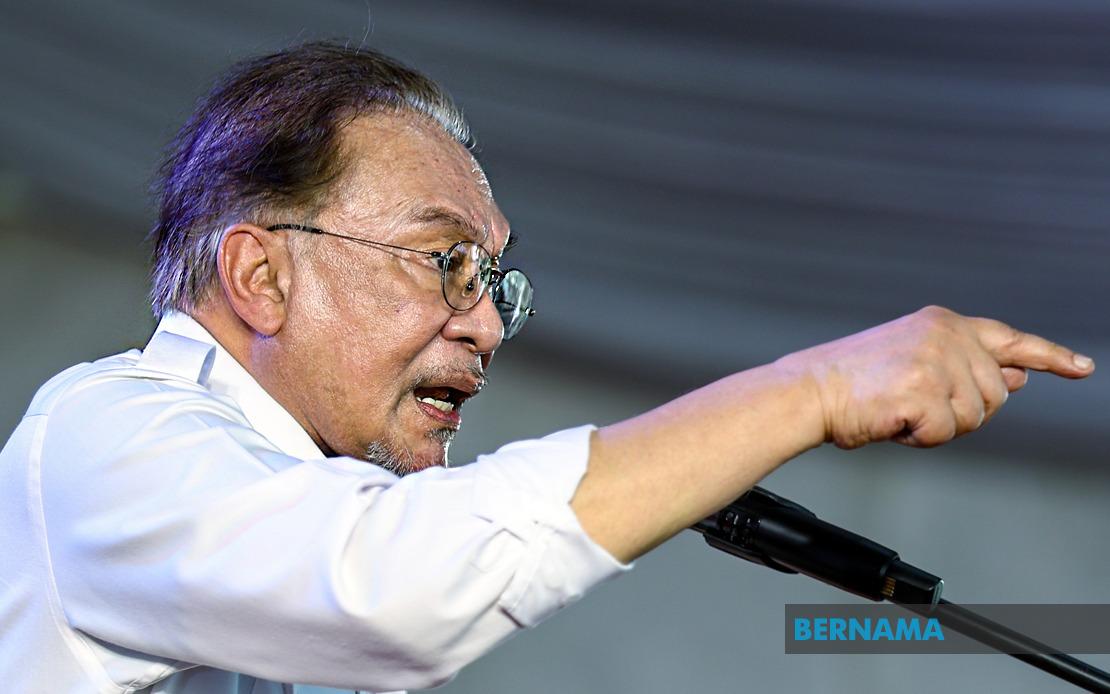
Prime Minister Datuk Seri Anwar Ibrahim has issued a pointed call for public officials across all administrative tiers to maintain equitable engagement with the nation's diverse communities, framing such conduct as fundamental to Malaysia's continued cohesion and prosperity. Speaking during a gathering with Johor community leaders in Johor Bahru on July 4, Anwar stressed that while the MADANI Government has implemented reforms at the national level, implementation challenges persist when these commitments reach state and municipal authorities.
The challenge, as Anwar articulated it, centres not on approving every petition or application, but rather on ensuring communities receive genuine opportunity to present their perspectives through processes perceived as impartial and principled. This distinction matters significantly in Malaysia's context, where perceptions of bureaucratic unfairness can quickly calcify into broader narratives of systemic bias. Anwar described fairness in governance as fundamentally about process—allowing voices to be heard and concerns to be substantively considered within existing legal and regulatory frameworks. The remark underscores an acknowledgment that governance at the municipal and state levels has lagged behind federal-level reform commitments, a problem that requires administrative culture change rather than legislative action alone.
Anwar also reframed how national success should be measured, arguing that economic metrics alone provide an incomplete picture of Malaysia's trajectory. While gross domestic product growth and investment flows matter, he contended, preserving social cohesion and fostering genuine mutual respect among different communities represents an equally vital barometer of national wellbeing. This articulation reflects growing concern in policy circles that rapid economic development unaccompanied by inclusive governance can deepen social fractures rather than bridge them.
The Prime Minister highlighted Malaysia's expanding economic footprint as evidence of development beyond traditional centres of prosperity. Investment is now reaching Negeri Sembilan, Melaka and Johor through the Johor-Singapore Special Economic Zone (JS-SEZ), while Sabah and Sarawak are receiving renewed attention. This geographic dispersal of opportunity, Anwar implied, depends substantially on the quality of governance and inter-community relations at state and local levels. Economic zones function effectively only when they operate within stable social environments where all communities perceive themselves as stakeholders in shared prosperity.
Anwar emphasised that Malaysia's engagement with transformative technologies—artificial intelligence, digital infrastructure modernisation, and the energy transition towards renewable sources—must remain anchored in moral foundations and cultural sensitivity. This caution proves particularly relevant for Malaysia, where rapid technological adoption can disrupt traditional livelihoods and communities without proper safeguards. Technological progress unmoored from ethical consideration and respect for religious principles risks generating social backlash that undermines both the technological transition and broader national unity objectives.
The Prime Minister expressed particular alarm at persistent narratives centred on race and religion, which he characterised as corroding the social fabric. He called upon religious and community leaders to amplify messages of faith, compassion, justice and mutual comprehension within their constituencies, rather than allowing divisive rhetoric to dominate public discourse. This appeal acknowledges that counter-narratives from respected community figures carry weight that government messaging alone cannot match.
Anwar also stressed the responsibility of leaders to circulate accurate information and actively resist narratives weaponising ethnicity and faith for partisan advantage. The statement suggests growing frustration with the persistence of polarising rhetoric despite government-level emphasis on unity and inclusion. Leaders, Anwar implies, must move beyond passive non-engagement with divisive narratives toward active refutation and alternative framing.
The Prime Minister grounded his argument in concrete human desires that transcend communal boundaries—access to quality education for children, healthcare for families, functional community infrastructure, and the constitutional liberty to practise religious belief. By reducing the conversation to these universal aspirations, Anwar attempted to reorient public discourse away from zero-sum identity competition toward shared interest in tangible governance outcomes. These are not novel demands, he noted; they are foundational commitments enshrined in Malaysia's founding constitutional framework by the nation's founders.
The gathering included Deputy National Unity Minister R Yuneswaran, signalling government-wide commitment to the unity agenda. Yet the Prime Minister's remarks also functioned as an implicit critique of how state and local administrators have executed unity commitments, suggesting that federal-level rhetoric about inclusion has not consistently translated into fair administrative practice at ground level. The gap between federal policy framework and municipal implementation remains a persistent challenge in Malaysia's governance structure, one that requires sustained pressure and institutional reform beyond rhetorical exhortation.

