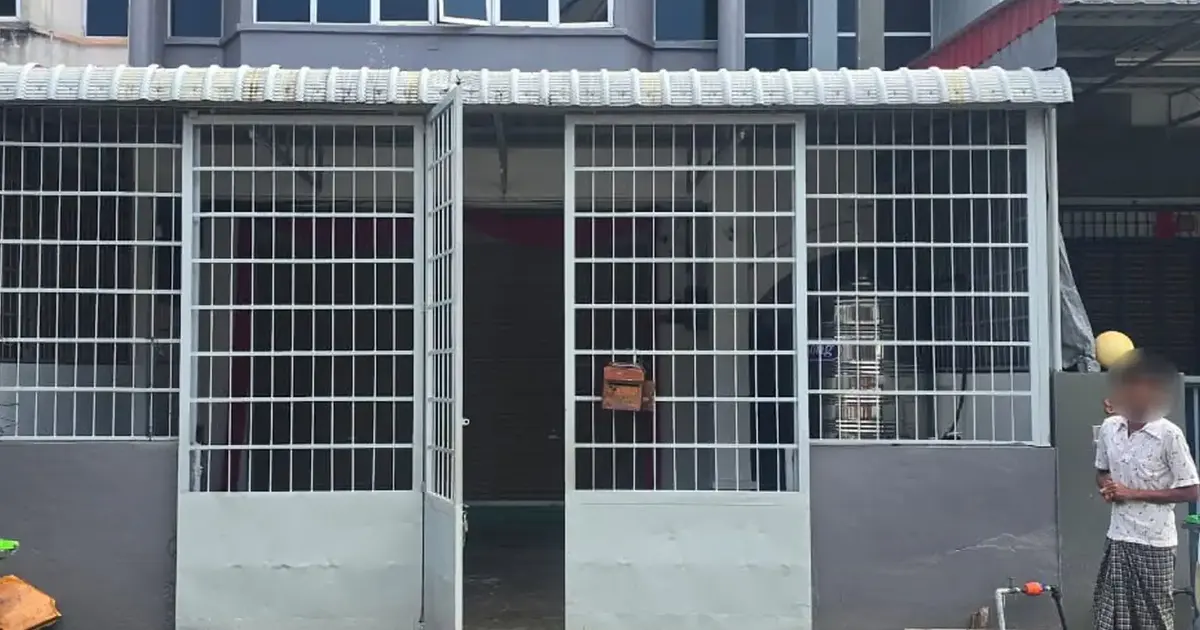
Alor Setar City Council has conducted enforcement action against an industrial premises in the state capital that was being operated as an unofficial school serving children from the Rohingya community. The raid marks an escalation in regulatory scrutiny regarding the use of commercial spaces for educational purposes without proper authorisation or zoning compliance.
The investigation focuses on two distinct regulatory violations. Authorities are examining the misuse of an industrial-zoned property for activities that fall outside its designated commercial classification, alongside the operation of an education facility without the requisite licensing and approval from relevant state and federal education authorities. Such dual breaches represent a common enforcement challenge across Malaysian municipalities, where the expansion of informal service provision often outpaces regulatory oversight.
The Rohingya refugee population in Malaysia presents a complex humanitarian and administrative landscape. The country hosts one of the largest concentrations of Rohingya in Southeast Asia, with estimates suggesting over 180,000 individuals in urban centres including Kuala Lumpur, Selangor, Penang, and increasingly in northern states like Kedah. These communities frequently establish informal educational structures to address gaps in formal schooling access, as most Rohingya children lack Malaysian citizenship and face restrictions on enrollment in public schools. However, such initiatives operate in legal grey areas that periodically trigger enforcement action from local authorities.
The municipal enforcement approach in Alor Setar reflects broader tensions within Malaysia's approach to refugee populations. While international humanitarian organisations acknowledge the genuine educational needs of stateless children, local authorities emphasise the importance of adhering to planning regulations and education standards. The use of industrial premises for schooling creates multiple concerns: safety compliance issues, inadequate sanitation and lighting facilities, fire code violations, and the absence of qualified educators meeting national standards. These technical violations provide the legal basis for intervention, even when the underlying humanitarian motivation is recognised.
From a governance perspective, the raid underscores the challenges faced by local councils in balancing compassion with regulatory responsibility. Alor Setar City Council must enforce municipal bylaws and land-use regulations consistently, yet enforcement against informal refugee education facilities generates significant public relations and humanitarian considerations. The case illustrates how local government bodies often find themselves at the intersection of federal refugee policy, education law, and municipal zoning ordinances, with limited capacity to develop coordinated long-term solutions.
The investigation's scope encompasses not merely the physical premises but also the operational structure of the learning centre. Questions will likely arise regarding funding sources, the qualifications of educators, curriculum content, student registration records, and whether the operation posed safety risks to young occupants. These procedural elements matter significantly because they determine whether this can be characterised as a simple zoning violation or a more serious breach involving child welfare considerations.
For the broader Rohingya and refugee communities in Malaysia, such enforcement actions reinforce their precarious status and limit their capacity for self-directed social development. Education remains a critical pathway for personal advancement and community resilience, yet the regulatory environment makes formal schooling inaccessible while simultaneously constraining informal alternatives. This creates a catch-22 where vulnerable children's educational rights remain unmet regardless of which approach communities attempt.
The incident also reflects ongoing policy ambiguity at the national level. Malaysia has not ratified the United Nations Convention on the Rights of the Child in its entirety, and the status of refugee children's educational entitlements remains inconsistently applied across different states and municipalities. Some jurisdictions have negotiated quasi-formal arrangements with UNHCR and international NGOs to provide learning spaces, while others maintain strict separation between citizen and non-citizen education systems. Alor Setar's approach suggests the stricter interpretation, prioritising legal compliance over pragmatic accommodation.
International humanitarian organisations working in Malaysia have documented the educational deprivation facing stateless children, noting that limited schooling access restricts future employment prospects and perpetuates cycles of vulnerability. The shutdown of informal learning facilities, while legally justifiable, exacerbates these challenges. Some states have permitted learning centres to operate under modified regulatory frameworks or partnerships with international bodies, yet no standardised national protocol exists.
The investigation will determine what enforcement actions follow and whether rehabilitation of the facility is possible under proper conditions, or whether operations must cease entirely. The outcome will signal Alor Setar's position on refugee community initiatives and may influence how other northern municipalities approach similar situations. For Kedah state and the Alor Setar municipality, the case represents an opportunity to clarify policies rather than rely on reactive enforcement alone.
Looking forward, this incident highlights the necessity for inter-agency dialogue involving local councils, state education departments, federal refugee coordinators, and humanitarian organisations. Sustainable approaches would require acknowledging the reality of refugee populations' educational needs while developing compliant regulatory pathways. Without such coordination, enforcement actions will continue addressing symptoms rather than addressing the underlying policy vacuum that creates such situations. The children's educational interests, increasingly central to international humanitarian standards, remain the critical consideration in how Malaysian authorities navigate these complex jurisdictional questions.

